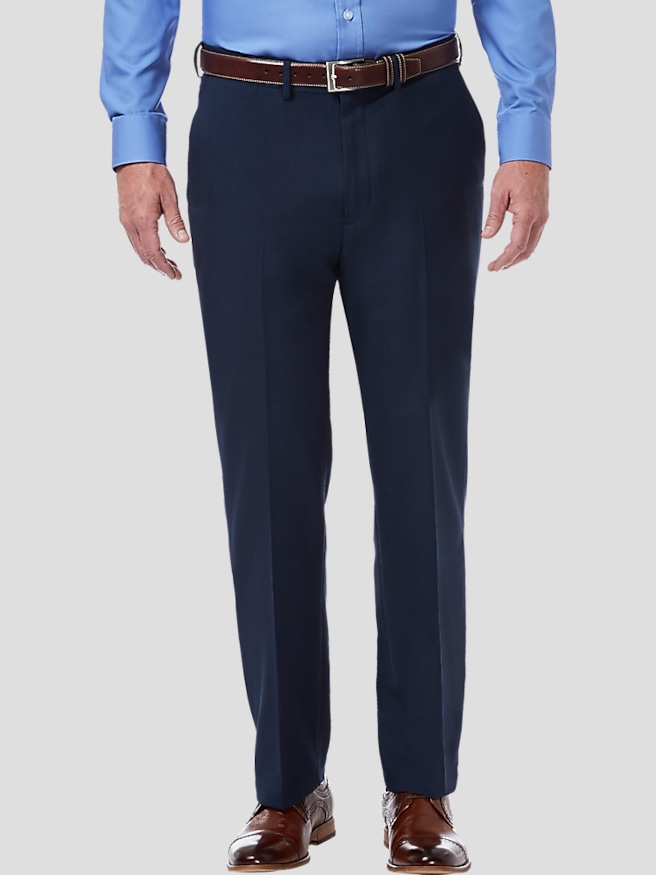
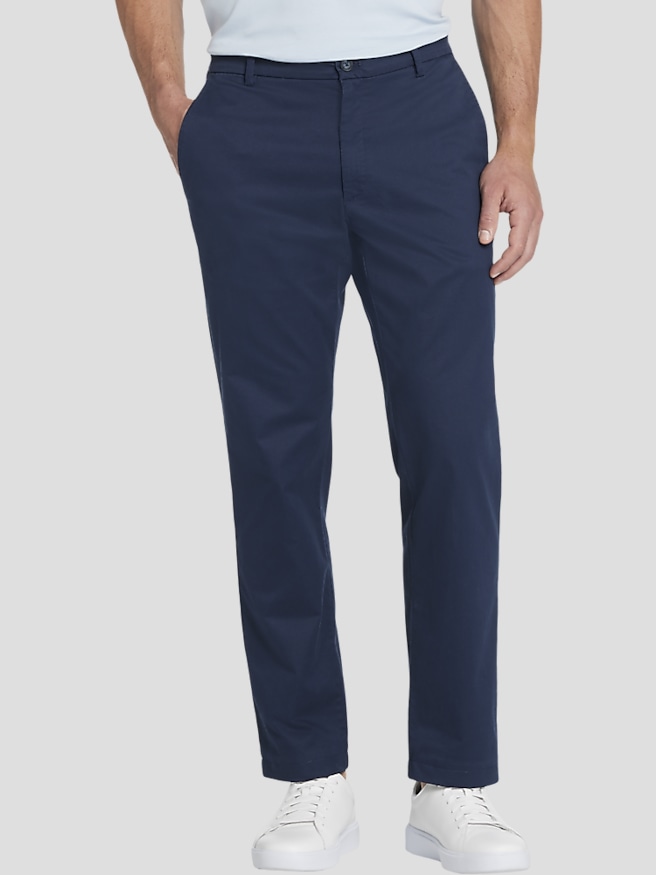
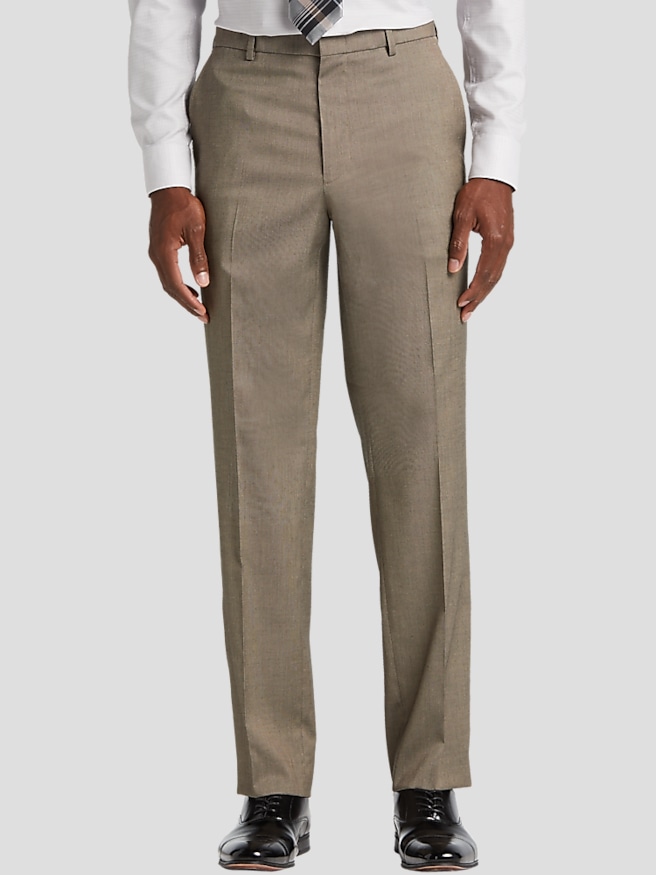
Stretch waist pants are trousers with an elasticized or flexible waistband that expands slightly for comfort when sitting, bending, and moving. They can provide an easier fit around the middle while maintaining the appearance of casual pants, chinos, or dress trousers, depending on their fabric and construction. Some have a fully elastic waist and a pull-on design; others combine a traditional button-and-zip closure with elastic sections or a concealed stretch waistband. A drawstring can add adjustability, although not every stretch waist style includes one. That range of construction makes these pants useful for everything from working at a desk to traveling, sharing a relaxed dinner, or spending a quiet day at home. A smooth waistband and tailored leg can look polished with a tucked-in shirt, while a visible drawstring and a softer silhouette generally suggest a more casual setting. The appeal is especially clear during a long stretch of sitting: a waistband with some give can accommodate changes in posture without the rigid feeling of a fixed band. Stretch at the waist does not automatically mean the entire garment stretches, however. The waistband and the main fabric may have different properties, so both matter when considering comfort. A flexible waist paired with a structured woven fabric can retain a crisp outline, while a knit construction typically creates a softer, more relaxed effect. For movement through the seat, thighs, and knees as well as the waist, Stretch Fabric Pants offer a related option, with flexibility built into the body fabric. The most useful distinction is between adjustability at the waist and stretch throughout the garment. Either can make everyday dressing more comfortable, but the right balance depends on how the pants will be worn and how closely they fit through the leg. Someone who spends much of the day seated may value a forgiving waistband, while someone frequently walking between appointments may also appreciate stretch through the seat and thighs.
Fabric gives stretch waist pants much of their character. Cotton twill has the familiar texture associated with chinos and can work well for everyday outfits that need a little structure. Cotton blended with elastane adds give, though the amount of stretch and the fabric’s ability to recover depend on more than the fiber percentage alone. Polyester blends may offer wrinkle resistance and shape retention, while wool blends can provide a refined drape suited to dressier settings. Knit fabrics tend to feel more yielding than firm woven fabrics, but their appearance can vary from distinctly casual to relatively polished. Fabric weight, surface texture, and construction all influence whether pants look appropriate with a simple T-shirt, an Oxford shirt, or a jacket. Fit is equally important: an accommodating waistband should not have to compensate for pants that are too tight through the hips or thighs. When standing, the waist should feel secure without digging in; when seated, the front closure should lie comfortably and the pockets should not pull noticeably open. Persistent horizontal strain lines across the front or seat can indicate that more room is needed. A waistband that rolls, folds, or slips may also signal a fit or construction mismatch rather than a need to tighten the drawstring. Slim fits generally follow the leg more closely, straight fits offer a more consistent line from thigh to hem, and relaxed fits provide additional ease. None of those shapes requires a baggy waist. Rise also changes the feel of the garment, since a band resting near the natural waist sits differently from one positioned lower on the hips. Length completes the silhouette: a clean hem with minimal bunching looks intentional, and enough room at the knee keeps the leg from catching when standing after sitting. For pants that may need hemming, the intended shoes help establish the finished length. A comfortable fit comes from the proportions of the whole garment, not simply from how far the waistband can stretch.
Care and construction help determine how well stretch waist pants hold their shape over time. The garment’s care label is the starting point because cotton, wool, synthetic blends, and elastic components can require different treatment. For machine-washable styles, following the recommended water temperature and drying method helps protect both the fabric and the waistband. Excessive heat can shorten the useful life of elastic fibers, so high dryer settings and direct ironing over elastic sections deserve particular caution. Pants marked for professional cleaning should be handled accordingly rather than treated like washable casual wear. Secure stitching, neatly finished seams, and an evenly attached waistband are useful signs of careful construction, while reinforced pocket openings can help with repeated everyday use. Even durable fabric can lose its clean line when pockets are overloaded with a phone, keys, and a bulky wallet. Keeping pocket contents manageable allows the pants to hang more naturally and reduces unnecessary strain. For an office with a relaxed dress code, stretch waist pants with a smooth front, subtle texture, and restrained detailing can pair comfortably with a collared shirt and loafers. A softer pair with a drawstring can suit errands, a road trip, or downtime with a crewneck shirt and clean sneakers. More formal occasions require attention to the full dress code; an elastic waistband alone does not make casual pants a substitute for dress trousers. These pants can also be a thoughtful gift for a father, brother, partner, or adult son who appreciates comfort but prefers a finished look. Knowing the recipient’s usual waist size, inseam, preferred rise, and favorite leg shape makes the choice more personal than relying on the waistband’s flexibility alone. Whether worn for a commute, an afternoon gathering, or hours at a desk, well-fitting stretch waist pants offer an appealing combination of a secure waist, freedom to move, and a silhouette that suits the setting.