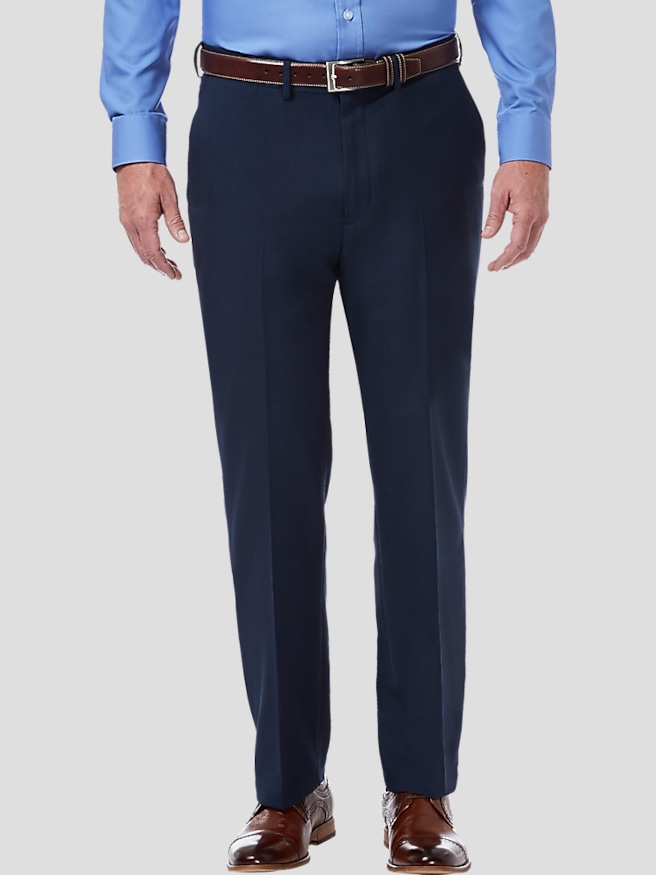
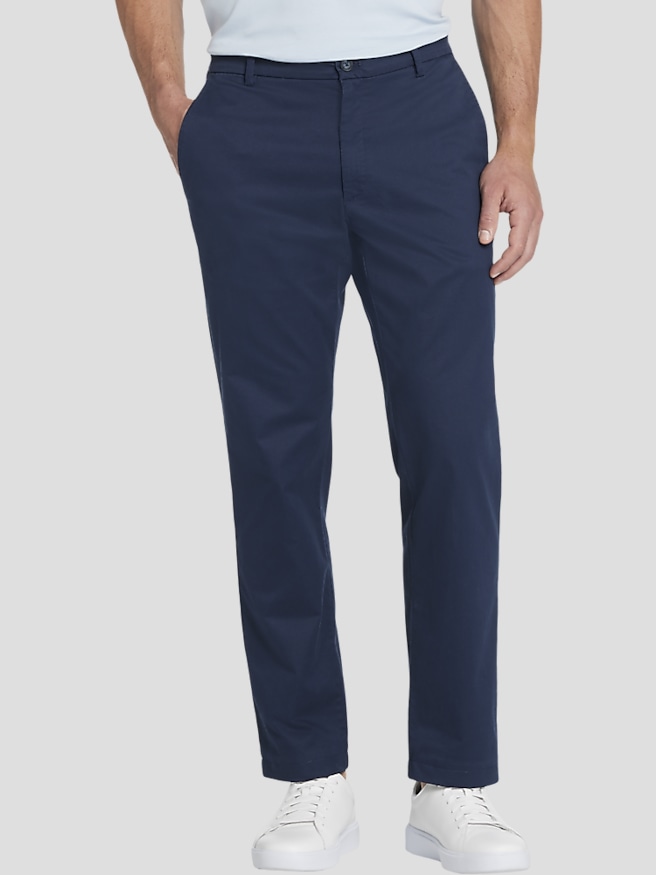
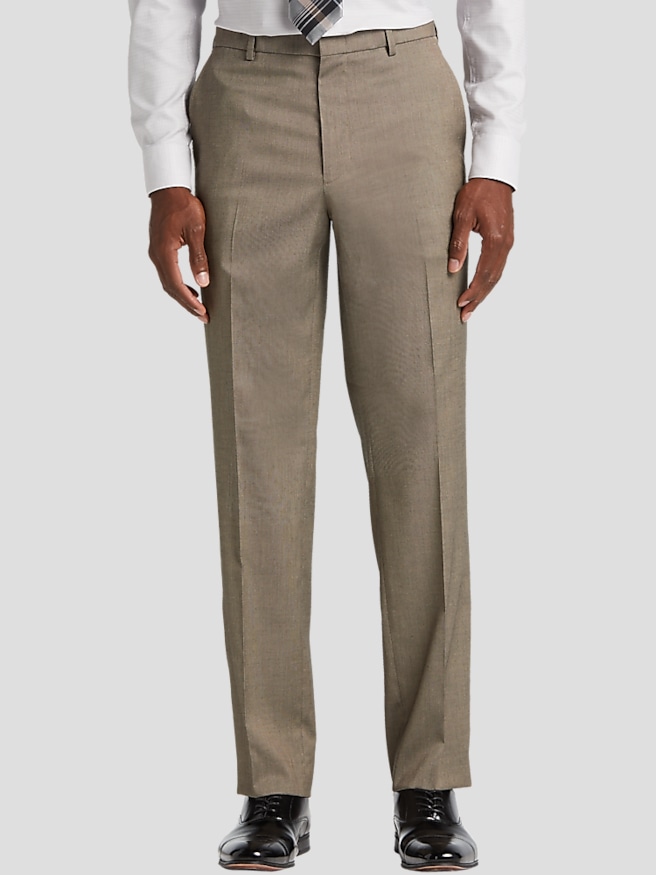
Stretchy waistband pants have elastic, stretch panels, or another flexible waist construction that allows the waistband to expand and recover as the wearer moves. That extra give can make sitting through a long meeting, climbing stairs, or settling into an airplane seat feel less restrictive without requiring an oversized fit. The details vary by construction. A fully elasticized waist often supports an easy pull-on design, while elastic at the sides or back can preserve a smooth front. Hidden stretch sections may provide flexibility behind a traditional waistband with belt loops and a zippered fly. These differences affect both appearance and feel: a visible drawstring has a relaxed character, while a clean front can work naturally with a tucked-in shirt. Waistband flexibility is also distinct from stretch in the rest of the garment. Styles described as Stretch Fabric Pants may provide give through the seat, thighs, and knees, but that does not necessarily mean the waistband stretches. Both features can be useful, especially for days that involve equal amounts of walking and sitting. Materials influence how the pants hang and how they feel against the skin. Cotton-rich fabrics often have a familiar, soft hand and a more casual character, while wool blends can bring a refined drape suited to dressier settings. Polyester and nylon blends may contribute strength, shape retention, or wrinkle resistance, depending on their construction. Rayon can add softness and fluidity, and elastane can supply stretch when incorporated into the fabric. The blend alone does not tell the whole story; fabric weight, weave, finishing, and waistband design all influence the result. A flexible waist in a crisp woven fabric can look quite different from one in a soft knit, even when both offer comfortable movement. That range makes stretchy waistband pants relevant beyond lounge settings, with silhouettes that can suit casual offices, travel days, relaxed dinners, and everyday errands.
A comfortable fit still depends on more than how far the waist can stretch. The waistband should rest securely at its intended position without needing to be pulled close to its limit, and the seat and thighs should have enough room for sitting and taking a full stride. Elastic can accommodate small changes in position, but it cannot correct pants that are too tight through the hips or too short in the rise. A waistband that rolls, twists, or presses noticeably when seated may indicate a fit or construction mismatch. Rise makes a meaningful difference because it determines where the pants sit on the body. Some men prefer the support of a waistband closer to the natural waist; others feel more comfortable with a lower position. Neither choice requires a baggy leg. A straight silhouette offers a consistent line from thigh to hem, while a tapered shape narrows toward the ankle for a more defined profile. A slim cut can still feel easy when the proportions suit the wearer and the fabric has appropriate give. Length matters just as much. A hem that meets the shoe cleanly keeps the overall shape intentional, whether the pants are worn with loafers, lace-up shoes, or simple sneakers. For someone moving between a desk, a commute, and dinner, a smooth-front style can provide a dressed appearance with less pressure across the middle. For extended travel, room through the seat and knees can be as valuable as stretch at the waist. A man who spends much of the day seated may appreciate a soft interior waistband and flat seams, while someone frequently on the move may favor secure pockets and fabric that recovers well after bending. These are practical differences rather than reasons to size up indiscriminately. The most useful flexibility works with the wearer’s proportions, keeping the pants comfortable without letting the waist slide or the fabric bunch excessively under a belt.
Styling depends largely on the fabric’s surface, the shape of the leg, and how much of the waistband is visible. A neat woven pair in navy, charcoal, or black can provide a quiet foundation for a button-front shirt and an unstructured jacket, provided the workplace or occasion allows that level of dress. A textured knit or visible drawstring generally reads more casually and works naturally with a polo, a simple T-shirt, or a lightweight sweater. An untucked shirt can leave the waist discreet, while a tucked shirt makes the waistband finish and closure more noticeable. Stretch does not automatically make pants appropriate for every dress code; the complete appearance still matters. For frequent wear, durability comes from the interaction of fabric, seams, and elastic recovery. Reinforced pocket openings, even stitching, and a waistband that lies flat are useful construction details, while fabric that returns to shape helps limit a stretched-out look at the knees or seat. Proper care helps preserve those qualities. The care label takes priority because similar-looking pants can require different cleaning methods, including professional cleaning for certain tailored fabrics. When machine washing is permitted, following the stated temperature and drying instructions is especially important for elastic and stretch fibers. High heat can shorten their useful life, and unnecessary heat during pressing can also affect the waistband. Emptying pockets, fastening closures as directed, and avoiding an overloaded washer can reduce avoidable strain. Hanging or folding the pants neatly after cleaning helps maintain their shape between wears. Stretchy waistband pants can also make a thoughtful gift for a dad, partner, or another man who appreciates comfortable clothing with a put-together appearance. His usual waist size, preferred rise, and everyday dress habits remain better starting points than assuming stretch makes sizing universal. The appeal is straightforward: a little flexibility where the body moves, supported by fabric and a silhouette that fit the way he spends his day.