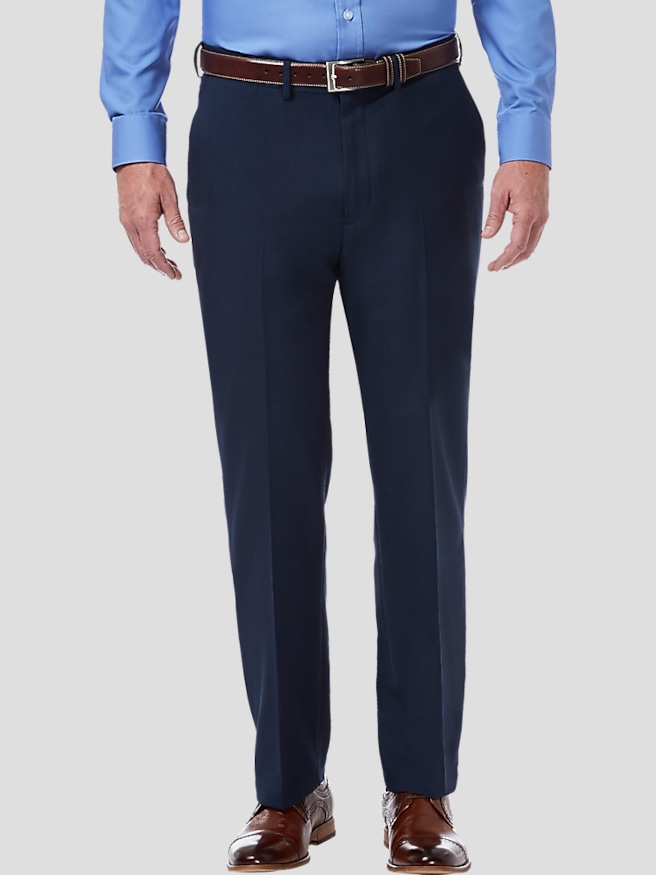
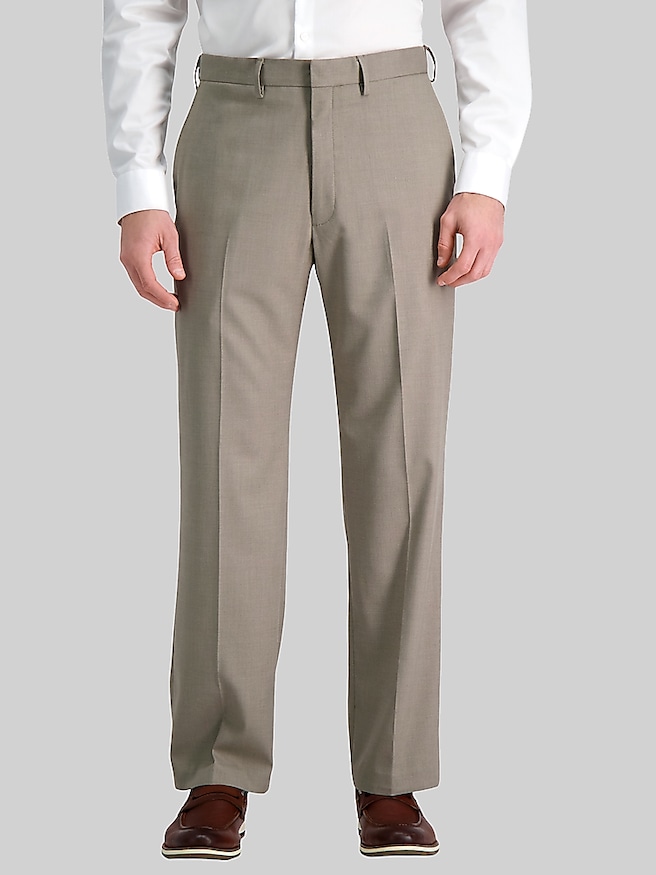
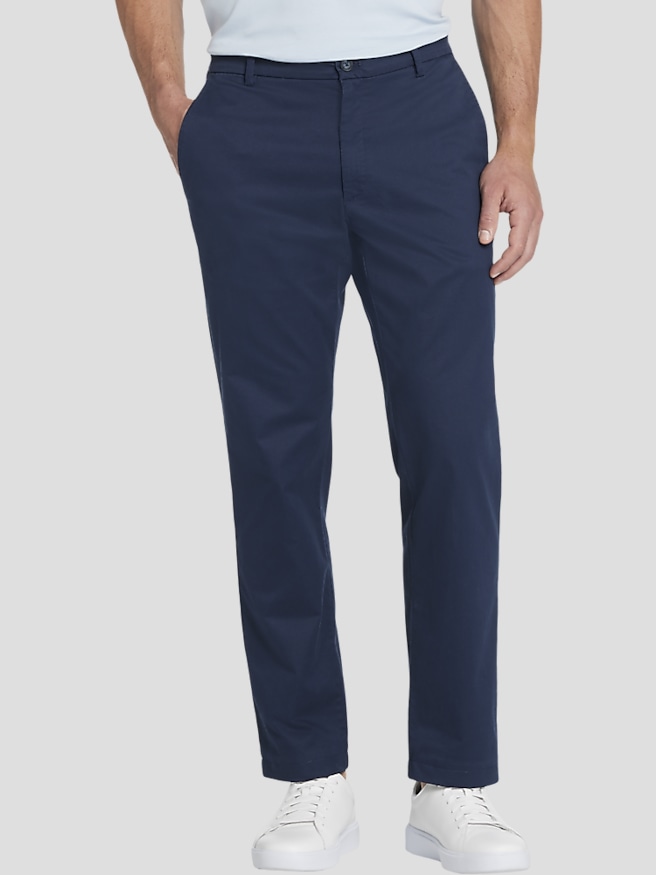
A pants waistband is the band of fabric at the top of the garment that wraps around the waist and helps keep the pants securely in place. Although it occupies only a small part of the garment, its construction has a noticeable effect on comfort, fit, and the way a shirt sits against the body. Structured waistbands typically use an internal layer of reinforcement to hold their shape, with a button or hook-and-bar closure above the fly. They create a defined upper edge that works well with tucked-in shirts and tailored outfits. Elastic waistbands use a stretchable band inside a fabric casing or incorporated into the waistband itself, allowing the waist opening to expand and recover. This flexibility can make sitting through a long meeting, stepping into a car, or moving between errands feel less restrictive. Partial-elastic waistbands combine a more structured front with elastic at the sides or back, balancing a clean appearance with additional give. A flat front can keep the outfit looking polished even when the waistband has flexible sections elsewhere. Drawstring waistbands offer another form of adjustment, allowing the opening to be secured without relying entirely on a fixed closure. Stretch fabric is not the same as an elastic waistband: pants can have flexible fabric through the seat and legs while retaining a relatively firm waist. A curtain waistband refers to an interior lining construction often found in tailored trousers, creating a finished surface where the pants meet the body. Certain waistband interiors also include a shirt-grip strip designed to help a tucked-in shirt stay in place. These details serve distinct purposes, so the appearance of the front closure alone does not reveal how the waistband will feel. The practical distinction comes down to support, flexibility, and finish, whether the pants are intended for a desk job, a special occasion, or everyday movement.
Fabric and fit work together with waistband construction to shape the overall wearing experience. Cotton offers a familiar hand and can suit casual pants as well as more polished designs, depending on the weave and finish. Wool can provide a smooth drape and a refined appearance in dress trousers, while blends may combine the qualities of multiple fibers. A small amount of elastane can add stretch, though the amount of movement depends on the fabric construction rather than the fiber label alone. Wrinkle resistance, softness, and shape retention also vary by material and finish; no single fabric description tells the whole story. Inside the waistband, a smooth lining and neatly finished seams matter because that area stays in contact with the body throughout the day. The waist should feel secure without pinching when seated, and the closure should lie flat rather than pulling sharply across the front. A waistband that fits while standing can still feel restrictive at a desk, especially if the rise or seat is too snug. Rise, the distance from the crotch seam to the top of the waistband, helps determine where the pants sit on the body. A higher rise generally places the band closer to the natural waist, while a lower rise positions it farther down. Neither is automatically more comfortable; proportions, personal preference, and the intended outfit all matter. The seat, thighs, and leg shape should provide enough room for normal movement without making the waistband carry the strain of an undersized cut. For outfits built around a belt, Belt Loop Pants offer a related way to consider how the waist is finished. Belt loops support a belt, but they do not correct a fundamentally poor fit. A belt should complement a secure waistband rather than gather excess fabric into folds. With a tucked-in shirt, a smooth band and balanced rise help create an uninterrupted line from the shirtfront through the legs.
The intended setting often makes the most useful waistband details clear. For an office day that includes commuting, presentations, and hours in a chair, a clean front with comfortable give can support a polished appearance without constant readjustment. For weddings, graduations, and other dressier gatherings, structured trousers can provide a crisp foundation beneath a dress shirt and jacket. Casual plans may call for a softer waistband, particularly when the day involves driving, walking, or spending extended time seated. Someone who prefers fewer fiddly closures may appreciate a pull-on construction, while someone who regularly wears tucked shirts may value a defined waistband with a smooth interior. Care is just as important as the initial feel. The garment label should determine whether pants are machine washable, hand washable, or intended for professional cleaning, since the outer fabric, lining, and internal reinforcement may have distinct needs. Excessive heat can affect elastic recovery and some stretch fibers, so washing, drying, and pressing temperatures deserve attention. Closing fasteners before washing, when appropriate for the garment, can help reduce snagging, while removing a belt keeps its hardware from rubbing against the fabric. After wear, hanging or folding pants neatly helps limit unnecessary creasing and protects the shape of the waistband. Durability also depends on construction: even stitching, securely attached closures, and reinforcement at stress points help the top of the pants withstand repeated use. A loose button or opening seam is worth addressing before repeated pulling makes the problem larger. Tailoring possibilities depend on the waistband design, seam allowances, and overall construction; taking in or letting out the waist is not equally feasible for every pair. As a gift, pants are most successful when the recipient’s usual size, preferred rise, and favored leg shape are already known. A familiar waistband style can be especially useful for someone who values consistent comfort, giving the garment a practical role in an everyday wardrobe rather than leaving fit to guesswork.