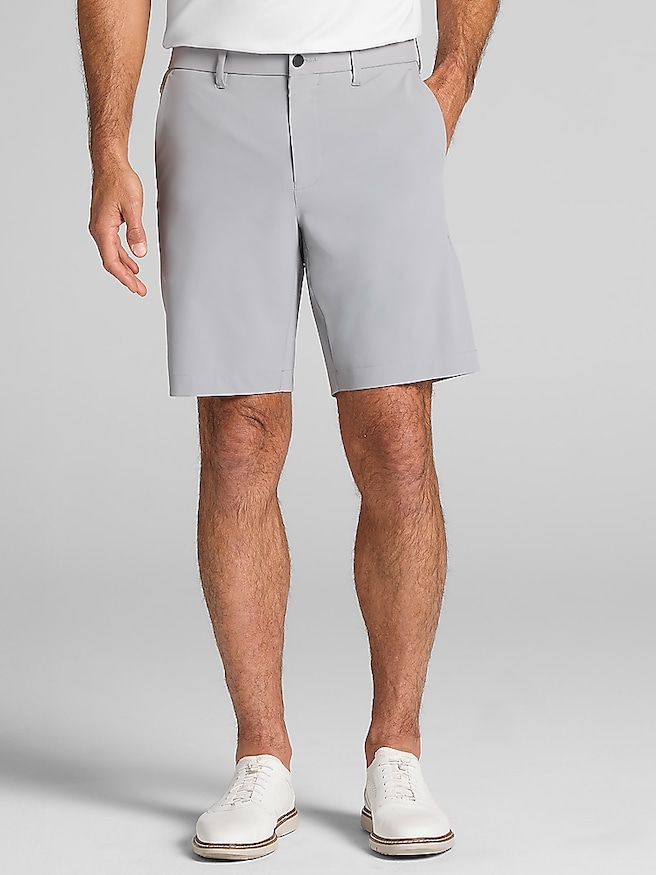
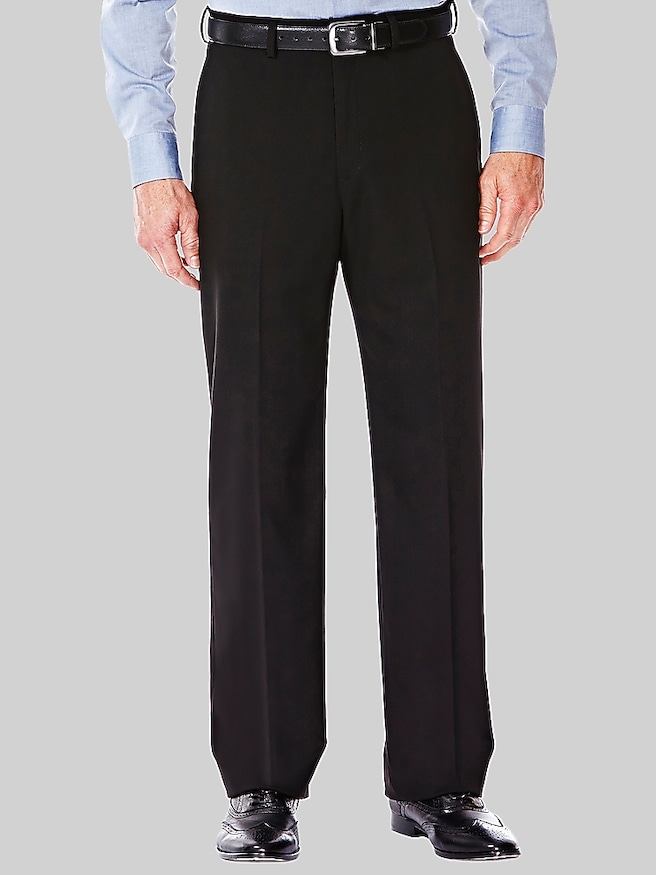
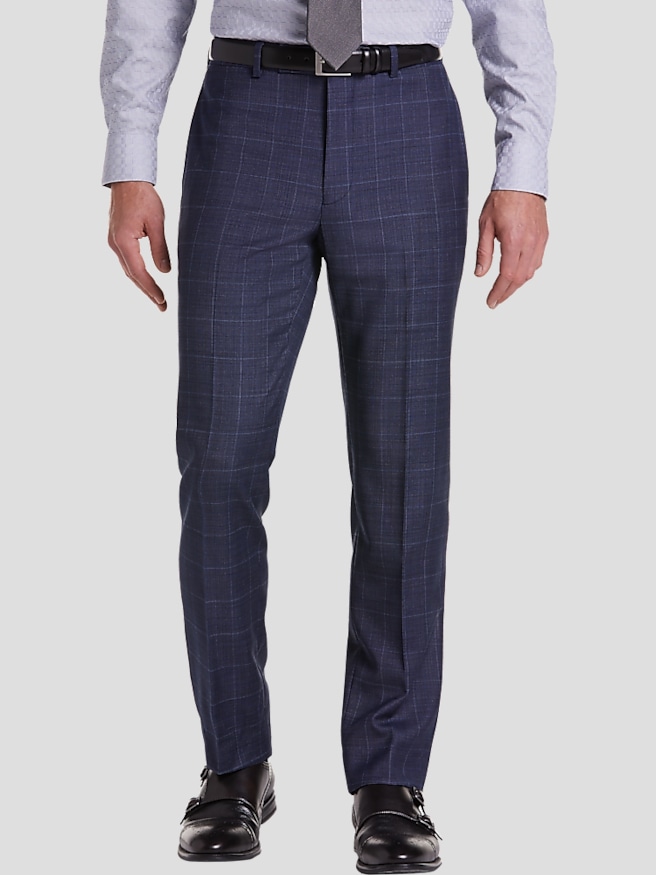
Flat-front trousers are pants with a smooth front and no pleats below the waistband, creating a clean line from the waist through the hips. Unlike pleated trousers, which have folded fabric at the front, flat-front styles keep that area uncluttered. The result works with tucked-in dress shirts, fine-gauge sweaters, polos, and tailored jackets, making these trousers useful for office days, dinner reservations, and celebrations that call for something more polished than jeans. A flat front describes the construction, not the fit: trousers with this design can have a slim, tailored, or roomier shape through the seat and legs. That distinction matters when choosing a pair that looks sharp and feels comfortable through a full day. Someone who prefers extra room through the thighs can still wear a flat front without choosing a narrow leg, while someone who likes a closer silhouette can look for a more tapered cut. The waistband should sit comfortably at the intended rise without digging in, and the fabric across the front should lie relatively smooth when standing. Pockets that flare open, strong horizontal pulling across the hips, or a fly that strains can indicate that more room is needed. Enough ease through the seat and thighs makes sitting at a desk, climbing stairs, or stepping into a car more comfortable. Rise also changes the overall proportion: a higher rise positions the waistband closer to the natural waist, while a lower rise sits farther down the hips. Neither approach defines flat-front construction, so the choice depends on body proportions, comfort, and the shirts or jackets worn with the trousers. At the hem, a slight break creates a familiar dress-trouser finish, while little or no break gives a neater view of the shoe. The best length also depends on leg width, since a narrow opening and a fuller opening fall differently over footwear. Fit through the waist and seat remains more important than choosing a particular silhouette simply because it sounds modern.
Fabric gives flat-front trousers much of their character, affecting how they drape, move, and hold their appearance. Wool typically offers a fluid line and natural resilience, making it a strong choice for dress trousers that need to look composed through meetings or an extended event. Fine wool fabrics can appear smooth and refined, while more visibly textured weaves bring depth to a simple outfit. Cotton generally has a more casual character, with a familiar hand and a structure that works well with button-down shirts, knitwear, and unstructured jackets. A twill weave can add substance and a subtle diagonal texture, although weight and finishing also influence how the fabric feels. Natural texture gives Mens Flat Front Linen Trousers a distinct character, with an airy feel and the gentle creasing associated with flax fibers. That softly rumpled appearance is part of linen’s appeal rather than a sign that every wrinkle needs to be pressed away. Blended fabrics can balance several qualities, such as softness, shape retention, or added stretch, but the fiber percentages and construction matter more than a broad fabric label alone. A small amount of stretch may make bending and sitting easier; it does not replace adequate room in the cut. Fabric weight matters as well, since a lighter cloth may move more freely while a more substantial cloth can create a firmer outline. Interior details influence everyday comfort, too. A well-finished waistband, secure pocket openings, and smooth seams help trousers feel settled rather than distracting. Partial lining can help the upper leg glide against the fabric, depending on the construction. For repeated wear, durability comes from the combination of suitable fabric, sound stitching, and a fit that does not place constant tension on the seams. Areas such as the pocket edges, seat, and hems benefit from regular attention, especially when trousers are worn often for commuting or long stretches at a desk.
The appeal of flat-front trousers is how easily their clean shape adapts to different settings without requiring an elaborate outfit. Charcoal or navy trousers with a pale dress shirt and leather lace-ups create a straightforward business combination; a jacket adds definition when the setting calls for it. Medium gray can soften the contrast with a dark sweater, while tan or other lighter neutrals work naturally with textured knits and casual button-downs. For a dinner or a gathering with a dressy-casual expectation, a tucked-in knit polo and loafers keep the outline tidy without making the outfit feel overly formal. Flat-front trousers can also work for wedding guests when their fabric and styling suit the stated dress code, though separate trousers do not replace a suit or black-tie attire when either is required. Shoes help establish the tone, and the hem should fall cleanly over the pair most likely to be worn. A belt, when used, should fit the loops comfortably without bunching the waistband. For someone building a dependable wardrobe for a first office job, a new role, or frequent social occasions, this style offers a useful foundation. Trousers can also make a thoughtful gift when the recipient’s measurements and preferred fit are known; waist size alone does not account for rise, thigh room, or inseam. Once in regular use, care should follow the garment’s label rather than a general rule for all dress pants. Some fabrics require professional cleaning, while others permit washing under specified conditions. Emptying pockets before care, addressing marks promptly with a fabric-appropriate method, and avoiding unnecessary cleaning can help preserve the finish. Hanging trousers neatly or folding them along an existing crease helps maintain their shape between wears. When pressing is permitted, use the recommended heat setting and a pressing cloth where appropriate to reduce the risk of shine. A well-chosen fit and consistent care allow the smooth front, comfortable drape, and clean leg line to remain the defining features over repeated wears.