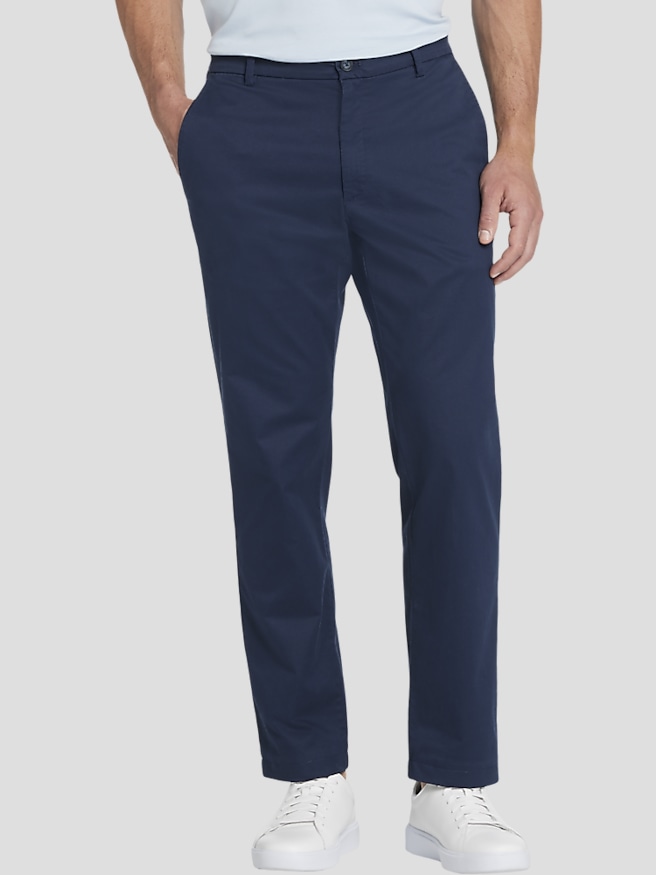
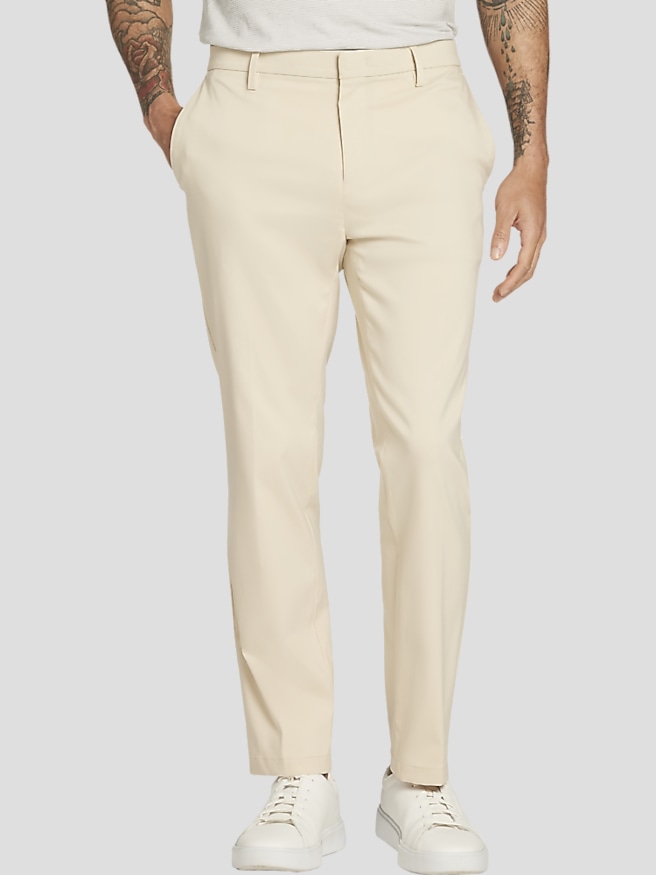
Men’s flat-front linen trousers combine the distinctive texture of flax-based fabric with a smooth, unpleated front for a look that feels polished without being overly structured. Unlike pleated trousers, which have folds of fabric below the waistband, flat-front styles lie relatively clean across the front of the hips. That construction creates a simple line beneath a tucked-in shirt or an open jacket, making these trousers a versatile choice for everything from a restaurant dinner to a destination wedding. Flat front describes the construction, not the overall fit: linen trousers with this detail may have a slim, straight, or more generous leg. The fabric composition matters just as much as the silhouette. Pure linen typically has a lightly textured surface, visible variations in the yarn, and a crisp feel that becomes softer with wear and appropriate care. Its natural tendency to crease is part of its character, giving the cloth a relaxed appearance rather than the uniformly smooth finish associated with some dress fabrics. Linen blends bring other fibers into that mix. Cotton may contribute a softer hand, while certain synthetic fibers can influence wrinkle recovery, drape, or ease of care; the result depends on the full composition and construction. A small amount of stretch fiber may add flexibility, but linen itself has limited elasticity, so comfortable sizing remains important. Fabric weight and weave also affect how trousers hang. A lighter, more open weave can feel airy and fluid, while a more substantial weave may provide greater coverage and a firmer outline. Light-colored linen sometimes reveals pocket bags or the outline of undergarments, making opacity and lining useful details to consider. Natural yarn variations, sometimes called slubs, contribute subtle depth to the fabric rather than a perfectly uniform surface. Together, these qualities give flat-front linen trousers a recognizable balance of texture and simplicity, with enough visual interest to work alongside a plain shirt and enough restraint to sit comfortably beneath a tailored jacket.
A well-proportioned fit allows that fabric to fall cleanly instead of pulling across the seat or gathering around the knees. The waistband should sit securely at its intended rise without requiring a tightly cinched belt, and the front pockets should rest reasonably flat while standing. When the pocket openings flare or horizontal lines appear across the hips, the trousers may need more room through that area. Comfort while seated is equally important, especially for a long dinner, a ceremony, or a workday that involves moving between a desk and meetings. Flat-front construction does not require a close fit through the thighs; adequate ease helps preserve the clean appearance while allowing natural movement. For a narrower outline, men’s slim fit linen trousers offer a related silhouette to consider, with the understanding that rise, thigh room, and leg taper vary by cut. A straight leg provides a more consistent line from the knee toward the hem, while a fuller leg gives the fabric more room to drape. Length changes the overall impression, too. A hem that barely meets the shoe creates a precise finish, while a slight break introduces a softer fold at the front. Excess fabric pooling over the shoes can overwhelm linen’s natural texture, particularly with a narrower leg opening. Trying trousers with the shoes intended for the outfit makes those proportions easier to judge. Loafers complement an open-collar shirt and a tailored jacket, leather lace-ups give the outfit a more traditional dress appearance, and clean, understated sneakers suit a casual setting. Color helps set the tone without changing the essential character of the trousers. Beige, stone, and other pale neutrals emphasize linen’s texture, while navy, charcoal, and deeper shades can feel more understated. A solid shirt keeps the combination quiet; a subtle stripe or small-scale pattern adds interest without competing with the fabric. When trousers and a jacket are intended to look like a suit, a close match in color alone may not be enough—the weave, weight, and finish also need to coordinate.
The appeal of men’s flat-front linen trousers extends across occasions where a considered outfit is welcome but rigid formality is not required. They pair naturally with a button-down shirt for a family celebration, a knit polo for a casual dinner, or a compatible sport coat for an event with a tailored dress code. For weddings, the invitation and venue should determine the level of formality; linen trousers can suit some celebrations but do not replace the attire required for a black-tie event. They can also make a thoughtful gift for someone who enjoys textured fabrics, wears tailored separates, or prefers trousers that move easily between dressed-up and relaxed outfits. Familiarity with the recipient’s usual waist size, inseam, and preferred rise is more useful than relying on a general clothing size alone. Long-term appearance depends on care as well as fit. Linen fibers are strong, but repeated abrasion at the hems, pocket edges, and seat can still wear down the fabric. A hem that clears the ground helps protect the bottom edge, and keeping bulky objects out of the pockets reduces strain and preserves the front’s smooth line. Cleaning instructions should always follow the garment’s care label, since a washable linen blend and a lined, tailored linen trouser may need different treatment. When washing is permitted, gentle handling and the recommended water temperature help limit unnecessary stress; excessive heat can cause shrinkage or affect the finish. For garments that allow ironing, pressing while slightly damp can make creases easier to smooth, with the iron setting adjusted to the fiber blend and care instructions. A pressing cloth can help protect the surface, especially on darker fabrics. Hanging trousers neatly after wear, letting them air, and addressing spots promptly can reduce the need for frequent full cleaning. Linen will develop folds again as the wearer sits and moves, so a completely crease-free appearance is not a realistic expectation. The goal is clean, well-kept fabric with an easy drape—a finish that respects linen’s natural character while keeping the flat-front silhouette looking deliberate.