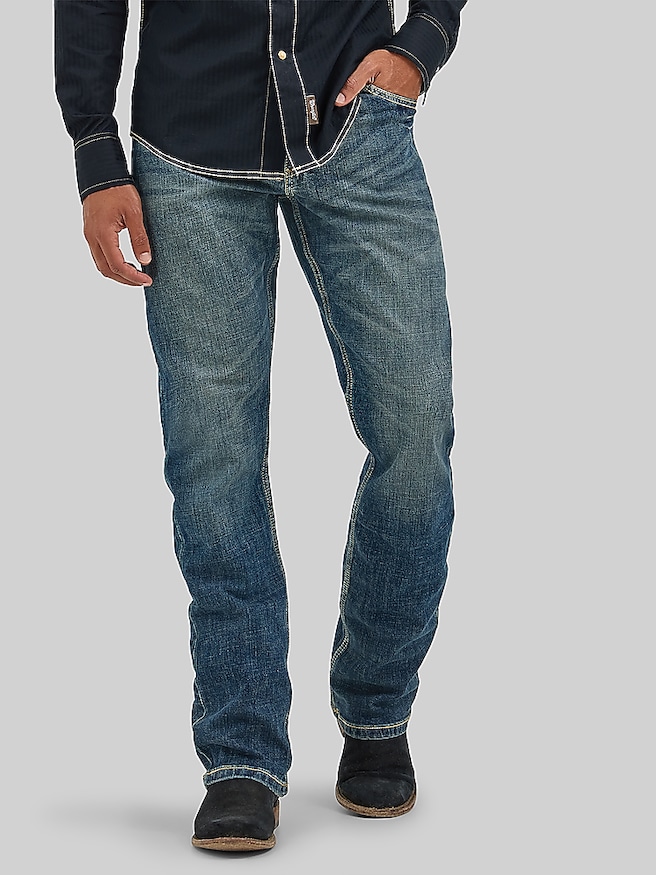
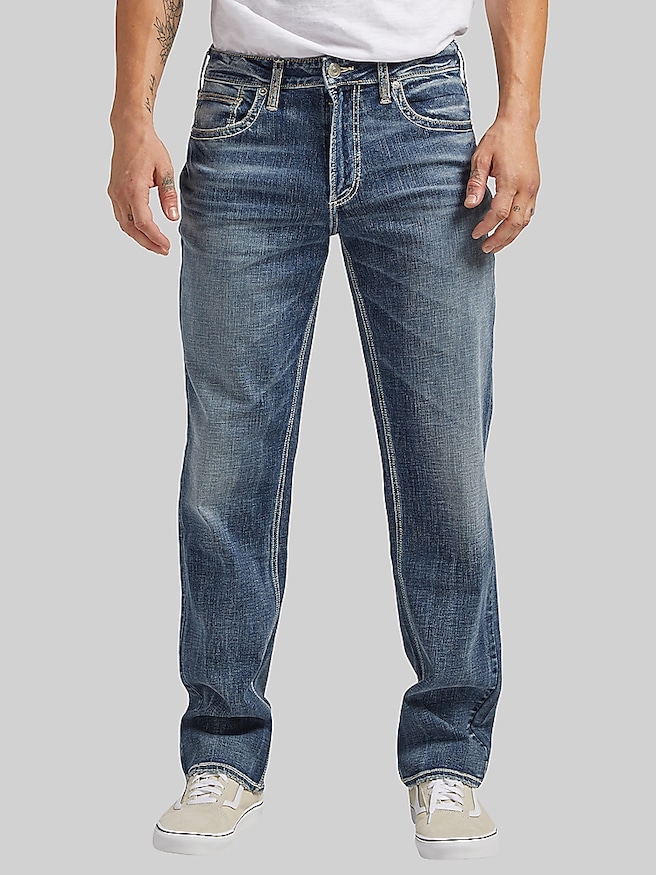
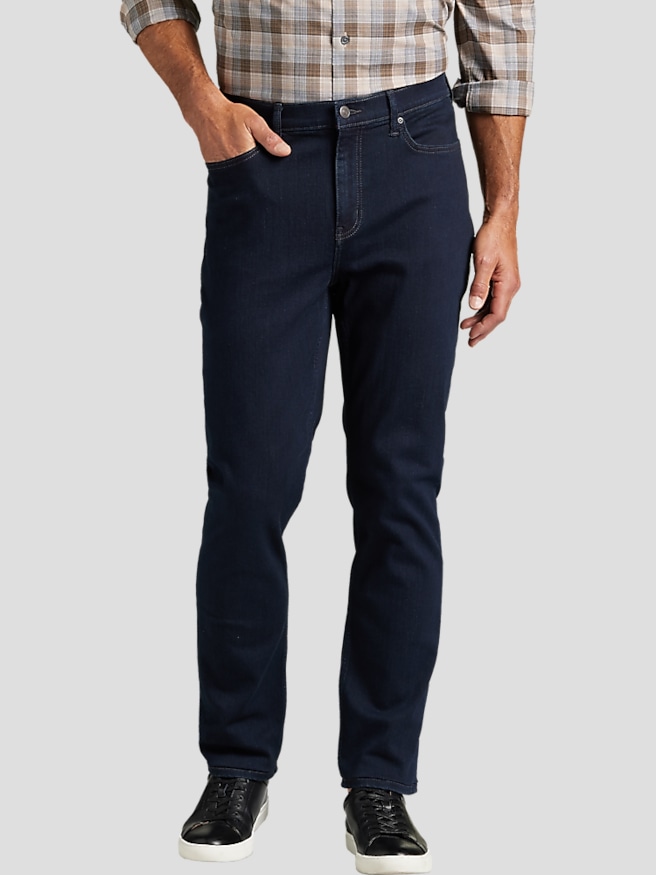
The right fit gives jeans their shape, but it also determines how they feel through a full day of sitting, walking, and moving. Well-fitting jeans rest securely at the waist, leave enough room through the seat and thighs, and fall along the leg without pulling across the pockets or bunching heavily at the ankles. A waistband that stays in place without being cinched tightly by a belt is a useful starting point. From there, the differences among slim, straight, athletic, and relaxed fits become more meaningful than the size printed on the label. Slim-fit jeans follow the leg closely for a streamlined outline, while straight-fit jeans maintain a more consistent width from the knee to the hem. Athletic-fit jeans generally offer extra room through the seat and thighs, often with a tapered lower leg, making them a practical option for men with muscular legs who find that other cuts fit the waist but restrict movement. Relaxed fits provide more ease for anyone who prefers a roomier feel. These categories are not standardized across all denim, so measurements and the cut’s proportions matter. Rise—the distance from the crotch seam to the top of the waistband—also affects where jeans sit and how comfortably they fit when seated. A higher rise provides more coverage, while a lower rise rests farther down the hips. Neither a close fit nor a roomy one should require constant adjustment. Horizontal pulling at the fly, pockets that flare outward, or a waistband that dips noticeably when sitting can signal a mismatch in size or shape. For men who struggle with a gap at the back waist, choosing a cut with the right balance of waist, seat, and thigh room can be more effective than simply sizing down. The result is denim that looks intentional with a tucked-in shirt and feels comfortable during a commute, a casual dinner, or an afternoon spent on foot.
Fabric makes an equally important contribution to how jeans fit and hold their shape. Cotton gives denim its familiar texture and structure, while blends containing elastane, sometimes labeled spandex, add stretch. Polyester in a blend can contribute strength and shape retention, though the finished fabric’s performance depends on its construction as well as its fiber percentages. Stretch denim can accommodate bending and sitting without requiring an excessively loose cut, particularly through the hips and thighs. It should not be confused with a guarantee of a particular fit: highly flexible fabric can still pull at the waist or sag at the knees if the proportions are wrong. Recovery, or the fabric’s ability to return toward its original shape after stretching, matters as much as the initial give. Jeans that feel comfortable when first put on should also maintain a reasonably consistent silhouette after several hours of wear. Traditional denim with little or no stretch has a firmer hand and typically softens with use, appealing to men who prefer a more structured feel. Fabric weight influences drape, too. A substantial denim can create a defined outline, while lighter constructions may feel less bulky and move more freely. Wash and finish change the visual effect without changing the basic purpose of the garment. Dark, even washes present a cleaner look for a restaurant dinner or a workplace that permits denim; faded finishes and visible texture lean more casual. Subtle whiskering and worn-in shading can highlight the fabric’s character, while an uninterrupted wash keeps attention on the overall silhouette. For an office-to-evening combination, straight or tapered jeans with a button-down shirt and leather shoes can look considered without feeling overly formal. For travel or a long drive, adequate room at the rise and thigh may matter more than a sharply narrowed hem. Jeans intended for frequent everyday wear benefit from secure seams, neatly finished pocket edges, and reinforcement at stress points, especially where pockets meet the body of the garment.
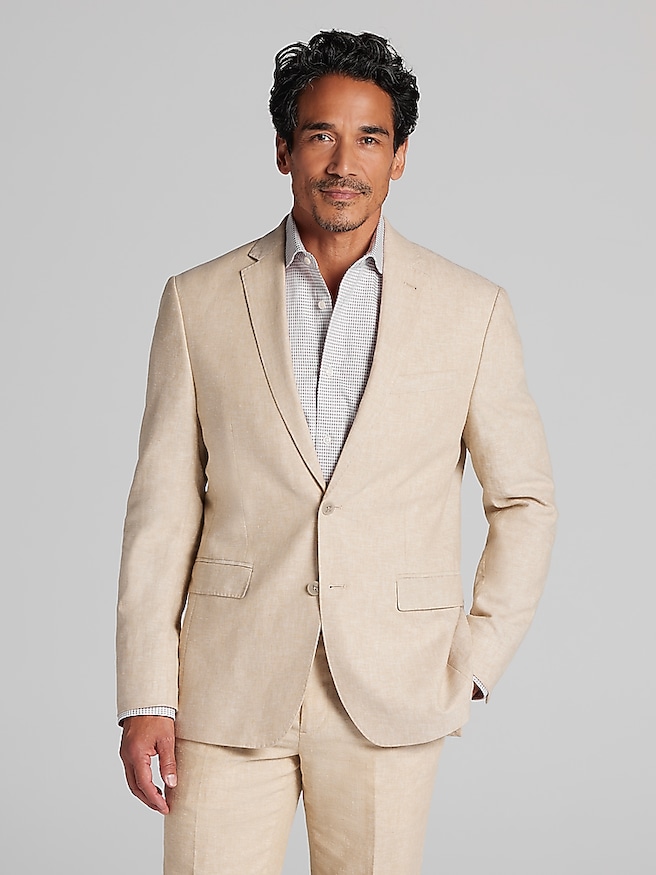
Proportion connects jeans to the rest of an outfit. A narrow leg opening tends to sit neatly over low-profile sneakers or loafers, while a wider opening leaves more space around boots. Inseam length affects that relationship: a hem that just meets the shoe creates a cleaner line, whereas extra length produces folds that can make even a tapered cut appear bulky. A small cuff can suit a casual outfit, provided it does not create a thick roll or distort the leg shape. Through the upper body, a jacket should balance the jeans rather than compete with them; the Fit Jackets page offers a related starting point for building that combination. A trim jacket and dark denim can work well for an informal gathering, while a more relaxed silhouette pairs naturally with a simple knit shirt and sneakers. Jeans also make a useful gift for a partner, father, adult son, or friend when their preferred waist size, inseam, and fit are known. Checking the measurements and fabric label of a pair they already enjoy wearing is more reliable than guessing from appearance alone. Once jeans become a regular part of the rotation, thoughtful care helps preserve both their fit and finish. The garment’s care label takes priority, since washes, dyes, and stretch blends can require different treatment. Turning jeans inside out, washing with similar colors, and using a gentle cycle when permitted can help limit abrasion and fading. Dark denim may transfer color, especially when new, so contact with light upholstery or pale shoes deserves some attention. Excessive heat can contribute to shrinkage and affect stretch fibers; air-drying or using the label’s recommended dryer setting helps reduce that risk. Small repairs to a loose seam or worn pocket edge can extend wear before the damage spreads. With suitable proportions, a comfortable fabric, and care matched to its construction, a dependable pair of jeans can earn its place through ordinary routines rather than needing a special occasion.