Essential socks are everyday wardrobe staples that bring comfort, coverage, and a finished look to everything from sneakers and chinos to leather lace-ups and a suit. Their usefulness comes from details that are easy to overlook until a pair slips under the heel, bunches beneath the toes, or feels too thick inside a shoe. A dependable everyday sock sits smoothly against the foot, has enough stretch to move naturally, and stays in place without leaving an uncomfortably tight band around the leg. The right length depends on both the footwear and the setting. No-show socks keep a low profile inside loafers and casual sneakers, while ankle socks offer modest coverage for relaxed outfits and active routines. Crew socks extend up the lower leg and work with a broad range of casual shoes and boots. Dress socks typically have a finer knit that fits comfortably inside more closely fitted footwear, with mid-calf and over-the-calf lengths providing coverage beneath tailored trousers. That extra height matters when sitting across a conference table or crossing a leg at a wedding reception, when a trouser hem naturally rises. Fit involves more than the size printed on a package: the heel pocket should align with the heel, the toe area should allow comfortable movement, and the fabric should lie flat rather than gather beneath the arch. Socks stretched beyond their intended size may pull at the toes or wear prematurely, while oversized pairs can create folds that rub during a long walk. For someone who moves between a desk, a commute, and an evening out, a smooth, secure fit can be more useful than heavy cushioning. For extended periods on foot, a little padding under the heel and forefoot may add welcome comfort, provided the shoe has room for it. Everyday socks work best when their thickness, height, and construction suit the shoes and activities they accompany, rather than asking one style to serve every purpose.
Materials give essential socks much of their character, affecting how they feel against the skin, manage moisture, hold their shape, and stand up to repeated washing. Cotton is familiar for its softness and absorbency, and cotton blends often combine that comfortable feel with fibers selected for stretch or strength. Because cotton can retain moisture, someone with an active commute or a job that involves frequent walking may prefer a blend designed to move moisture away from the skin. Merino wool offers a soft feel in finer grades and can help manage moisture and resist odor, although performance depends on the fabric blend and construction. Polyester and nylon are common in everyday and activity-focused socks; polyester can contribute to moisture management and faster drying, while nylon often adds strength in areas exposed to friction. Small amounts of elastane or spandex help the knit stretch and recover so the sock follows the foot without becoming loose after a few hours. Fiber content alone does not tell the whole story. A dense, even knit, a well-shaped heel, and neatly finished seams all influence comfort and longevity. Reinforcement at the heel and toe can help address the places that rub most often against a shoe’s lining. Flat or smoothly finished toe seams may feel less noticeable across the front of the foot, especially in fitted dress shoes. Terry cushioning creates a softer underfoot surface, but additional padding also takes up space, making a lightly cushioned pair more practical in some shoes than a thick one. Care helps preserve those features. The care label should determine washing and drying methods, particularly for wool blends or delicate knits. Turning socks inside out can help expose the areas that collect perspiration and skin oils, while avoiding excessive dryer heat can help protect elastic fibers. Letting pairs dry fully before wearing them again and rotating through several pairs can reduce repeated stress on the same fabric. Thinning heels, persistent sagging, and roughened toe seams are useful signs that a once-comfortable pair is no longer performing as intended.
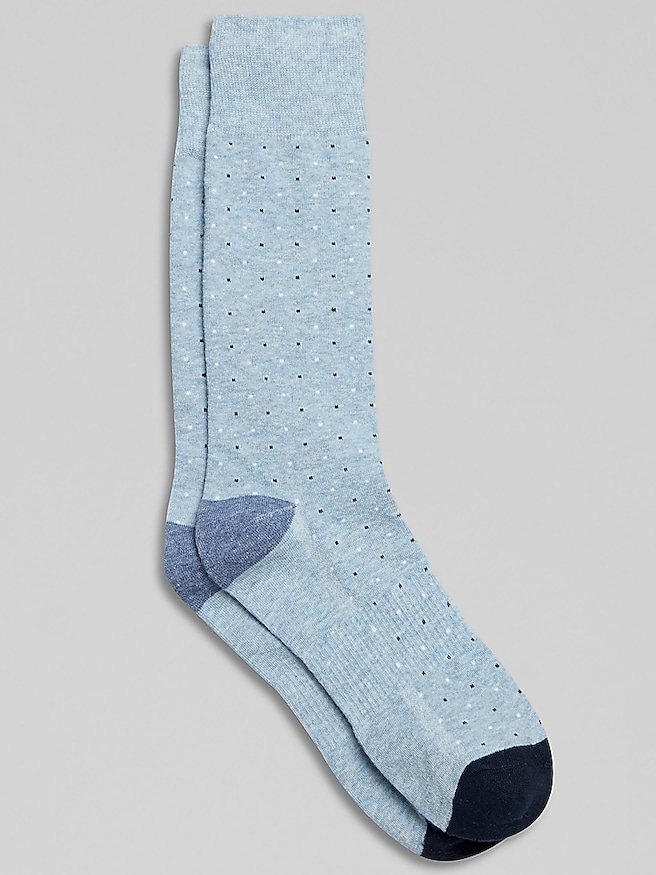
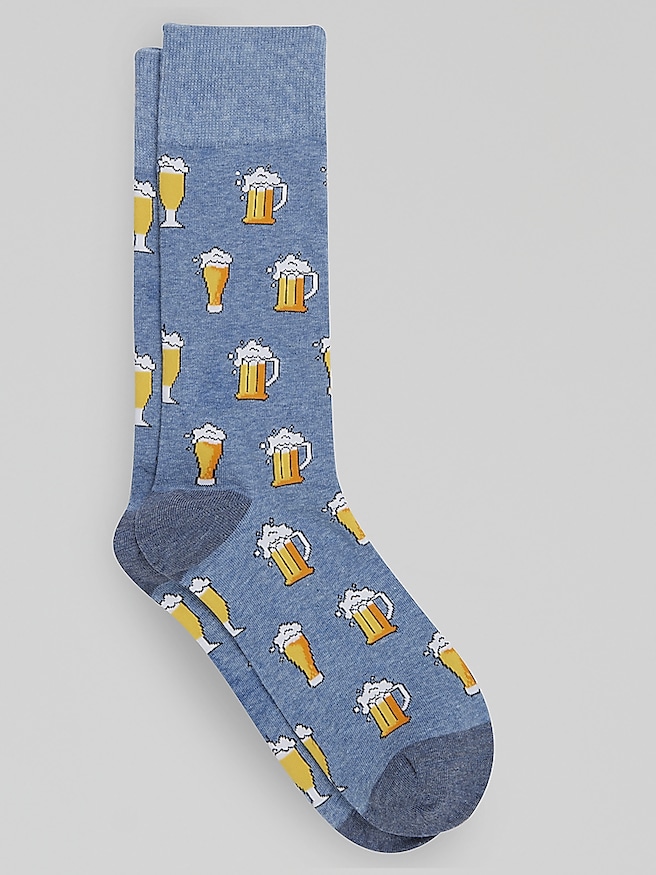
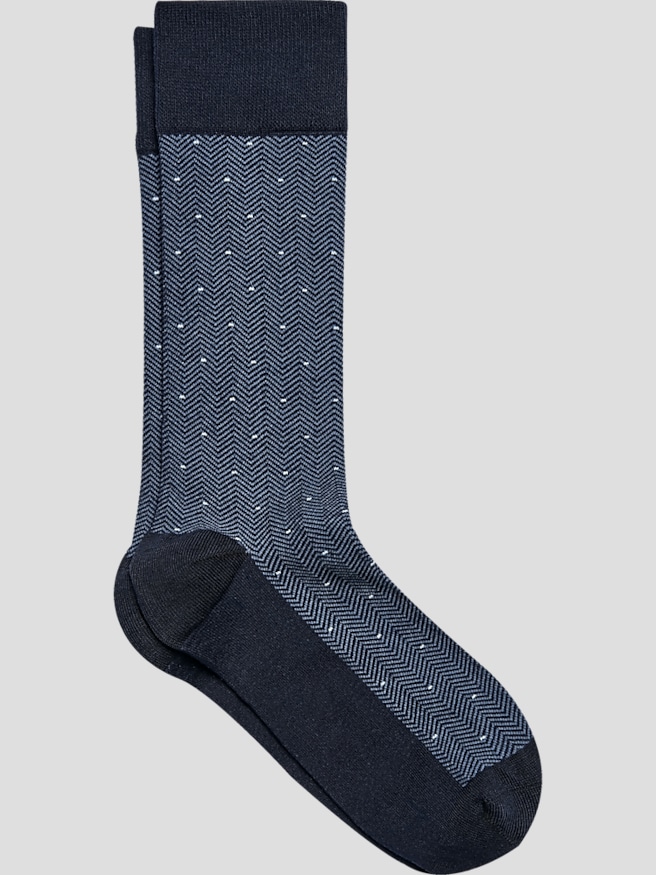
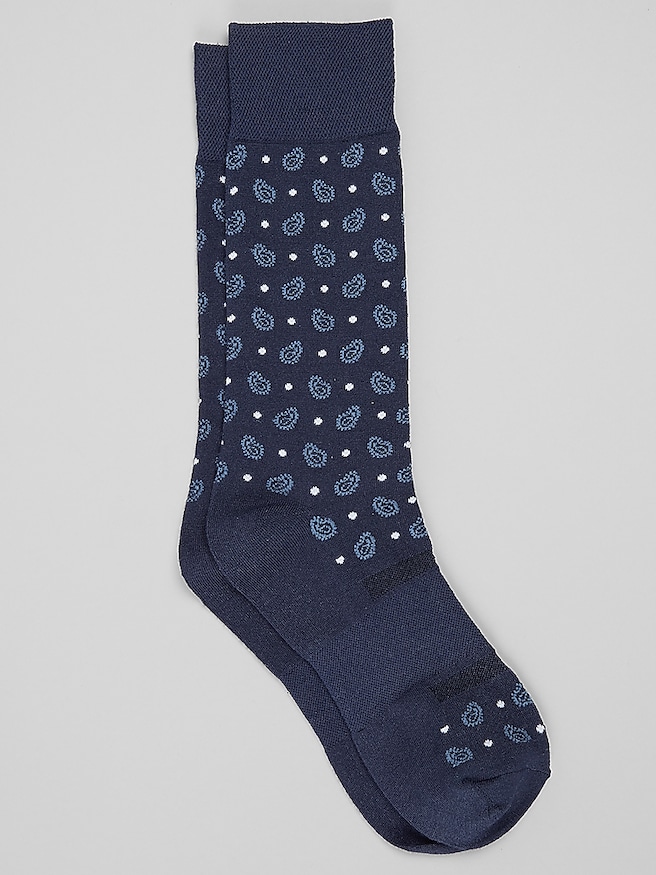
Color and pattern make socks part of the outfit rather than simply a layer hidden inside a shoe. Navy, charcoal, black, and brown offer straightforward foundations for a wardrobe built around tailored trousers, denim, and chinos. With dress clothing, socks close in color to the trousers create a continuous line through the lower leg, especially when the hem lifts while walking or sitting. An exact match is not always necessary; a similar depth of color often looks more natural than a sharp contrast. Fine ribbing, subtle texture, and small repeating patterns add interest without competing with a patterned shirt or tie. A restrained stripe or geometric motif can pick up a secondary color elsewhere in an outfit, giving the combination a considered finish without making every accessory match. For more expressive colors and patterns, Designer Socks offer another way to bring personality to everyday and dressed-up looks. The occasion still shapes what feels appropriate: a quiet solid works well for a job interview, while a patterned crew can add character beneath cuffed chinos at a casual dinner. Socks also make a practical gift for a graduate building a professional wardrobe, a frequent traveler refreshing everyday basics, or someone who appreciates small details in personal style. Shoe size, preferred sock height, and usual footwear provide better clues than color alone. A person who wears slim leather shoes most days is likely to get more use from fine-gauge dress socks than heavily padded athletic styles, while someone who lives in sneakers may prefer a soft crew with modest cushioning. Having a few complementary sock types makes getting dressed simpler: smooth pairs for tailored clothing, comfortable crews for casual wear, and low-cut options for footwear that calls for less visible coverage. The most useful assortment reflects actual routines, with enough consistency in fit and feel that reaching into the sock drawer is an easy part of the day.