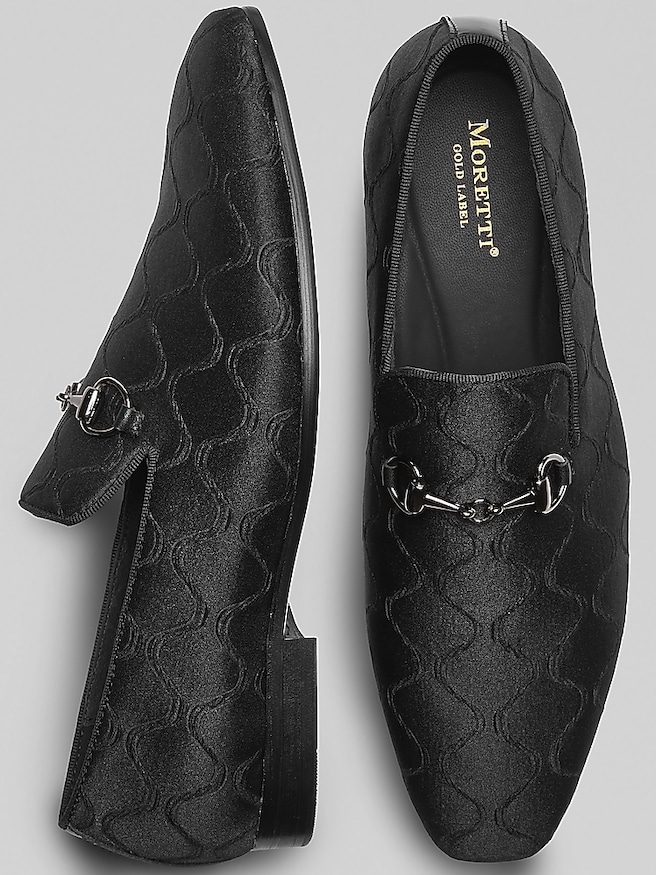
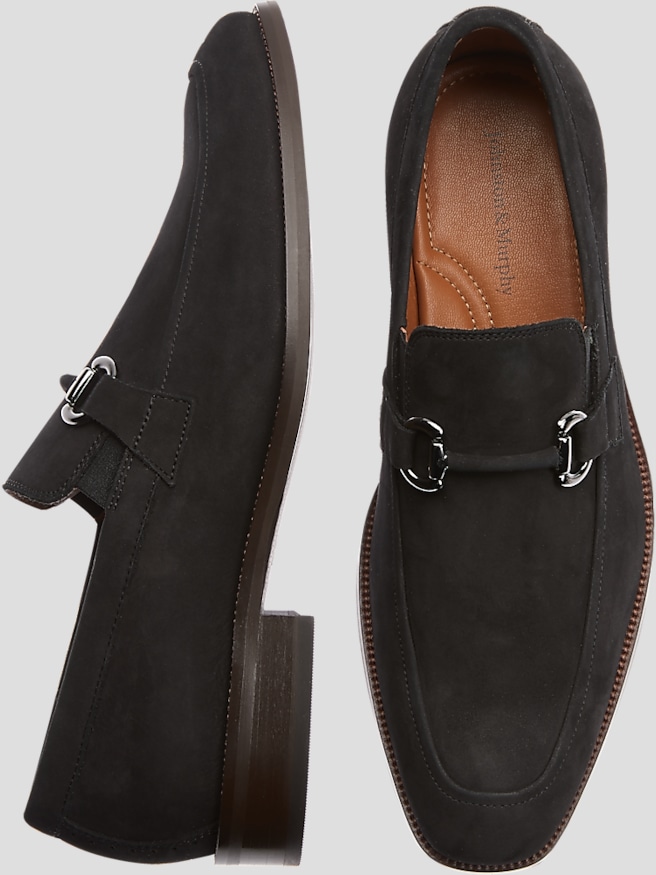
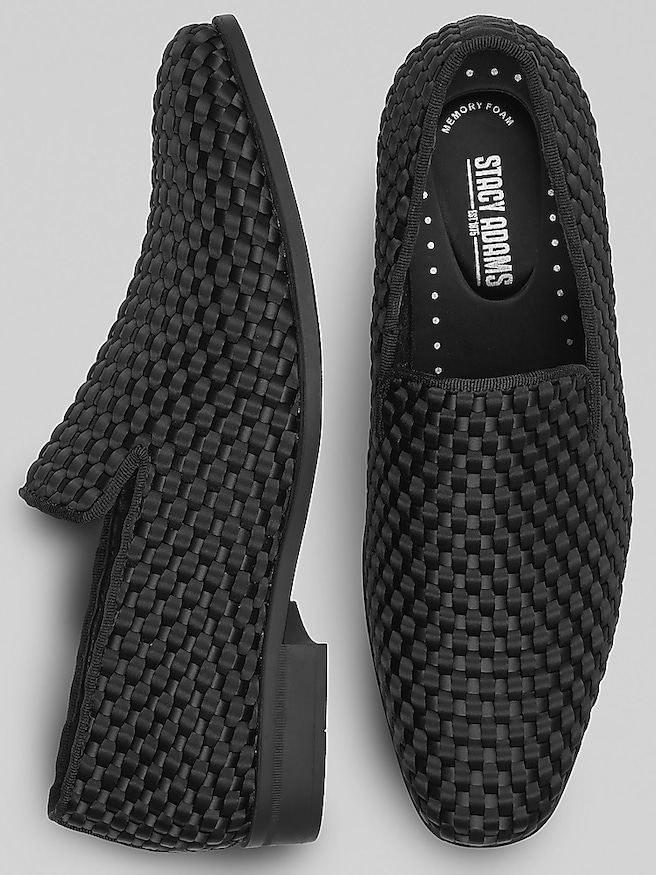
Embellished loafers bring a distinctive finishing touch to dressed-up looks, pairing the ease of a slip-on shoe with details that deserve a closer look. A metal bit across the vamp, a neatly tied tassel, an embroidered motif, or a scattering of crystals can change the character of an otherwise simple silhouette. Some embellishments add just a glint of light beneath a trouser hem; others make the shoe the focal point of the outfit. That range gives embellished loafers a place at wedding receptions, cocktail parties, milestone dinners, and other occasions where personal style belongs alongside a polished appearance. The shape of the shoe matters as much as its decoration. A gently tapered toe tends to look sleek with tailored trousers, while a rounded toe and more substantial sole can give the same decorative detail a relaxed feel. Low-profile hardware often works well with a suit or a sport coat and dress pants, particularly when its finish complements a watch or belt buckle without matching every accessory exactly. More expressive embroidery and sparkling accents can sit comfortably against a quieter backdrop: dark trousers, a crisp shirt, and a jacket with clean lines. For events with a defined dress code, the overall formality of the shoe should come first; an understated dress loafer and a theatrical evening slipper do not serve precisely the same purpose. Trouser length also affects how the details read. A hem with little or no break leaves the vamp visible, while excess fabric can obscure the embellishment and interrupt the shoe’s outline. Fine dress socks create a continuous line with tailored pants, and discreet no-show socks can support an exposed-ankle look in settings where that styling feels appropriate. The appeal is not simply added decoration. It is the contrast between familiar tailoring and a small, deliberate expression of personality, whether that means a restrained metallic accent for an anniversary dinner or a bolder finish for a celebratory night out.
Materials give embellished loafers much of their visual depth and help determine how they feel over hours of wear. Smooth leather provides a clean background for hardware and can develop subtle character with proper care. Suede has a softer, matte surface that makes polished accents stand out, while velvet gives embroidery and decorative stones a rich backdrop suited to dressier settings. Fabric and synthetic uppers vary widely in flexibility, breathability, and cleaning requirements, so material information matters more than appearance alone. For a look defined more by the surface itself than by added ornament, Textured Loafers offer a related direction to consider alongside decorative details. Inside the shoe, a smooth lining and thoughtfully placed cushioning can make a meaningful difference during a long reception or an evening spent moving between dinner and a dance floor. A soft footbed, however, cannot compensate for the wrong size or shape. Because loafers have no laces to adjust, they rely on a secure fit through the instep and heel. The heel should remain comfortably seated while walking, without pronounced lifting or friction, and the toes need room to rest naturally rather than pressing against the front or sides. An embellished strap or rigid decorative piece across the vamp may make that area less forgiving, especially for a higher instep. Leather can soften with wear, but a painfully tight shoe is not a sound starting point. Trying loafers with the type of socks intended for the occasion gives a more useful sense of fit, as does walking far enough to notice pressure at the toe joints or heel. Sole construction deserves attention, too. A slim leather sole contributes to a traditional dress profile, while rubber components can add flexibility and traction, depending on their design. Neither appearance nor sole material alone guarantees comfort or grip. The best match accounts for the wearer’s foot shape, the amount of standing involved, and the surfaces encountered throughout the event.
The durability of embellished loafers depends on both the underlying construction and the way decorative elements are attached. Even stitching, neatly finished edges, and firmly secured hardware are useful details to notice. Tassels should sit securely at their attachment points, embroidery should appear tidy, and raised accents should not feel loose or catch easily on a trouser hem. Delicate ornamentation naturally calls for more care than an undecorated upper, particularly when shoes brush against chair legs, stair edges, or each other beneath a table. Keeping the finish looking sharp starts with care suited to the material. Smooth leather generally benefits from gentle cleaning and an appropriate conditioner or polish, used according to the care instructions and tested in an inconspicuous area first. Suede usually needs a dedicated brush and products intended for its nap; ordinary leather polish can alter its surface. Velvet and embroidered fabrics require a light touch, and decorative stones, metallic threads, and hardware should be kept clear of products that could cloud, discolor, or loosen them. Dust around embellishments can often be lifted carefully with a soft, dry brush rather than vigorous rubbing. After wear, allowing shoes to air out before storing them helps manage moisture, while correctly sized shoe trees can support the shape of suitable leather styles without stretching the upper. Separate soft bags help keep hardware on one shoe from scratching the other. Putting loafers on with a shoehorn also protects the heel counter from repeated crushing. For anyone choosing embellished loafers as a gift, familiar fit preferences and the recipient’s usual occasions are more useful clues than decoration alone. Someone who regularly wears tailored clothing may appreciate subtle hardware, while a person drawn to expressive eveningwear may enjoy a more noticeable accent. With the right balance of fit, material, and ornament, these shoes can become a distinctive part of a dress wardrobe rather than a finishing touch reserved for a single photograph.