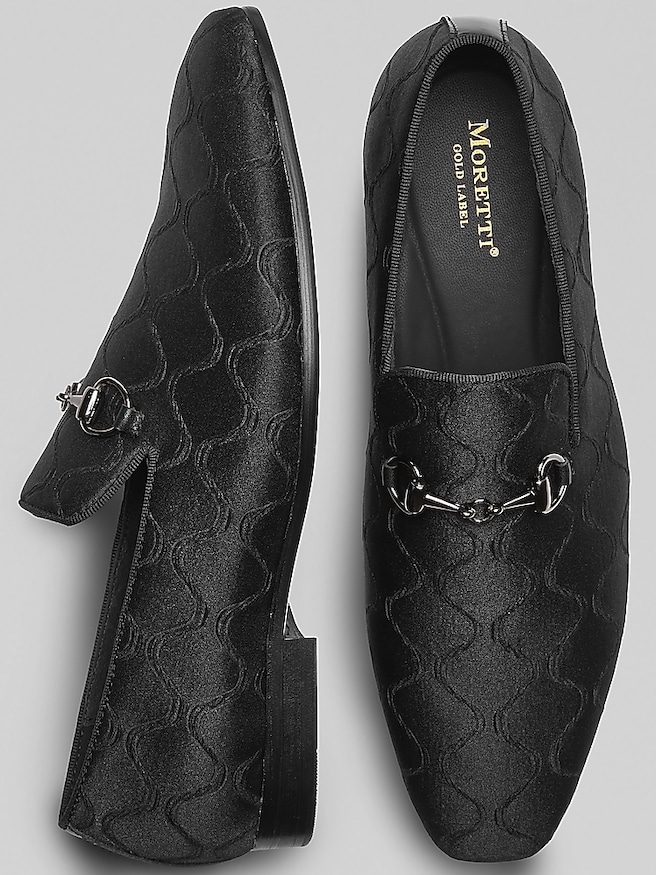
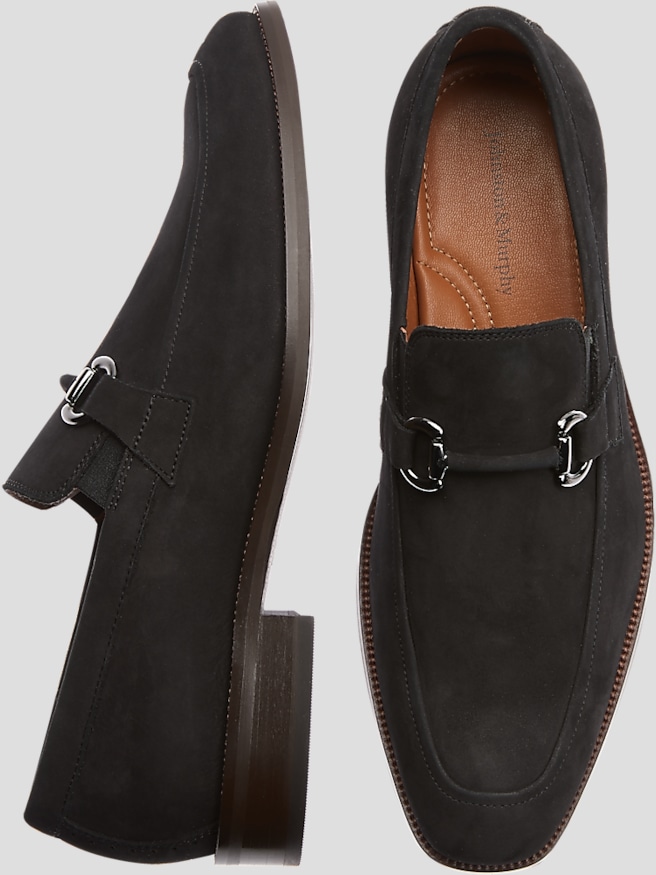
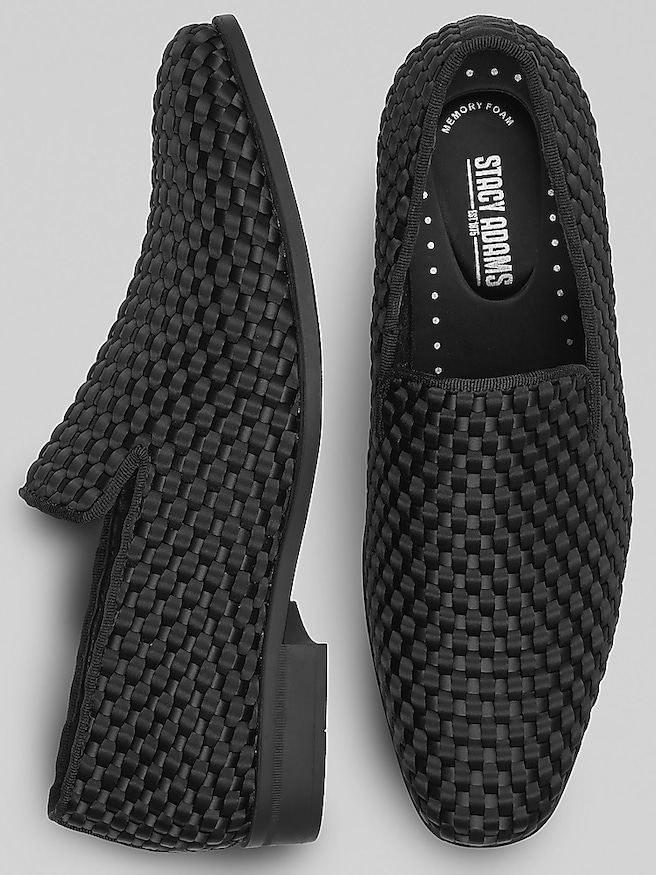
Textured loafers are slip-on shoes with visible or tactile surface detail, such as pebbled leather, brushed suede, woven uppers, or embossed patterns. Their appeal comes from the contrast between a straightforward silhouette and a material that gives the shoe depth. A fine grain can make a dark loafer feel more relaxed than a smooth leather dress shoe, while a pronounced weave or raised pattern can become the focal point of an otherwise simple outfit. For men who prefer understated clothing, that detail offers a practical way to add interest without introducing a bright color or bold print. Texture also changes how a shoe catches the light: suede has a soft, matte appearance, pebbled leather creates subtle highlights, and embossed surfaces give the upper a more defined pattern. The construction matters as much as the finish. An apron toe outlines the front of the shoe with a visible seam, a penny strap adds a familiar tailored element, and a tassel brings movement to the upper. A low-profile sole generally keeps the shape closer to traditional dress footwear, while a thicker sole gives it more visual weight. Neither approach is automatically dressier or more comfortable; the complete design, materials, and fit determine how the shoe wears. When choosing textured loafers for everyday use, consider whether the surface should blend into an outfit or stand apart from it. A compact grain in black or deep brown is easy to combine with patterned shirts and tailored separates. A larger woven pattern or pronounced embossing often looks best alongside quieter fabrics, where its detail remains clear. The most useful choice is one that fits the settings already on the calendar, whether that means a business-casual office, a dinner reservation, or a celebration with a smart-casual dress code. Loafers can also make a thoughtful gift for a graduate, partner, or family member who enjoys polished everyday dressing, especially when the recipient’s size and preferred shoe shape are known.
Materials, lining, and sole construction help determine how textured loafers feel after the first few steps. Pebbled leather may disguise minor surface marks better than a highly polished finish, although its durability still depends on leather quality, construction, and maintenance. Suede offers a velvety nap and a less formal appearance, but that surface needs its own brush and suitable protective treatment rather than standard shoe polish. Embossed leather carries a pressed pattern, so cleaning products should be compatible with the underlying material as well as its finish. Woven leather can bring flexibility and intricate detail, though an open-looking upper does not necessarily mean an unlined or highly breathable shoe. Textile and synthetic uppers have their own care requirements; the material label is a better reference than appearance alone. Inside the shoe, lining seams, footbed shape, and space across the forefoot all affect comfort. Because loafers have no laces to adjust, a secure fit through the heel and instep is especially important. The heel should stay reasonably settled during a normal stride without a loose, lifting sensation at every step. Toes need room to rest naturally, and the upper should not pinch the widest part of the foot or press sharply across the top. Try them with the sock thickness intended for regular wear, then walk far enough to notice rubbing, sliding, or pressure rather than judging only while seated. Leather may soften with use, but a shoe that is too short or painfully tight is not a sound fit. Underfoot, cushioning can soften contact with hard floors, while sole flexibility affects how naturally the shoe moves through a step. Rubber outsoles often provide useful traction, though grip varies with the tread and walking surface. Leather soles offer a traditional profile but can feel slick on smooth flooring. For a day split between a desk, hallways, and several blocks on foot, comfort should be evaluated across all three settings. Neat stitching, secure sole attachment, and an evenly finished interior are useful signs to examine, but texture alone is not a measure of quality.
Styling textured loafers starts with the relationship between the shoe’s finish and the rest of the outfit. Brown pebbled leather works naturally with navy trousers, a light blue button-down, and a belt in a compatible brown tone; the colors can coordinate without matching exactly. A suede loafer can soften the look of tailored pants and an unstructured jacket, making the combination feel appropriate for a relaxed client lunch or an evening out. Black textured loafers with a restrained profile can complement charcoal trousers and a fine-gauge knit, especially when the trouser hem falls cleanly instead of bunching over the shoe. With jeans, a straight or gently tapered leg usually gives the loafer enough space without hiding its shape. Very distressed denim creates a stronger contrast with refined footwear, while a clean, dark wash keeps the overall effect more composed. Socks can either extend the line of the pants or add a controlled accent; a small pattern is often easier to balance when the upper already has noticeable texture. No-show socks offer a less visible option with cropped or ankle-length pants, provided they stay in place and do not cause heel friction. For occasions where decorative details are the main attraction, Embellished Loafers provide another direction, emphasizing accents rather than surface texture alone. A textured loafer’s suitability for a wedding or other dressed-up event depends on the invitation and the shoe’s overall formality, not simply its color. After wear, a little consistent care helps preserve both appearance and structure. Remove loose dust before it settles into grain or seams, and use a soft brush to reach recessed areas without aggressive scrubbing. Follow material-specific cleaning instructions, test treatments in a discreet spot, and avoid saturating textured uppers. Let shoes dry naturally away from direct heat if they become damp. Shoe trees can help maintain the shape of leather footwear, while allowing pairs to rest between wears gives interiors time to air out. Keeping an eye on worn heels, loose stitching, and thinning soles makes it easier to address small problems before they affect comfort or the shoe’s structure.