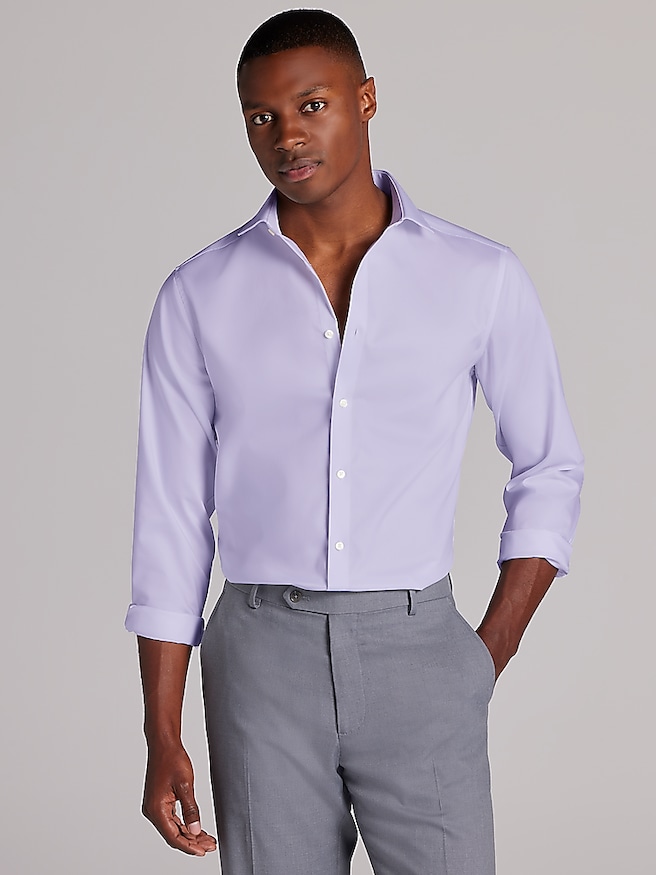
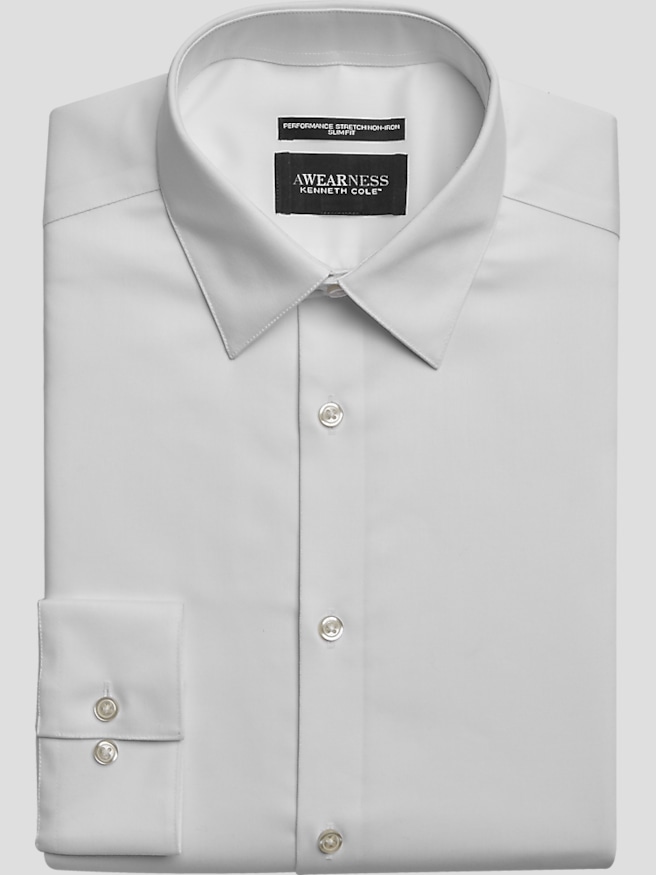
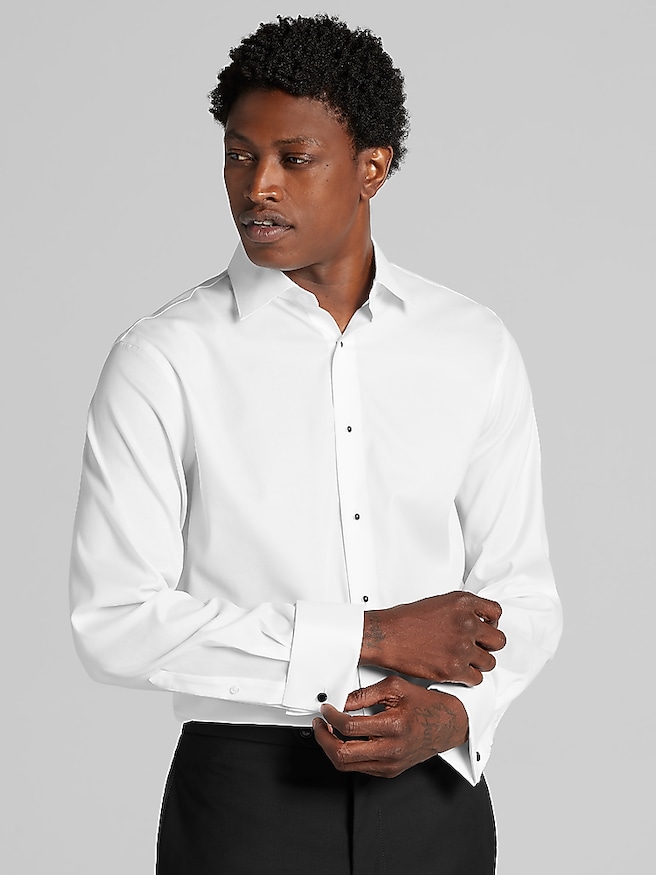
Elegant men's dress shirts bring definition to a tailored outfit through clean lines, balanced proportions, and fabric that looks refined at close range. Their appeal is not limited to highly formal occasions: a crisp collar can sharpen a workday suit, while a subtle woven texture adds depth beneath a blazer at a dinner or reception. Cotton is a traditional choice because it absorbs moisture, feels comfortable against the skin, and can be pressed to a smooth finish. The weave helps determine the shirt's appearance and feel. Poplin typically has a fine, flat surface that works well with sleek tailoring, while twill has a diagonal weave that often gives the fabric a softer drape and a little more visual depth. Pinpoint Oxford offers a restrained texture that bridges business and more relaxed dress codes; a coarser Oxford cloth generally reads as less formal. Dobby weaves can introduce small geometric patterns without the contrast of a printed design. Cotton blends may add wrinkle resistance or stretch, although the feel and care requirements depend on the fiber mix and finishing. A higher thread count alone does not establish quality; yarn quality, fabric construction, and finishing also affect softness, opacity, and wear. Color plays an equally important role. The appeal of Elegant White Shirts lies in their clear contrast against dark tailoring and their compatibility with an extensive range of ties. Pale blue offers another versatile foundation, while fine stripes and small checks can add interest without dominating an outfit. With a patterned suit or an expressive tie, a quieter shirt helps keep the overall look composed. Under a solid jacket, a discreet texture can provide the detail that makes an otherwise simple combination feel considered. Fabric opacity matters, too: a very fine white cloth may reveal an undershirt more readily than a denser weave. These small distinctions separate a shirt that merely meets a dress code from one that feels suited to the person wearing it.
Fit gives elegant men's dress shirts much of their polish, especially when a jacket comes off during a meeting or celebration. A shirt should follow the body without pulling across the chest, straining at the buttons, or collecting in excessive folds around the waist. Slim, tailored, and classic fit labels describe general silhouettes, but their measurements can vary, so neck, chest, and sleeve dimensions provide a more useful basis for comparison. Shoulder seams generally sit near the outer edge of the shoulders, helping the sleeves hang cleanly. The collar should button comfortably without pressing into the neck, and the sleeves should allow the arms to reach forward without dragging the cuffs far up the forearms. A small amount of shirt cuff showing below a jacket sleeve creates a deliberate finish rather than an accidental mismatch. Enough length through the body helps the hem stay tucked when sitting, standing, or reaching across a conference table. Back pleats and shaped side seams affect room and silhouette in distinct ways; extra fabric can support movement, while closer shaping reduces fullness beneath a fitted jacket. Collar and cuff design further influence the impression. A point collar creates a relatively narrow frame for a tie, while a spread collar leaves more space for the knot. The collar opening and tie knot look most balanced when neither overwhelms the other. Button-down collars have a more relaxed character, even when paired with tailoring. Barrel cuffs close with buttons and suit a broad range of business and social settings; French cuffs require cufflinks and bring a more ceremonial touch. With an open collar, the fabric and collar construction help determine whether the neckline stands neatly or falls flat. For an important presentation, an understated shirt keeps attention on the speaker. At a wedding reception, the same attention to collar shape, sleeve length, and clean fit helps an outfit look finished through photographs, dinner, and time on the dance floor.
Lasting refinement also depends on construction and care. Even stitching, securely attached buttons, smooth seams, and neatly finished buttonholes are useful signs of careful workmanship, though no single detail guarantees durability. The collar and cuffs deserve particular attention because they experience repeated friction and contact with skin. A substantial fabric can feel reassuring, but weight alone does not establish longevity; a well-made finer cloth can perform well with appropriate handling. Wrinkle-resistant finishes may reduce creasing and simplify upkeep, but they do not necessarily eliminate the need for pressing. Stretch can make seated work and everyday movement more comfortable, while the garment's care label remains the best reference for protecting the fibers and finish. Washing and drying methods should suit that label rather than a blanket rule for all dress shirts. Excessive heat can damage some blends, affect finishes, and contribute to shrinkage. Prompt attention to collar marks and spills helps prevent buildup, and removable collar stays should be taken out before laundering. Where the care instructions permit, pressing cotton while slightly damp can help smooth the surface; textured weaves need enough care to preserve their character rather than flattening every detail. Hanging a clean shirt on a supportive hanger helps maintain its shape between wears, and allowing it to dry fully before storage protects both fabric and freshness. These practical considerations matter for someone wearing a dress shirt several days a week as much as for someone dressing for an occasional ceremony. A dependable shirt can serve a first job interview, a business dinner, a graduation, or an anniversary celebration without needing an elaborate outfit around it. As a gift for a partner, father, brother, or recent graduate, a dress shirt feels more personal when the size reflects actual neck and sleeve measurements and the styling matches the recipient's routine. Understated color, comfortable movement, and manageable care help turn a polished piece of clothing into something that gets worn with confidence.