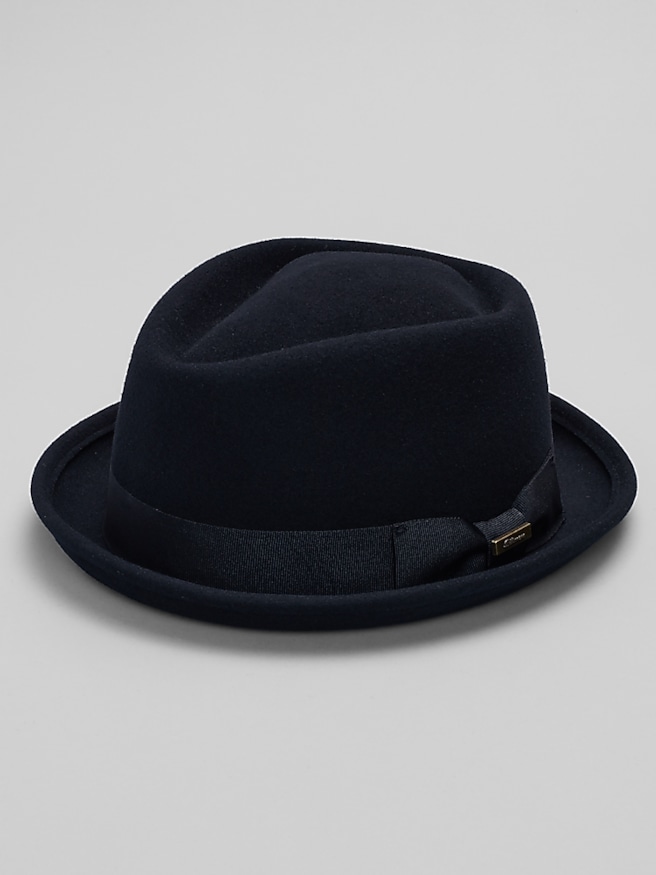
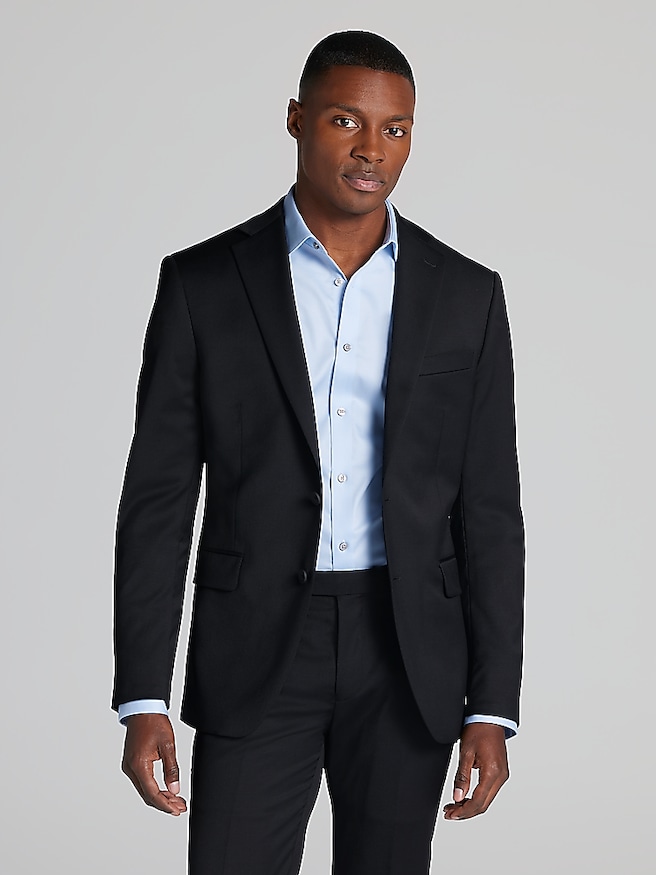
Dress fedoras are soft-brimmed hats distinguished by a shaped crown, often with a lengthwise crease or teardrop indentation and a pinch near the front. A ribbon or band around the crown gives the silhouette a finished edge, while the brim frames the face and helps establish the hat’s character. That combination makes a fedora a natural companion to tailored clothing without limiting it to a full suit. With a navy two-piece, a restrained felt fedora can echo the clean lines of the jacket; with a textured sport coat and dress trousers, it can lend the outfit a more relaxed, expressive finish. The distinction between a dress fedora and a more casual hat usually comes from the material, proportions, trim, and overall construction rather than a single defining detail. A smooth felt surface, an evenly shaped brim, and a simple band tend to look refined, while pronounced texture or contrasting trim creates a stronger visual accent. Brim widths vary, with many traditional styles falling around two to three inches, though narrower and wider proportions also belong to the category. A broader brim creates a more pronounced outline, while a shorter brim keeps the profile compact. Crown height matters just as much: a taller crown adds vertical emphasis, and a lower crown sits more discreetly within an outfit. Neither proportion is inherently more formal; the relationship between the hat, the wearer, and the clothing makes the difference. Charcoal, black, brown, and navy are familiar choices because they work with many tailored wardrobes. Exact color matching is not necessary. A brown fedora can complement a blue jacket through contrast, while a charcoal hat can sit comfortably alongside gray trousers and a patterned tie. For dinners, theater outings, receptions, and other occasions that call for thoughtful dressing, the appeal lies in a recognizable silhouette that feels deliberate rather than elaborate.
Materials give dress fedoras much of their personality, affecting everything from the surface finish to the way the crown holds its shape. Wool felt typically has a substantial, softly textured hand and can support a clearly defined crease. Fur felt, made from fibers such as rabbit or beaver, can offer a fine, dense finish and a supple feel, although quality depends on the fibers, felting process, and workmanship rather than the material name alone. Blends bring their own balance of texture and structure. Woven straw fedoras introduce a distinctly textured surface, with the fineness and consistency of the weave contributing to their appearance and strength. Across these materials, careful construction shows in an even brim, secure stitching, neatly attached trim, and a crown that looks balanced from the front and side. A bound brim has fabric finishing around the edge, while a raw edge leaves the felt exposed for a simpler outline. Neither treatment is automatically better; each changes the visual weight of the hat. Inside, a sweatband provides the main point of contact with the head, and a lining can create a smoother interior finish. Leather and fabric sweatbands feel different against the skin, making personal comfort an important consideration alongside appearance. A well-fitting fedora rests securely without creating pressure across the forehead or temples. It should not need to be pulled down tightly to stay in place, and it should not slip low over the eyes with ordinary movement. Measuring around the head where the sweatband will sit provides a useful starting point, but size charts and the shape of the crown also matter. Hair volume, head shape, and eyeglass frames can affect how a hat feels in practice. Someone who wears glasses may appreciate enough clearance to keep the brim and sweatband from pressing on the frames. Comfort is especially noticeable during a long reception or an evening out, when a hat should feel like part of the outfit rather than something that constantly needs adjusting.
The most versatile dress fedoras have proportions and details that make sense with clothing already in regular rotation. A simple ribbon band can relate to a dark belt or pair of dress shoes without requiring every accessory to match, while a patterned band may work best when the shirt and tie are comparatively restrained. For someone exploring Men's Dress Hats, the fedora offers a distinctive middle ground between understated tailoring and a more expressive personal style. It can become a familiar finishing touch for a man who enjoys dressing for dinner, or a thoughtful gift for a father, brother, partner, or friend with an interest in classic clothing. Birthdays, anniversaries, and personal milestones can suit this kind of gift, particularly when the recipient’s head measurement and preferred colors are known. The intended setting deserves consideration as well: a fedora may complement arrival attire for a wedding or reception, while venue customs often call for removing hats during indoor ceremonies or seated dining. Good care helps preserve the details that make the hat worth wearing. Felt benefits from gentle brushing with a suitable hat brush to lift surface dust, while woven materials generally need a lighter touch and cleaning methods appropriate to their construction. Manufacturer care instructions take precedence, especially for trim, linings, and sweatbands that may respond differently to cleaning. Handling the hat with both hands near the base of the brim reduces repeated pressure on the crown’s pinch. A hat stand or supportive storage box helps protect the shape, and nothing heavy should rest on the brim or crown. Unless a hat is specifically designed to be packed or crushed, folding it can leave lasting distortions. Wear at the sweatband, loose trim, and changes in shape are worth addressing early. With suitable handling and occasional attention, a well-made fedora can remain a dependable part of a tailored wardrobe, gaining familiarity without losing the clear lines that give it its appeal.