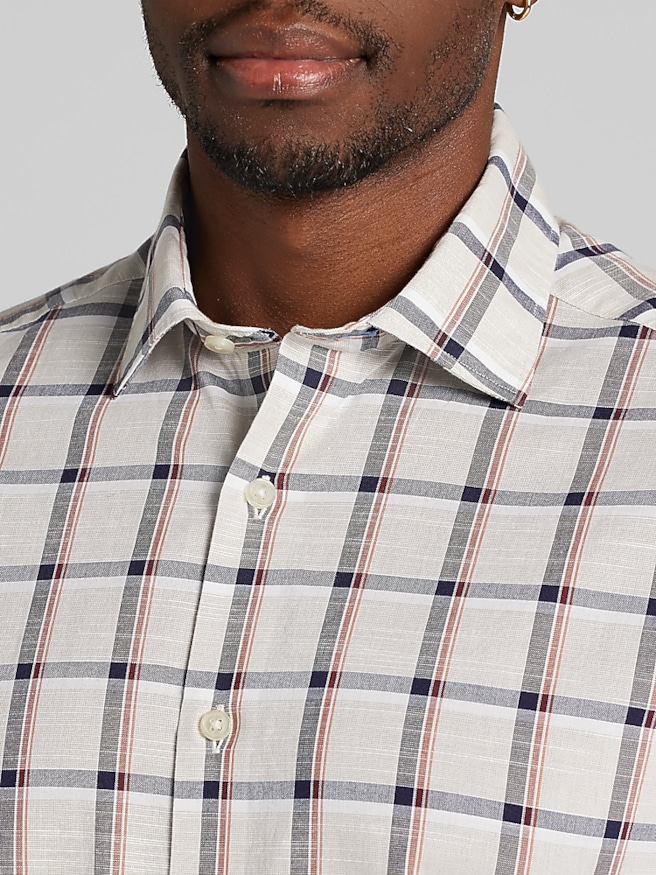
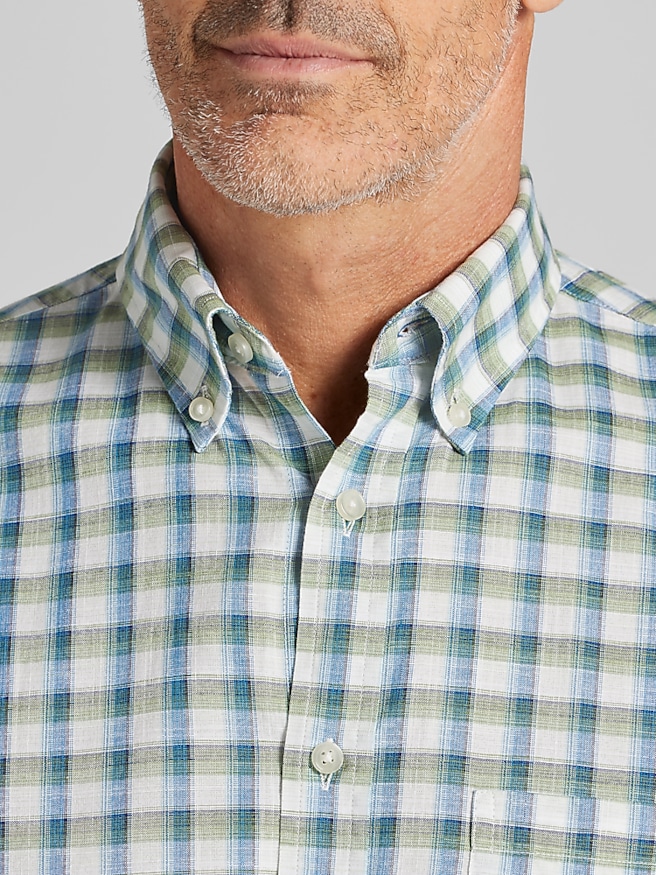
Plaid dress shirts bring intersecting lines and balanced color combinations to a polished wardrobe, offering more visual interest than a solid shirt without necessarily feeling casual. Their dressier character comes from the combination of a refined weave, a structured collar, a smooth finish, and proportions that work beneath a jacket. Unlike a rugged plaid work shirt, a dress version generally has a cleaner profile and less bulk, making it easier to tuck into tailored trousers or wear with a suit. The pattern itself can be quiet or expressive: fine lines against a light background create a restrained grid, while broader checks and stronger contrasts give the shirt more presence. Small-scale plaid in blue, gray, or other muted shades often sits comfortably beside a solid navy or charcoal jacket, allowing the pattern to show at the collar and cuffs without dominating the outfit. A larger plaid can become the focal point when paired with simple trousers and understated accessories. From a distance, some fine patterns read almost like a textured solid; up close, the intersecting lines add depth. That distinction matters in settings where a shirt needs to feel professional but not severe, such as an office presentation, a client lunch, or a dinner reservation after work. A white or pale background keeps the overall effect crisp, while deeper backgrounds produce a more pronounced contrast with lighter jackets or trousers. When a tie is part of the outfit, a solid color drawn from one of the plaid’s quieter lines creates a cohesive combination. A patterned tie can work, too, particularly when its motif differs noticeably in scale from the shirt’s checks. The result is a category with room for individual taste, from discreet patterns that complement established tailoring to bolder designs that give a familiar suit a distinct personality.
Fabric and fit shape how a plaid dress shirt feels through a full day, not just how it looks on a hanger. Cotton is valued for its breathable feel and familiar softness, with the final texture depending on the yarn and weave. Poplin typically has a smooth, relatively crisp surface that gives fine plaid lines clear definition. Twill has a subtle diagonal structure and often a softer drape, lending depth to the pattern without making the shirt feel rugged. Cotton blends can offer different balances of softness, wrinkle resistance, and ease of care, while fabrics containing stretch may provide more give across the shoulders and elbows. Stretch complements a suitable fit rather than replacing it: a shirt that pulls between the buttons or binds under the arms is still too restrictive. In a well-proportioned fit, the shoulder seams sit near the shoulder edges, the chest has enough room for comfortable movement, and the body follows the torso without gripping it. A slimmer cut creates a closer outline beneath a fitted jacket, while a roomier cut allows more space through the chest and waist. Neither shape needs to look baggy or strained. Collar size deserves equal attention, especially for anyone who wears a tie; the collar should close comfortably without pressing against the neck or leaving a conspicuous gap. Sleeve length affects both comfort and the finished appearance, with cuffs resting near the wrist and a small amount of shirt cuff showing beyond a properly fitted jacket sleeve. A longer, shaped hem helps a dress shirt remain tucked when sitting, reaching, or walking between appointments. Collar construction also changes the impression. A spread collar provides space for a fuller tie knot, while a point collar creates a narrower frame. A button-down collar can make plaid feel more relaxed, especially with the neck open. These details distinguish a shirt intended for tailored dressing from one chosen mainly for an easygoing, untucked outfit.
The usefulness of plaid dress shirts extends beyond any single dress code. A fine, low-contrast plaid can add personality to a business wardrobe, while a more noticeable check can bring structure to an outfit built around dress pants and leather shoes. For a wedding guest, the right pattern depends on the invitation and setting: a subtle plaid may suit a less formal celebration, whereas a highly formal dress code may call for a solid shirt instead. For dinners, professional gatherings, and everyday office wear, plaid offers a way to vary familiar combinations without replacing the entire wardrobe. The same shirt can look more formal with a tie and jacket or more relaxed with an open collar, provided the fabric and fit support both uses. Related Button Up Plaid Shirts offer another perspective on the pattern, particularly when comparing collar styles and dressier or more casual constructions. Long-term satisfaction also depends on care. The garment’s care label is the best reference for washing, drying, and ironing, since cotton, blended fibers, stretch components, and finishes can require different treatment. Avoiding excessive dryer heat when the label permits gentler drying can help limit shrinkage and wear; prompt removal after washing or drying can also reduce stubborn creases. Ironing at the recommended setting helps smooth the placket, collar, and cuffs, the areas most visible beneath a jacket. Removable collar stays should be handled according to the care instructions, and hanging shirts with room between them helps preserve a clean shape. Secure buttons, even seams, and neatly finished buttonholes are useful details to examine when considering durability. As a gift, a plaid dress shirt is especially thoughtful when the recipient’s neck and sleeve measurements, preferred fit, and usual wardrobe colors are known. A restrained pattern can complement an established collection of suits and trousers, while a more expressive plaid suits someone who enjoys making the shirt the centerpiece of an outfit.