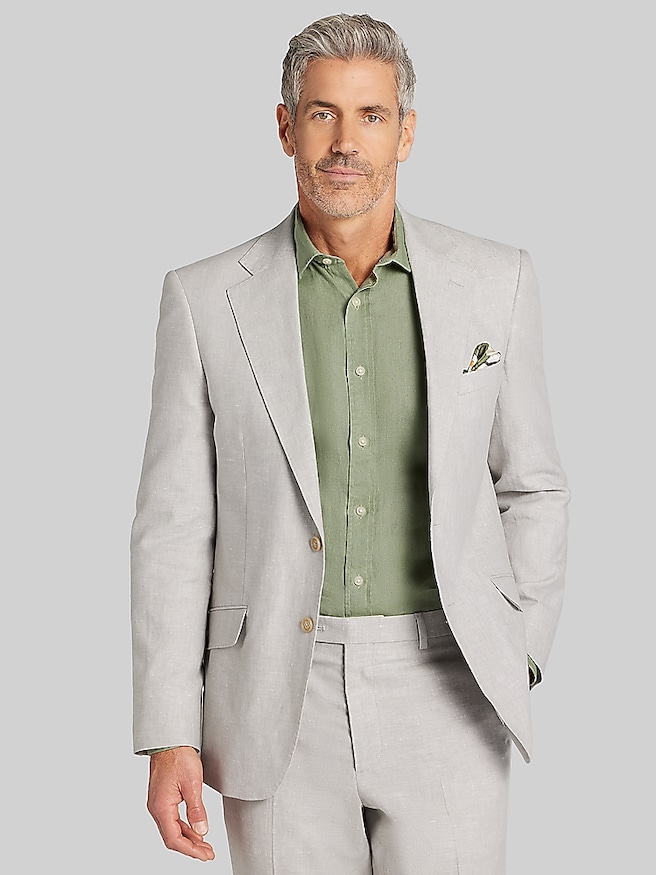
Dress clothing and suits create a put-together appearance for the moments when everyday casual clothing feels out of place: an important presentation, a wedding ceremony, a graduation, or an evening celebration. A suit brings a jacket and trousers together in matching fabric, giving the outfit a consistent color, texture, and shape from shoulders to shoes. Dress shirts, separate trousers, and tailored jackets offer more flexibility, allowing an outfit to feel formal without always requiring a matching set. Navy and charcoal are versatile foundations because they pair easily with white, light blue, and many subtle shirt patterns. Medium gray has a softer appearance, while black creates a sharper contrast and often feels more appropriate for evening events or occasions with a formal dress code. Fine stripes, small checks, and textured weaves add character without making the clothing difficult to coordinate. The distinction often comes down to how the pieces work together: a crisp shirt and restrained tie can make a patterned suit feel composed, while a textured jacket over a plain shirt creates a less formal impression. Collections of Suits and Vests reflect another approach to tailored dressing, with a vest adding a coordinated layer and keeping the outfit looking finished when the jacket comes off. A two-piece suit has a straightforward profile that works across many professional and social settings; a three-piece combination offers additional structure for ceremonies, portraits, and occasions that call for a more dressed-up appearance. Dress codes still matter, since business attire, cocktail attire, and black tie describe distinct expectations rather than interchangeable levels of formality. Within those expectations, color, lapel shape, shirt collar, and accessories leave room for personal taste. The most useful dress clothing feels appropriate for the setting without drawing attention away from the person wearing it, whether that means a quiet, familiar combination for the office or a more expressive pattern for a celebration.
Fabric and fit influence how a suit looks throughout the day, not just in the first few minutes after it is put on. Wool is valued in tailored clothing for its drape, resilience, and ability to recover from light creasing. Finer wool fabrics can have a smooth, refined surface, while more pronounced weaves create visible texture and a slightly more substantial feel. Cotton offers a recognizable natural texture in dress shirts and some tailored separates, though its tendency to crease varies with the weave and finish. Blended fabrics can combine the qualities of several fibers, and a small amount of stretch may improve ease of movement; the fiber content and care label provide a clearer picture than appearance alone. Weight, lining, and construction also affect how the garment feels. A lighter lining can reduce bulk, while a more structured jacket helps maintain a defined chest and shoulder line. Neither approach replaces good fit. Jacket shoulders should sit close to the natural shoulder without extending noticeably beyond it, and the collar should rest against the shirt collar rather than leaving a visible gap. Across the chest, a clean fit allows the jacket to close without pulling the front into pronounced folds. Sleeves that reveal a small amount of shirt cuff create a deliberate transition at the wrist. Trousers need enough room through the seat and thighs to accommodate sitting, walking, and climbing stairs without strain. A tapered leg gives a narrower outline, while a straighter cut provides a more relaxed line; both can look sharp when the proportions suit the wearer. Trouser length changes the overall impression as well, from a hem that barely meets the shoe to a slight break across its top. Someone spending a full day between a desk, a conference room, and a dinner reservation benefits from clothing that stays comfortable in each position. Durable wear depends on that balance: fabric quality matters, but repeated tension at tight seams and pockets can also shorten a garment’s useful life.
The supporting pieces make dress clothing feel complete and help a suit serve more than one purpose. A white dress shirt offers a clean backdrop for nearly any suit color, while pale blue adds subtle contrast without overwhelming the outfit. Collar shape affects how a tie sits and how the neckline looks when worn open; the collar should feel comfortable when buttoned, with enough space to avoid pressure at the neck. A tie with a modest pattern can bring interest to a plain suit, and a pocket square can add a small accent without duplicating the tie exactly. Smooth leather shoes create a more formal impression than heavily textured styles, while a belt in a similar color keeps the transition at the waist understated. For a wedding guest, these details can help an outfit feel celebratory without competing with the ceremony. For a job interview or client meeting, simpler combinations keep the focus on the conversation. Care supports that same clean appearance over repeated wear. The garment label is the starting point for washing, pressing, and professional cleaning, since different fibers, linings, and finishes respond differently to heat and moisture. Suits generally benefit from airing after wear, gentle brushing to remove surface dust, and storage on a broad hanger that supports the shoulders. Trousers hung neatly along their intended crease are less likely to develop distracting folds. An overfilled jacket pocket can distort the fabric, and leaving garments compressed in a travel bag encourages wrinkles. Prompt attention to a spill helps limit damage, though rubbing a stain can spread it or affect the surface. Dress shirts may require a different care routine from the suit itself, particularly around collars and cuffs. As gifts, dress clothing is most useful when the recipient’s measurements, preferred fit, and typical occasions are known. A graduation, a new professional role, or a milestone celebration can give tailored clothing lasting significance, especially when comfort and personal style receive as much attention as the occasion.