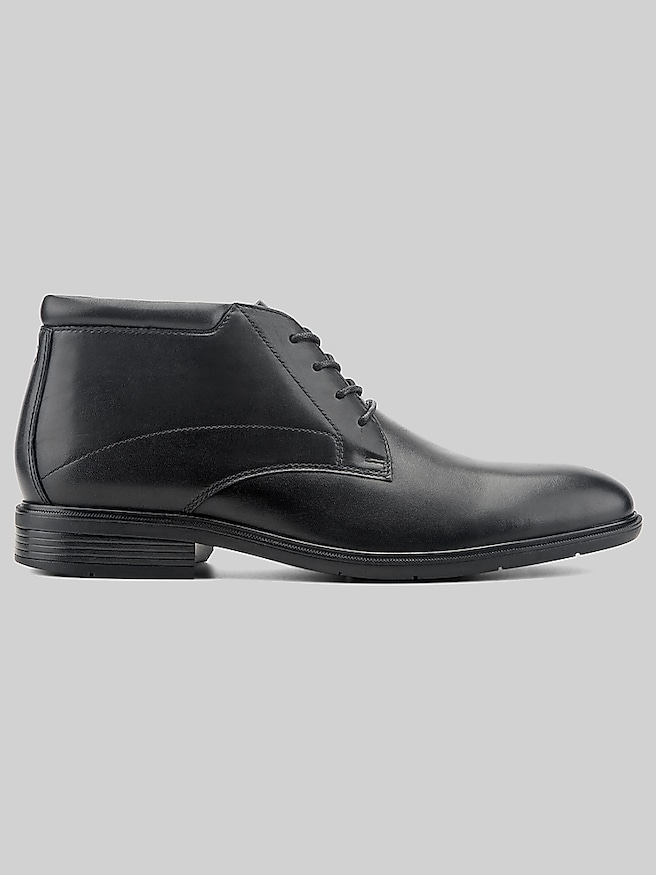
Dress boots are polished, typically ankle-height footwear that combine the refined appearance of dress shoes with the coverage and structure of a boot. Their defining qualities are a clean silhouette, an understated sole, and an upper that complements tailored clothing rather than looking rugged or heavily utilitarian. Leather dress boots can bring a finished look to office outfits, dinner reservations, wedding guest attire, and other occasions that call for thoughtful dressing without necessarily requiring traditional formal footwear. The shape and detailing make a meaningful difference. Chelsea boots use elastic side panels and a pull-on design to create a smooth profile with very little visual interruption, making them a natural complement to tapered trousers. Chukka boots generally have two or three pairs of eyelets and a shorter shaft; sleek leather versions can bridge business casual and more relaxed dressing, while textured suede gives them a softer appearance. Lace-up dress boots offer adjustable support across the instep, with plain-toe styles emphasizing simplicity and cap-toe styles adding a distinct seam across the front. Oxford-style boots, sometimes called Balmoral boots, have closed lacing that creates a particularly streamlined, dress-oriented appearance. Brogue perforations and wingtip patterns introduce decorative character, though their extra detailing usually reads less formal than smooth, unembellished leather. Western-inspired dress boots bring a different aesthetic through shaped heels, distinctive toes, and leatherwork that suits occasions where that tradition feels appropriate. Not every boot belongs with every dress code: dark, smooth leather and restrained details are generally easier to pair with a suit, while chunky soles, prominent stitching, and heavily distressed finishes lean casual. For strict black-tie settings, traditional formal shoes remain the safer choice. Within those boundaries, dress boots offer a versatile middle ground, giving a tailored outfit a little more presence while still feeling familiar enough for regular wear. Their appeal is not simply extra height at the ankle, but the way proportion, finish, and construction work together beneath a trouser hem.
Materials and construction shape how dress boots look, feel, and hold up over time. Full-grain leather retains its natural surface and can develop a distinctive patina with proper care, while other smooth leather finishes may offer a more uniform appearance. Neither a glossy finish nor a leather description alone tells the whole story; suppleness, stitching, lining, and the way the upper bends are also worth considering. Suede has a soft, textured surface that pairs especially well with flannel trousers, chinos, and less structured tailoring, although it requires different cleaning tools from smooth leather. Leather linings can help manage moisture inside the boot, and cushioned footbeds may add comfort for days that move between a desk, a commute, and an evening gathering. Sole construction matters just as much as the upper. A slim leather sole creates a traditional dress profile, while a low-profile rubber sole can offer grip and flexibility without adding a bulky appearance. Welted construction may make resoling possible, depending on the boot and the repair service, but it does not automatically guarantee a comfortable fit. Cemented construction can also provide a sleek, flexible result, though repair options may be more limited. Fit should feel secure through the heel and midfoot, with enough space for the toes to rest naturally rather than pressing against the front or sides. The widest part of the foot should sit comfortably within the widest part of the boot, and the upper should not squeeze the instep. Trying boots with the socks intended for regular wear gives a more useful sense of fit than switching sock thickness afterward. Lace-ups allow some adjustment, while Chelsea and zip styles depend more heavily on the match between foot shape and boot shape. A little initial leather stiffness can soften with wear, but pinching, numbness, or persistent heel slipping are not problems to dismiss as normal break-in. For someone who spends long stretches standing, secure fit and comfortable support deserve as much attention as a sharp toe shape.
The most successful outfits give dress boots enough room to sit neatly beneath the trousers without letting excess fabric gather around the ankle. A straight or gently tapered leg often creates a clean line, while an extremely narrow opening can catch on the boot shaft. Black leather works naturally with charcoal and many dark suits; brown leather adds warmth to navy, gray, and earth-toned separates, with the shade and finish influencing how dressy the combination feels. Matching the general color family of a belt to the boots keeps the outfit cohesive without requiring every leather accessory to be identical. For an office presentation followed by dinner, a plain-toe or cap-toe boot beneath tailored trousers can carry the same outfit through both settings. A suede chukka with chinos and a textured sport coat creates a more relaxed impression. For outfits that sit closer to the casual end of that spectrum, Men's Dressy Casual Boots reflect the same balance of an easygoing feel and a considered finish. Ongoing care helps preserve that appearance. Smooth leather benefits from gentle cleaning, occasional conditioning suited to the material, and polish when appropriate; applying a small amount and testing an inconspicuous area first helps prevent unwanted changes in color. Suede needs a dedicated brush and compatible cleaning products rather than ordinary leather polish. Letting boots dry naturally away from direct heat, rotating between pairs, and using properly sized shoe trees can help manage moisture and maintain their shape. Checking worn heels, thinning soles, and loose stitching early can prevent minor wear from becoming a larger repair. Dress boots can also make a thoughtful gift for someone starting an office role, attending more dressed-up occasions, or building a wardrobe around tailored separates. Familiarity with the recipient’s usual size, foot width, and preferred closure is more useful than choosing on appearance alone. A well-chosen pair earns its place through comfortable wear, dependable construction, and a silhouette that feels at home with the clothing already in the closet.