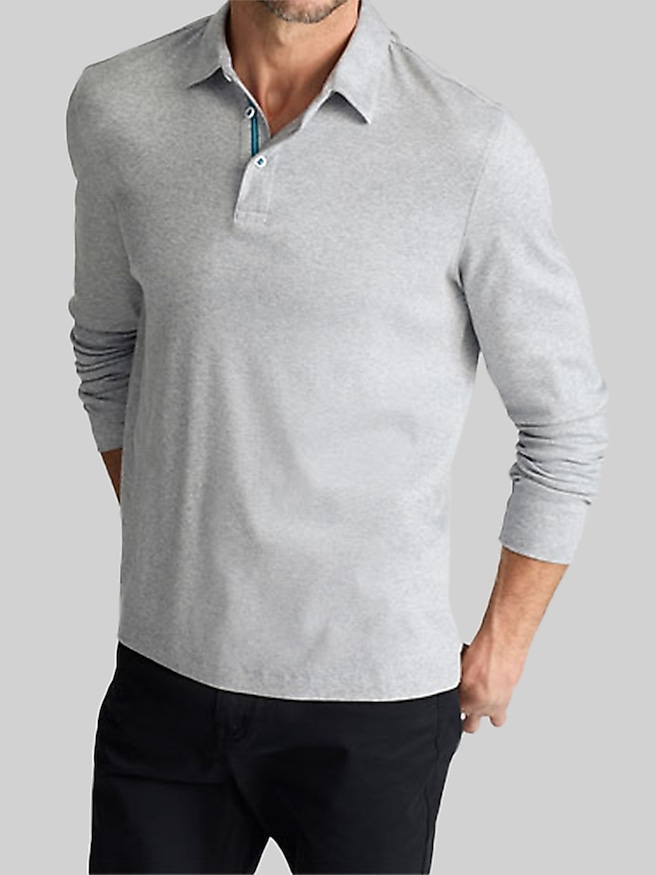
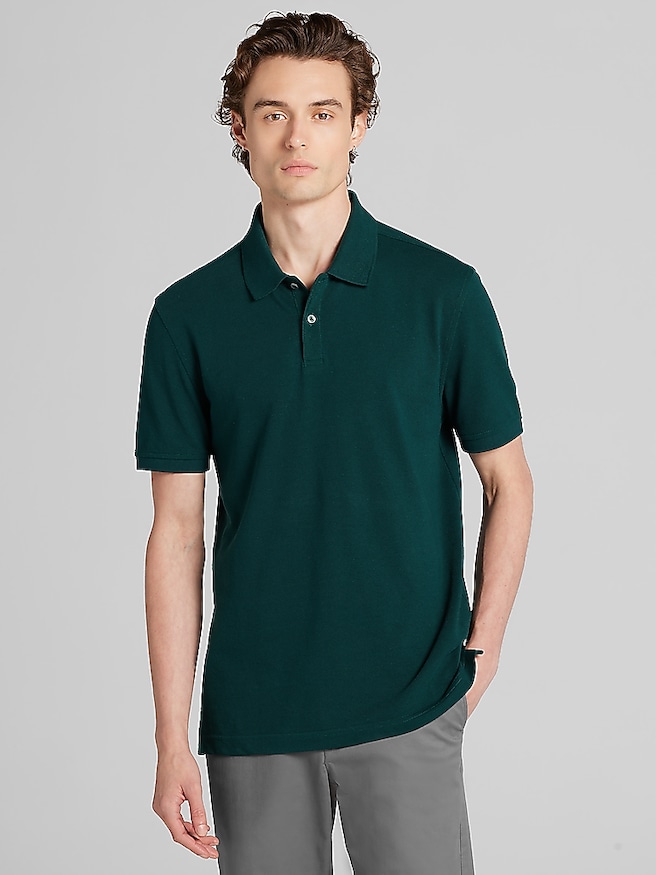
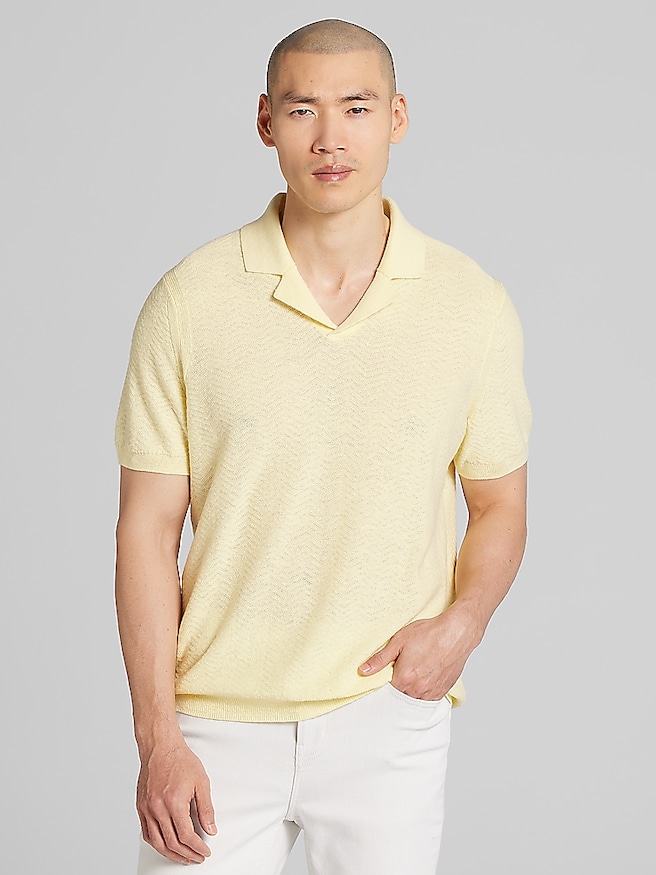
Designer polo shirts bring a more considered approach to an everyday staple, combining the ease of a knit shirt with the definition of a collar and a short button placket. The term describes a design-led category rather than a standardized fabric, fit, or level of performance. What distinguishes one polo from another is often visible in smaller details: the shape of the collar, the proportion of the sleeves, the texture of the knit, and how the shirt hangs when worn. Some designs emphasize a clean, understated appearance; others use stripes, contrast trim, textured stitching, or embroidery to create a stronger visual identity. Fabric makes an equally important difference. Cotton piqué has a subtly raised, patterned surface that gives a polo texture without relying on a print. For a closer look at that fabric category, Men's Pique Polo Shirts offers a related starting point. Cotton jersey generally has a smoother surface and a softer drape, making it a natural choice for a less structured look. Mercerized cotton can have a subtle sheen and a smooth hand, while fine-gauge knits can give the familiar polo silhouette a more refined appearance. Cotton blends may incorporate synthetic fibers for shape retention or easier care, and a small amount of elastane can provide stretch. Performance-oriented fabrics may offer moisture management or wrinkle resistance, although those qualities depend on the actual construction and finish rather than the designer designation alone. Fabric weight also affects the silhouette: a lighter knit tends to fall closer to the body, while a more substantial knit can create a firmer outline. The balance among softness, structure, and texture helps determine whether a polo feels at home with tailored trousers, everyday chinos, or denim. A distinctive design does not have to be conspicuous; even a neatly shaped collar or a well-proportioned placket can give a simple shirt its character.
Fit is central to how a designer polo shirt looks and feels throughout a normal day. A slim fit typically follows the torso more closely, a regular fit leaves moderate room through the chest and waist, and a relaxed fit allows a fuller silhouette. These descriptions are not identical across designers, so measurements and the intended shape of the shirt matter more than the fit name by itself. On a conventional set-in sleeve, the shoulder seam generally rests near the edge of the shoulder, with enough room through the chest to keep the placket from pulling open. Sleeves can frame the upper arm without gripping it, and the body should allow comfortable movement when reaching across a desk, driving, or sitting down to lunch. A polo that appears smooth while standing can behave differently when seated, particularly if the knit has little stretch. Length matters, too. An untucked polo benefits from a hem that provides coverage without extending so far that it overwhelms the trousers; a shirt intended for tucking needs enough length to stay secure during movement. Side vents and slightly extended back hems can influence how the shirt falls, while ribbed hems tend to create a more defined edge. Collar construction deserves attention because it remains visible under a jacket. A collar that lies flat and keeps its shape can help a polo look composed at a business-casual meeting or a restaurant dinner. Worn with chinos and loafers, a solid-colored polo creates a straightforward, polished outfit without the formality of a dress shirt. Textured knits can add interest beneath an unstructured blazer, while a striped or contrast-trimmed design often works best with simpler trousers. For an office, the appropriate choice still depends on the dress code; a polo is not a substitute for clothing required at a formal event. Outside work, the same silhouette suits travel days, casual gatherings, and meals with friends, making it useful for men who prefer a wardrobe that moves easily between settings.
The lasting appeal of designer polo shirts depends as much on care and construction as on their initial appearance. Even stitching, a neatly finished placket, secure buttons, and stable seams contribute to a shirt that holds together through repeated wear. Collar and cuff recovery also matter: ribbed edges should feel resilient rather than loose, though their long-term shape depends on both the knit and its care. A designer name alone does not establish durability, and a soft fabric is not necessarily a delicate one. The fiber content, fabric density, finishing, and washing instructions provide more useful context. Care labels are especially important for fine knits, textured surfaces, and blends, since some polos are machine washable while others call for hand washing or professional cleaning. Where machine washing is permitted, washing with similar colors and avoiding an unnecessarily harsh cycle can help protect the fabric and finish. Excessive dryer heat can contribute to shrinkage or affect stretch fibers, so the recommended drying method deserves the same attention as the wash instructions. Knitted polos that are meant to dry flat can stretch if suspended while wet, and folding heavier knits can help prevent hanger marks during storage. A few practical habits also preserve the details that make a polo appealing, such as smoothing the collar after washing and following label guidance before ironing embroidery or textured trim. For gifting, designer polos can suit a father, partner, brother, friend, or colleague whose personal style and size are familiar. The most useful choice reflects the recipient's habits: an understated solid for someone who wears chinos to work, a tactile knit for someone who appreciates fabric details, or a restrained pattern for someone who likes visual interest without a bold graphic. Checking a well-fitting shirt's measurements offers a more dependable reference than guessing from a size label. With an appropriate fit and care routine, a polo can become a frequently worn part of a wardrobe rather than something reserved for an occasional outing.