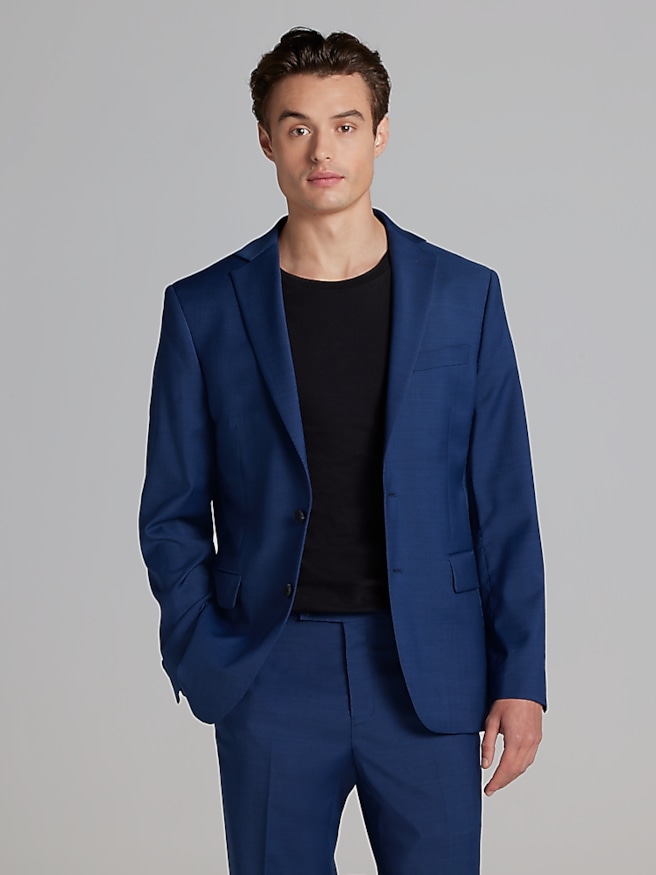
Dapper jackets range from softly structured styles that look at home with dark denim to sharply tailored sport coats and blazers that give a shirt and trousers a more formal finish. What they share is a deliberate silhouette: the shoulder sits neatly, the front hangs cleanly, and the proportions look right with the rest of the outfit. A short jacket with a simple collar and understated hardware has a casual, streetwear feel, especially over a plain crewneck. A longer cut with a shaped waist and a defined shoulder brings more polish to an office outfit or a dinner reservation. Lapel Jackets offer another way to set the tone. A narrow notch lapel can look understated with an open collar, while a broader lapel gives a simple shirt and tie a stronger frame. Details such as pockets and buttons matter, too. Patch pockets have a relaxed appearance that suits textured cloth, while slim welt pockets leave the front looking cleaner and dressier. Navy and charcoal are easy to pair with light shirts and darker trousers, but a quiet pattern can do much of the work in an otherwise plain outfit. A subtle herringbone might read as a solid from across the room, then reveal its zigzag up close. A larger check makes the jacket the focal point and looks best when the shirt and trousers give it some room. For a workplace with a variety of dress codes, a jacket with moderate structure and little ornamentation can look just as natural over a button-down at a client meeting as over a fine-knit polo at lunch. At a wedding with a more formal dress code, the same attention to proportion applies, but a dressy jacket and odd trousers aren’t substitutes when the invitation calls for a matching suit or black tie.
Fabric changes both how a jacket looks on the hanger and how it feels after several hours of wear. Smooth wool tends to fall in a clean line and can recover from light creasing, which makes it well suited to tailored cuts. Wool blends vary with their fiber content and weave; some hold a crisp shape, while others have a softer hand and more give. Cotton twill often has a matte finish and visible diagonal ribs that lend themselves to a more relaxed jacket. It can show creases at the elbows, a natural part of the look rather than a sign of poor fit. A small amount of stretch can make a close cut more comfortable, particularly for someone who spends part of the day reaching across a desk or carrying a bag. Stretch won’t fix a jacket that pulls sharply across the shoulder blades, though. Lining affects how easily a jacket slips over a shirt or knit, and a fully lined body generally feels smoother over textured layers. A partially lined or unlined construction often lets the cloth drape more naturally, although the outer fabric and the internal structure play a role as well. For regular wear, neat stitching at pocket corners, firmly attached buttons, and smooth seams are useful details to notice. Those spots take repeated strain, especially when pockets hold a phone or keys. Care is part of keeping the shape intact: a broad hanger supports the shoulders better than a thin wire one, and emptying the pockets before hanging the jacket helps prevent the front from sagging. The care label takes precedence over general advice, since the lining and internal structure may need gentler treatment than the outer fabric suggests. A soft clothes brush can lift surface lint from suitable fabrics between cleanings, and addressing a mark promptly according to the label is better than rubbing it into the weave.
The best indication of fit is how a jacket behaves during ordinary movement. On a tailored cut, the shoulder seam should sit near the edge of the natural shoulder, with no obvious dent below it or ridge above it. A deliberately relaxed jacket may extend a bit farther, but it should still hang evenly instead of collapsing at the sleeve. With the front fastened as designed, the cloth should lie fairly flat across the chest and waist, without a sharp X pulling out from the button. Sitting through a meal, reaching for a seat belt, or shaking hands reveals more than standing still in front of a mirror. The fabric will move, but the jacket shouldn’t tug at the back of the neck or force the wearer to keep adjusting it. On a dressier cut worn over a long-sleeve shirt, a small amount of visible shirt cuff can give the sleeve a clean finish. A more casual jacket often works with the sleeve ending near the wrist, without extra fabric pooling over the hand. The layer underneath matters just as much as the measurements. A cut that lies neatly over a dress shirt may feel snug over a substantial knit, while a roomy style can overwhelm a thin shirt if both the body and sleeves are too loose. Sleeve length and some waist shaping may be adjustable, depending on the construction, but the shoulders and overall length are better judged before any alterations. For a graduation gift or a milestone birthday, a jacket can mark the occasion and still have a place in everyday wear. A well-fitting jacket the recipient already reaches for offers a more useful reference than a size label alone, since two jackets marked the same size can sit quite differently. A tidy, lightly structured cut makes sense for someone who usually wears denim and knits, while a defined shoulder and smoother fabric tend to suit someone who spends more time in dress shirts and tailored trousers.