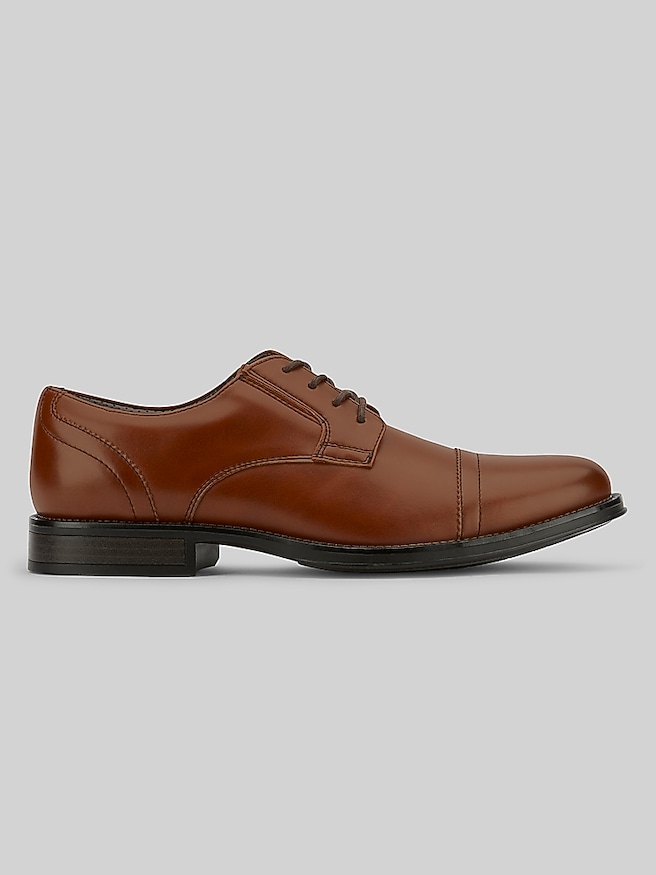
Cap-toe Oxfords have a place in a dress wardrobe well beyond Cyber Monday, pairing a clean silhouette with a distinctive seam across the toe. That simple detail creates definition without the decorative perforations or elaborate stitching found on more ornate dress shoes. Traditional Oxford construction uses closed lacing, with the sections holding the eyelets attached beneath the vamp, giving the top of the shoe a neat, closely fitted appearance. Within the broader family of lace-up shoes, this restrained profile makes cap-toe Oxfords especially useful for tailored clothing. Black leather looks crisp beneath charcoal trousers or a dark suit, while dark brown brings depth to navy and medium-gray tailoring. A lighter brown can lend a less formal note to textured trousers and a sport coat, provided the occasion allows it. Smooth leather generally reads dressier than suede, and a slim sole tends to look more refined than a thick, heavily treaded base. These distinctions matter when the same pair needs to move from an important presentation to dinner without looking out of place at either. For a job interview, an understated cap toe keeps attention on the complete outfit rather than the footwear alone. For a wedding guest or a member of the wedding party, a polished pair complements a suit without competing with its fabric or accessories. Trouser length also influences the result: a hem with a slight break allows the lacing and toe shape to remain visible without fabric bunching over the shoe. Matching a leather belt reasonably closely to the shoe color helps tie the outfit together, though an exact shade match is not necessary. The appeal is in that balance of structure and simplicity—a shoe with enough character to feel deliberate and enough restraint to work across a range of dress occasions.
Materials, construction, and fit determine how cap-toe Oxfords feel after the first impression. Smooth leather uppers can develop subtle creases and character with wear, while the quality of the finish influences both appearance and upkeep. Full-grain leather retains the natural surface of the hide; other leather finishes may be buffed or coated for a more uniform look. Neither a glossy surface nor a soft initial feel tells the whole story, so the lining, stitching, and flexibility through the forefoot deserve attention as well. Leather linings can help manage moisture, while cushioning under the heel and ball of the foot may make long stretches of standing more comfortable. A leather outsole offers a traditional look and feel, although it can be slick on some smooth surfaces. Rubber outsoles or rubber contact areas can add traction and cushioning without necessarily creating a bulky profile. Construction matters for long-term care, too: some stitched designs can be resoled, depending on the shoe’s condition and the work a repair professional can perform. Fit should be secure rather than restrictive, with room for the toes to rest naturally and enough width to avoid pressure along the sides. A pointed outline should not force the toes into the tip; the widest part of the foot should sit near the widest part of the shoe. Trying shoes with the dress socks intended for regular wear gives a more useful sense of fit than trying them with thick athletic socks. Standing and walking reveal details that sitting cannot, including heel movement, pressure over the instep, and whether the shoe bends comfortably at the ball of the foot. Because closed lacing offers less adjustment than some open-laced styles, instep fit deserves particular care. The eyelet sections do not need to meet completely, but they should sit comfortably without excessive tension. Leather may soften with use, yet a pair that pinches sharply or crowds the toes should not be expected to become the right size through wear.
Thoughtful care helps preserve the clean lines that make cap-toe Oxfords distinctive. Dust and grit can dull the surface and collect around the toe seam, so a soft brush or clean cloth is useful after wear. For smooth leather, an appropriate conditioner can help keep the material supple, while a matching cream polish refreshes color and a wax polish can add shine. Care products should suit the particular finish, with a small test on an inconspicuous area before broader application. Suede needs its own brush and suitable care products rather than the creams used on smooth leather. A high shine concentrated on a structured toe can create a formal finish, but heavy wax buildup over areas that flex may crack and look uneven. Cedar shoe trees help support the shape between wears, and a shoehorn reduces stress on the heel counter when putting the shoes on. Allowing the interior to dry fully before the next wear supports comfort and helps reduce lingering odor. If leather becomes damp, gentle air-drying away from direct heat is preferable to placing it beside a heater. Scuffed heels, loose stitching, and worn sole edges are worth addressing before minor damage becomes a larger repair. For someone who spends the day moving between a desk, conference rooms, and an evening event, those habits can make a practical difference in how the shoes look and feel over time. Cap-toe Oxfords can also make a thoughtful gift for a graduate entering professional life, a partner building a tailored wardrobe, or someone preparing for a milestone celebration. Knowing the recipient’s size, width, preferred color, and usual level of formality makes that choice more personal. Whether worn several days a week or reserved for important occasions, a well-fitting pair offers a dependable foundation: understated beneath a suit, polished with dress trousers, and distinctive without demanding attention.