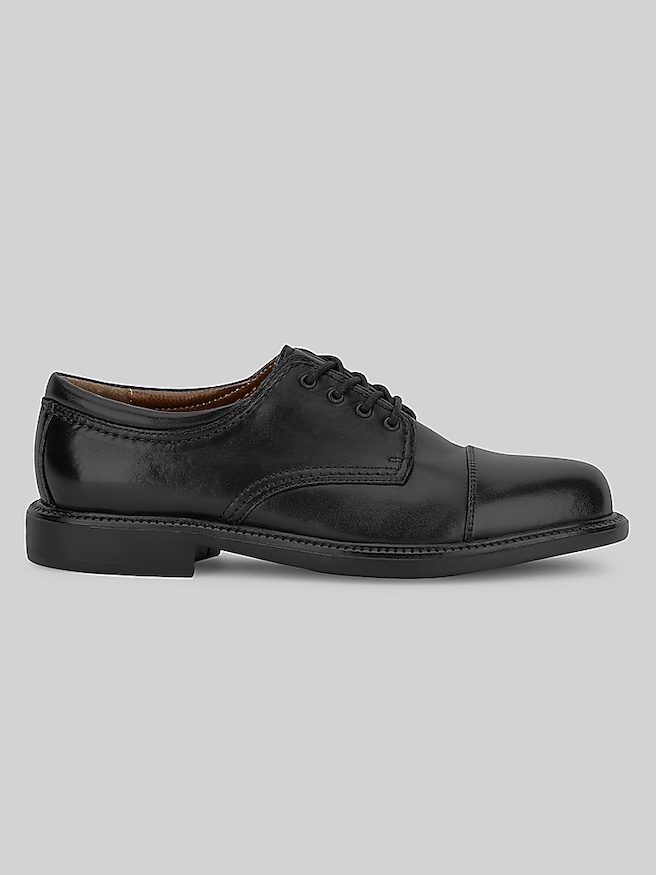
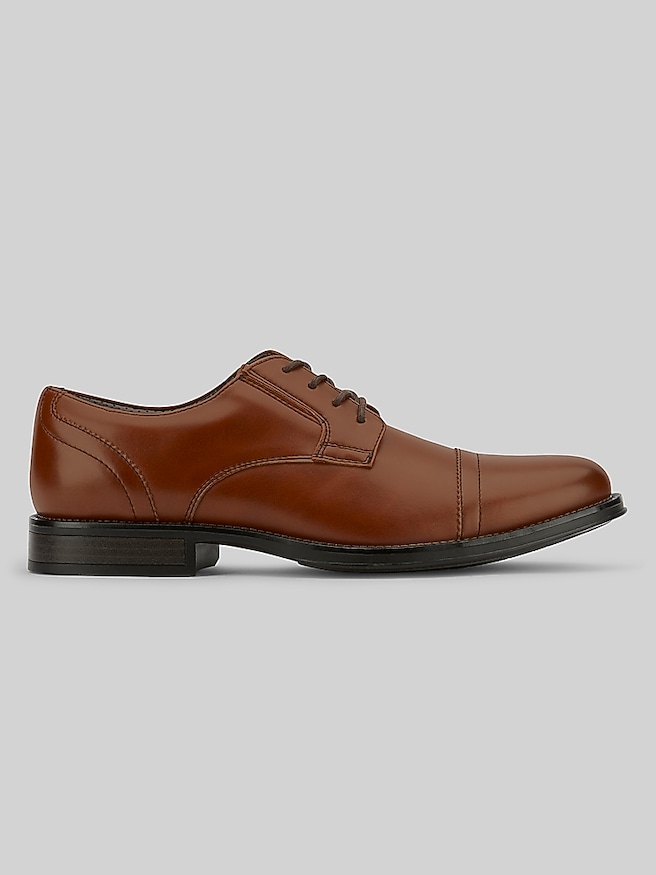
Plain toe oxfords bring a clean, deliberate finish to tailored clothing, with an uninterrupted toe that lets the shape of the shoe and the character of its material stand out. Unlike styles defined by decorative perforations or a stitched toe cap, these lace-ups rely on proportion: the curve of the vamp, the profile of the sole, and the balance between the toe and heel. Traditional oxford construction features closed lacing, with the eyelet sections stitched beneath the vamp for a closely drawn appearance. That neat silhouette works especially well with suit trousers, where a clean hem leaves the shoe visible without a heavy fold of fabric gathering over the laces. Black plain toe oxfords create a restrained foundation for charcoal and navy suits, business presentations, evening receptions, and wedding attire. Brown shades introduce a softer contrast with blue tailoring, medium-gray trousers, and textured sport coats, while deeper burgundy tones offer another option for wardrobes built around understated color. Toe shape changes the effect as much as color does. A gently rounded toe feels traditional and versatile; a subtly tapered profile creates a sleeker line without needing an exaggerated point. The intended occasion matters, too. A smooth leather oxford with a low-profile sole suits a client meeting or ceremony, while a more substantial sole can give the same basic design a stronger presence with separate trousers and a jacket. With a tuxedo, the finish becomes particularly important: a sleek black shoe with an appropriately formal shine keeps the footwear in step with the rest of the outfit. For a broader look at footwear suited to tailored clothing and dressed-up occasions, explore the Cyber Monday Sale On Leather Formal Shoes collection. Across these settings, the appeal of a plain toe remains consistent: it finishes an outfit without introducing another pattern or competing detail. The result can feel just as appropriate on a first day in a professional role as it does at an anniversary dinner.
Materials and construction influence how plain toe oxfords look, feel, and hold up through repeated wear. Smooth leather offers a surface that can be conditioned and polished, developing natural creasing where the foot bends. Those flex lines are part of wear rather than an automatic sign of damage, although leather quality, fit, and maintenance all affect how they develop. Full-grain leather retains the hide’s natural surface character, while other leather finishes may emphasize a more uniform appearance or a particular level of shine. Suede gives the oxford shape a softer, less formal personality and generally pairs more comfortably with sport coats and tailored separates than with strict evening attire. Linings also deserve attention, especially for days that stretch from an early commute through an afternoon presentation and dinner afterward. A smooth interior, well-finished seams, and cushioning that supports rather than crowds the foot can make a meaningful difference over several hours. Sole materials bring their own trade-offs. Leather soles typically have a refined profile and a traditional feel underfoot; rubber soles can provide additional traction and cushioning, depending on their design. Neither material alone determines durability. Stitching, attachment methods, heel construction, and the way the shoe fits all contribute to long-term performance, and some constructions allow a skilled repair professional to replace worn soles or heels. Fit is particularly important with closed-lacing shoes because the upper offers less adjustment across the instep than an open-lacing design. The heel should feel secure without rubbing, the ball of the foot should sit near the shoe’s natural flex point, and the toes need space to lie comfortably without pressing against the sides. A wide gap between the lacing sections, persistent pressure over the instep, or noticeable forward sliding can signal a mismatch in size, width, or shape. Dress socks of the thickness normally worn with the shoes give a more useful impression of fit than unusually thick athletic socks. A new pair may soften with use, but sharp pressure and cramped toes are not qualities to accept as necessary.
The lasting usefulness of plain toe oxfords comes from both their versatility and the attention they receive between wears. A pair worn for office days, interviews, and family celebrations has different demands from one reserved for occasional formal events, but both benefit from allowing the interior to dry fully before the next outing. Alternating footwear gives linings and footbeds time to release absorbed moisture, while properly sized cedar shoe trees help maintain the upper’s shape. For smooth leather, removing surface dust with a soft brush or cloth keeps grit from working against the finish. An appropriate conditioner can help prevent dryness, and a compatible cream polish refreshes color while supporting an even appearance. Wax polish adds shine where desired, particularly at the toe and heel, though heavy buildup over the flexible part of the upper can look uneven as the leather bends. Suede needs a different approach, with tools and treatments intended for its raised surface rather than conventional leather polish. Drying shoes away from direct heat helps protect both the upper and the materials used in construction. Small repairs also matter: replacing a worn heel before it becomes uneven can help preserve the shoe’s balance and prevent damage from extending into other components. These practical details make a simple silhouette a useful part of a thoughtfully maintained wardrobe. For someone starting a professional role, attending interviews, or preparing for a graduation ceremony, plain toe oxfords can fill a clear need without depending on a passing design trend. They can also make a considered gift for a partner, father, son, or close friend when size, width, and personal style are known. A recipient who regularly wears navy suits may get the most use from a classic dark shade, while someone who favors sport coats might appreciate the warmth of brown leather. The strongest choice is one that fits comfortably, suits the wearer’s real occasions, and looks natural alongside clothing already in the closet.