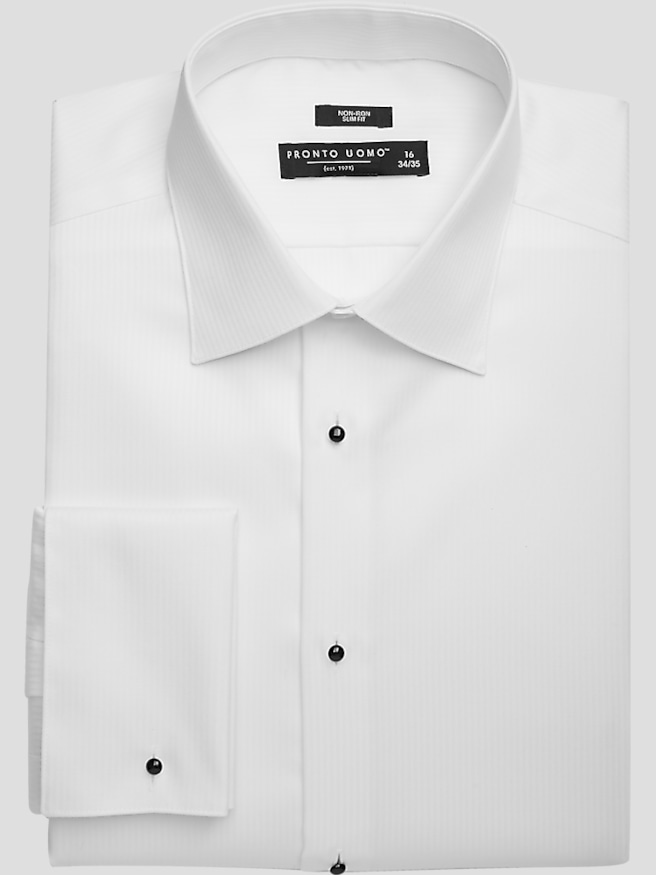
Cyber Monday men’s dress shirts center on a wardrobe essential that can make a familiar suit feel sharper, bring polish to a pair of tailored trousers, or set the right tone for an important introduction. A well-chosen dress shirt provides the foundation for business meetings, wedding celebrations, dinner reservations, and the everyday occasions that call for something more considered than a T-shirt. Its character comes from details that are easy to notice up close: the smoothness of the fabric, the shape of the collar, the way a cuff sits at the wrist, and the clean line of the front beneath a jacket. Cotton is a familiar choice for its breathable feel and versatility, although the weave makes a meaningful difference in how a shirt looks and wears. Poplin generally has a smooth surface and a crisp appearance, while twill has a subtle diagonal texture and often a slightly softer drape. Oxford weaves bring more visible texture, with finer versions bridging the space between business dressing and relaxed tailoring. Cotton blends can offer practical benefits such as added stretch or easier care, depending on their composition and finish. Fabric weight and opacity matter, too, particularly with lighter shades worn without a jacket. White creates a clear contrast against dark tailoring, pale blue adds color without dominating an outfit, and restrained stripes or checks introduce pattern while remaining easy to coordinate. A solid shirt leaves more room for a patterned tie; a patterned shirt can look especially composed beside a solid jacket. These choices shape the overall impression rather than simply filling a space beneath a suit. For someone moving from a desk to a client lunch and then to an evening gathering, a shirt with a comfortable hand, appropriate coverage, and a collar that holds its shape can make the whole outfit feel more settled.
Fit determines how comfortably those details come together over the course of a day. A dress shirt should have enough room for reaching across a conference table, sitting through a ceremony, or fastening a seat belt without pulling sharply across the chest or shoulders. Shoulder seams generally sit near the natural shoulder point, while the fabric across the back should allow movement without excessive billowing. Slimmer cuts follow the torso more closely; roomier cuts provide additional ease through the chest and waist. Neither silhouette is automatically more polished. The better match depends on body proportions, preferred comfort, and how the shirt sits beneath a jacket. Neck measurements are particularly important for anyone who regularly wears a tie, since a buttoned collar should feel secure without pressing uncomfortably against the throat. Sleeve length deserves similar attention: cuffs should reach the wrist without sliding far over the hand, allowing a small amount of shirt cuff to show beneath a properly fitted jacket sleeve. A longer shirttail helps a tucked shirt remain in place through normal movement, while excess fabric around the waistband can interrupt the line of tailored trousers. Collar shape also influences the finished outfit. A point collar creates a relatively narrow frame for a tie, while a spread collar leaves more space for the knot. Button-down collars have a more relaxed character, and French cuffs create an opportunity for cuff links at dressier occasions. The same attention to proportion applies when coordinating shirts with Cyber Monday men's dress pants: a clean tuck and compatible silhouettes keep the outfit balanced. With an open collar, the neckline should sit neatly beneath the jacket rather than collapsing or spreading awkwardly. When a tie is part of the outfit, the collar opening and knot should work together without gaps or crowding. Small adjustments in these areas can matter more than adding another accessory.
Care and construction help determine whether a dress shirt remains a dependable part of a regular rotation. Closely finished seams, securely attached buttons, and tidy stitching around the collar and cuffs are useful details to consider because these areas receive repeated handling and friction. Even a substantial fabric can show wear when it is washed or pressed more aggressively than its care label recommends. The fiber content, finishing treatment, and construction all affect the appropriate cleaning method, so label directions take priority over a general laundry routine. Separating light and dark colors, attending to collar and cuff marks promptly, and avoiding prolonged exposure to high heat can help preserve appearance when consistent with those directions. Non-iron and wrinkle-resistant finishes can reduce the effort needed to maintain a smooth look, but they do not make a shirt immune to creasing. Removing a washable shirt promptly after the recommended drying cycle and placing it on a suitable hanger can make the next wear easier. Pressing requirements vary, and any iron setting should suit the fabric and its finish. Removable collar stays should come out before laundering unless the care instructions indicate otherwise. For frequent wear, rotating among several shirts gives each one time between uses and spreads wear across the wardrobe. That practicality also makes dress shirts a thoughtful gift for a recent graduate preparing for interviews, someone starting a role with a more formal dress code, or a partner who enjoys tailored clothing. Accurate neck and sleeve measurements, a familiar fit, and an understanding of the recipient’s laundry preferences are more useful than guessing based on a jacket size alone. Understated colors and restrained patterns are often straightforward to coordinate, while a distinctive collar or cuff style is best matched to established preferences. Whether worn for a major milestone or an ordinary workday, a dress shirt feels most useful when its fabric, proportions, and care needs fit naturally into the wearer’s routine.