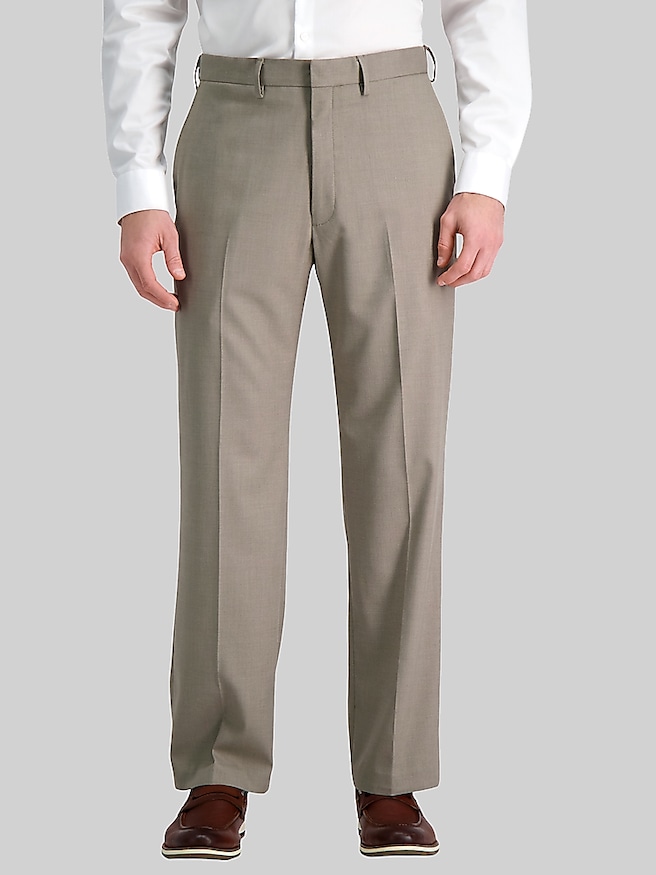
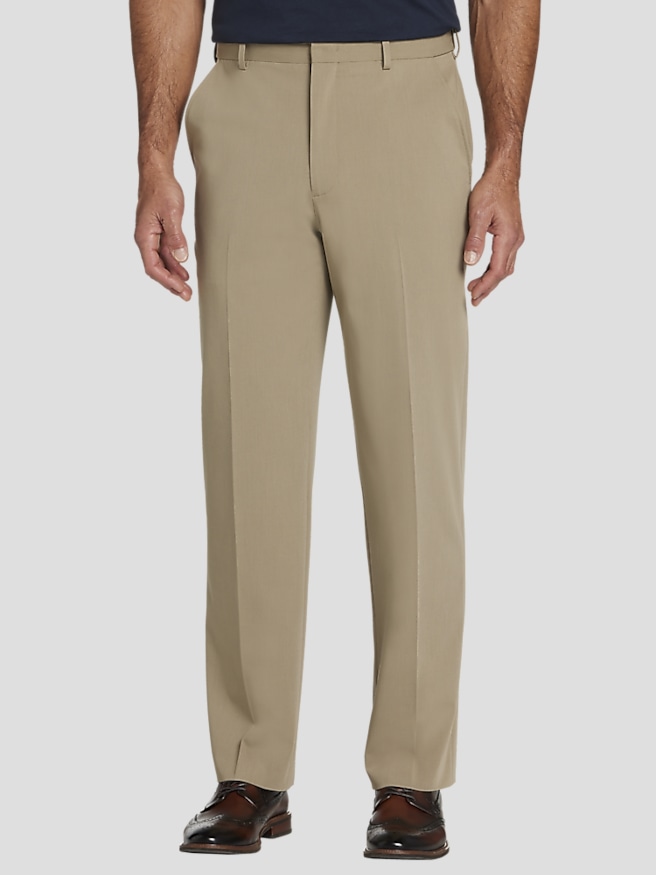
Cyber Monday men's dress pants can play a lasting role in a wardrobe built for work, celebrations, and evenings out. A pair with a clean drape can make a tucked-in shirt look more composed, give a knit polo a sharper finish, or balance the texture of a sport coat. Their usefulness starts with fit rather than a particular silhouette. A trim cut follows the shape of the leg with less excess fabric, while a straighter cut leaves more room through the thigh and calf. Neither should pull across the pockets, grip behind the knees, or force the waistband to carry the entire job of keeping the pants in place. When the seat fits smoothly and the rise feels comfortable, the rest of the outfit tends to sit better, too. Sitting through a long meeting, stepping into a car, and standing for a toast all reveal details that a quick glance in the mirror can miss. Stretch can help with movement, but enough room through the hips and thighs remains important. The hem also changes the overall impression. Little or no break creates a crisp line above the shoe, while a slight break gives the fabric a softer finish over the instep. Excess length can bunch at the ankle and interrupt an otherwise balanced fit. Shoe choice matters here: a fuller trouser leg often sits comfortably over a substantial oxford or derby, while a narrower opening creates a neater transition to a streamlined loafer. For someone who regularly moves between a desk and client meetings, these proportions can make one pair feel appropriate throughout the day. For occasional wear, such as a graduation ceremony or an anniversary dinner, a familiar, comfortable fit makes dressing up feel less like putting on a costume. Small alterations to length or waist can refine that fit, provided the garment's construction allows for them. A belt should finish the outfit, not compensate for a waistband that is noticeably too loose.
Fabric influences how dress pants look after several hours of wear as much as it affects their initial feel. Wool can offer a fluid drape, breathability, and a surface that pairs naturally with tailored jackets. Depending on the weave and weight, it may feel smooth and refined or have a more textured hand. Wool blends combine those characteristics with the qualities of other fibers, which can affect softness, resilience, and care requirements. Cotton tends to have a more structured feel and can suit a less formal office, especially when paired with a button-down shirt and leather shoes. Synthetic blends may offer wrinkle resistance or easier maintenance, though the fabric composition and care label tell more than a broad material name alone. A small amount of stretch can make bending and sitting more comfortable without changing the tailored appearance. Fabric weight is worth considering independently of fiber content: a lighter cloth generally moves more freely, while a substantial one can hold its shape and give the leg a defined line. Construction adds another layer of everyday practicality. Even stitching, secure closures, neatly finished seams, and pockets that lie flat contribute to a tidy appearance and help a pair stand up to repeated use. Bulging pockets can distort the silhouette, so carrying a large phone or an overfilled wallet may change how even well-fitted pants hang. Care is equally important to preserving that shape. The garment label should determine whether washing or professional cleaning is appropriate, along with any limits on heat or pressing. Hanging pants neatly after wear helps keep folds from settling into the fabric, and rotating between pairs reduces concentrated wear at the seat and knees. A hanger designed for trousers can support a straight drape without leaving an awkward fold. When pressing is permitted, the correct heat setting and a pressing cloth help protect the surface from unwanted shine, particularly on darker fabrics.
Color and texture give dress pants much of their range. Charcoal and navy create a composed foundation for business settings and evening occasions, with enough depth to work alongside white, pale blue, and subtly patterned shirts. Medium gray can soften the contrast of a dark jacket, while brown tones bring warmth to blue shirting and textured layers. Black has a sharper character that can suit an understated outfit with a fine-gauge sweater or a crisp dress shirt, though the event's dress code still determines whether separate trousers are appropriate. Tan offers another direction for outfits that need polish without a dark palette; Cyber Monday Sale On Tan Dress Pants focuses on that neutral color family. Tan trousers can sit comfortably alongside navy, cream, olive, or shades of blue, with footwear providing either a quiet transition or a more pronounced contrast. A smooth finish generally reads as dressier than a visibly textured weave, and a subtle pattern can add interest without competing with a patterned shirt. For an office presentation, a solid pair keeps attention on the overall silhouette; for a dinner or reception, texture can give a simple shirt-and-trouser combination more dimension. When a suit is expected, separate dress pants are not necessarily a substitute, and two similar dark fabrics may still look mismatched when worn together. For gifting, the recipient's established habits are often more useful than an unfamiliar trend. A frequently worn color, preferred rise, usual leg shape, and known waist and inseam measurements provide a practical starting point. Someone beginning a new job may appreciate an adaptable neutral, while a person who dresses up only occasionally may get more use from a straightforward silhouette that works with existing shoes and shirts. Pants that fit the wearer's routine, feel comfortable through a full day, and respond well to appropriate care are more likely to become a dependable part of getting dressed.