Cotton wrinkle-free shirts pair cotton’s familiar softness and breathability with fabric treatments designed to reduce creasing, helping a shirt maintain a smoother appearance through a busy day. The appeal is straightforward: a crisp collar at the morning meeting, comfortable fabric through the commute, and a polished look when dinner follows the workday. Cotton naturally wrinkles as its fibers bend and shift; wrinkle-control finishes help the fabric hold its shape and recover more readily. That does not make every shirt completely crease-proof, and results depend on the fabric, construction, finish, and care routine. Wrinkle-resistant shirts generally limit creasing but may still benefit from a light touch-up, while shirts labeled non-iron are typically designed to look smooth after washing and drying according to their care labels. Fiber content matters just as much as the label’s performance language. A shirt made from 100% cotton provides the soft hand and moisture absorption associated with the natural fiber. Cotton blends may add polyester for easier wrinkle recovery or a small amount of stretch fiber for greater flexibility. Breathability depends on weave, fabric weight, and finish as well as fiber content, so two cotton shirts can feel noticeably distinct against the skin. Poplin and broadcloth generally have smooth surfaces that work well with tailored clothing, while pinpoint fabrics offer subtle texture without looking overly casual. Twill has a diagonal weave and often a slightly fuller feel, making it a comfortable option beneath a jacket during the cooler months. These details give cotton wrinkle-free dress shirts a place in office wardrobes, travel bags, and occasion dressing without making them feel reserved for formal settings. For someone who wears a collared shirt several days a week, the real advantage is less fuss between laundering and getting dressed, along with the familiar comfort of cotton close to the skin.
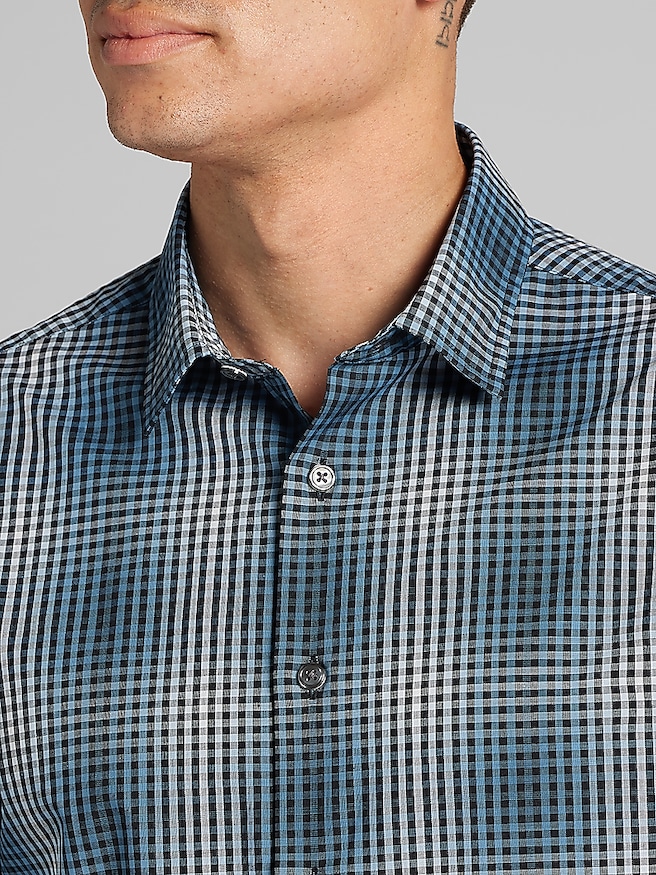
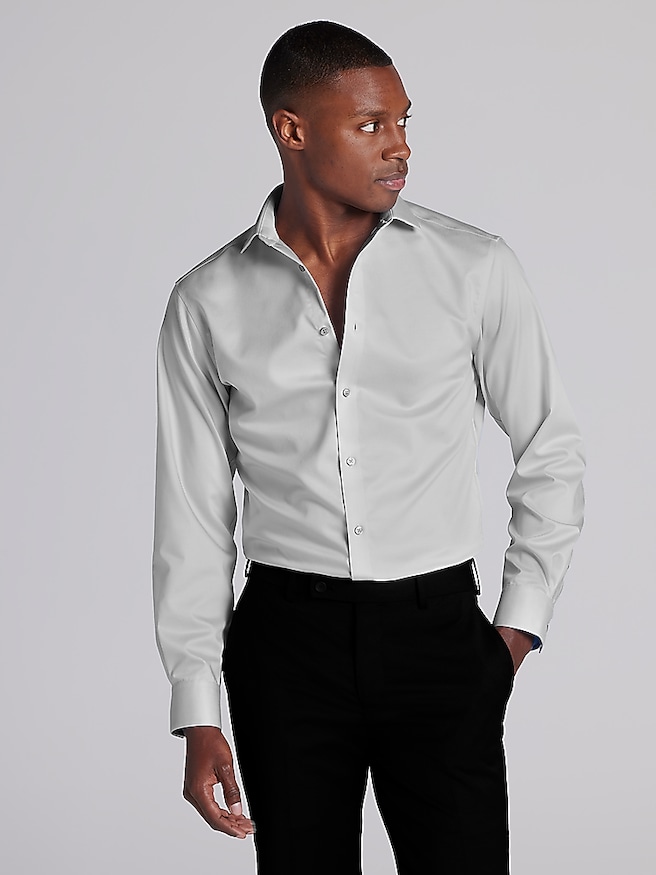
Fit determines whether that smooth fabric looks composed or strained once the shirt is on. A well-fitting shoulder seam sits close to the edge of the shoulder, the chest lies flat without gaps between buttons, and the collar feels comfortable when fastened. Slim fits generally follow the torso more closely, while classic fits provide more room through the chest and waist; tailored fits often sit between the two, though measurements vary by maker. The most useful choice accommodates everyday movement, not just a still moment in front of a mirror. Reaching for a laptop, sitting through a presentation, or driving across town should not pull the placket tight or force the cuffs far up the arms. Extra fabric can bunch beneath a sweater, but a shirt that is too tight develops tension lines that no wrinkle-control finish can prevent. Sleeve length, neck size, and body length deserve attention alongside the fit name. A longer shirttail helps a dress shirt remain tucked through a full day, while a shorter hem designed for untucked wear can create a relaxed outline with chinos or dark denim. Collar construction also changes the effect. A spread or point collar complements a tie and suit jacket, while a button-down collar keeps its points secured for an easy, neat appearance with or without a tie. The related selection of Men's Wrinkle Free Button Down Shirts offers another way to explore this everyday shirt category. White and pale blue make versatile foundations for tailored outfits, while fine stripes and small checks introduce pattern without overwhelming a jacket. Under a crewneck sweater, a restrained pattern adds interest at the neck and cuffs; beneath a blazer, a solid shirt keeps the overall look clean. Cotton wrinkle-free shirts also suit presentations, interviews, celebratory dinners, and family gatherings where looking put together matters but comfort still has to last beyond the first hour.
Easy-care performance is most useful when paired with habits that protect the fabric rather than push it beyond its limits. The care label remains the best reference for water temperature, dryer settings, bleach restrictions, and ironing, since finishes and blends do not all respond the same way. For machine-washable shirts, leaving enough room in the washer and dryer allows fabric to move instead of staying compressed into folds. Prompt removal at the end of the recommended drying cycle, followed by hanging and smoothing the collar, placket, and sleeves, can help preserve a neat appearance. Excessive heat and overdrying can be hard on cotton and may shorten the useful life of a finish. If touch-ups are needed and permitted, the appropriate iron setting can address a stubborn cuff or hem without treating the whole shirt as a heavy pressing project. Durability involves more than wrinkle resistance: secure buttons, even stitching, reinforced stress points, and neatly finished seams all contribute to repeated wear. Collars and cuffs take frequent friction, so attending to soil promptly according to the care instructions and rotating shirts can help keep them presentable. For business travel, wrinkle-free cotton can reduce the work needed after unpacking, although a tightly packed suitcase may still leave folds. Allowing space around folded shirts and hanging them on arrival gives the fabric a better chance to settle before the next appointment. During cooler weather, a breathable cotton layer can also feel comfortable between heated rooms and an outdoor jacket, with enough structure to stand on its own when the outer layer comes off. As a gift, these shirts can be practical for a graduate building a professional wardrobe, someone starting a new position, or a frequent traveler who appreciates simpler garment care. Knowing the recipient’s neck and sleeve measurements, preferred fit, and usual dress code makes that choice more personal. Whether worn with tailored trousers or casual pants, a cotton wrinkle-free shirt brings together everyday utility, a clean silhouette, and fabric that feels familiar from the first wear.