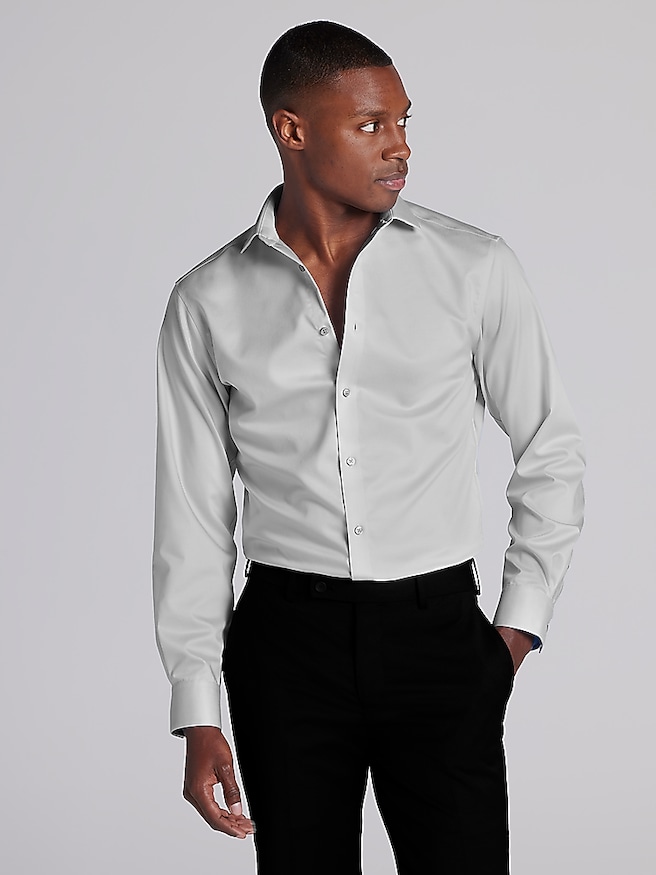
Men's wrinkle-free shirts bring a neat, put-together look to everyday dressing with less time spent working out creases before leaving home. They are especially useful for office schedules, business travel, celebrations, and days that move from a desk to dinner without a change of clothes. The appeal is straightforward: a smooth shirt front, an orderly collar, and sleeves that look tidy beneath a jacket or on their own. Wrinkle-free fabrics are designed to resist creasing, although the result depends on the material, construction, care, and how the shirt is worn or packed. Cotton offers a familiar feel against the skin and can be treated for easier care, while cotton blends often combine that softness with fibers that help the fabric recover after sitting, folding, or moving throughout the day. Polyester can contribute crease resistance and durability, and a small amount of stretch can make reaching across a conference table or settling into an airplane seat more comfortable. Fiber content alone does not tell the whole story; fabric weight, weave, finishing, and fit also influence how a shirt feels and holds its appearance. A smooth, fine weave typically has a dressier character, while a fabric with visible texture can feel more relaxed without looking careless. Crisp white and pale blue remain versatile choices beneath a suit, and subtle stripes or checks add interest when the rest of an outfit is understated. Darker solids can create a clean look with dress pants, while a small-scale pattern provides detail without competing with a patterned tie. Wrinkle-free does not mean that every shirt will emerge perfectly pressed from a tightly packed bag. It means the fabric is intended to make a polished appearance easier to maintain, a practical benefit for anyone who wants dependable clothing without making ironing a daily ritual.
The most useful wrinkle-free shirt is one whose fit works as well as its fabric. A trim silhouette can sit neatly beneath a tailored jacket, but it should still leave enough room through the chest, shoulders, and upper arms to move comfortably. Pulling around the buttons, horizontal lines across the torso, or a collar that feels restrictive can undermine an otherwise sharp appearance. A roomier cut provides additional ease and may suit someone who prefers a traditional shape or spends much of the day seated. Shoulder seams should generally sit near the natural edge of the shoulders, and long sleeves should reach the wrist without swallowing the hands. When a shirt is worn with a tie, the collar should close comfortably rather than squeeze the neck. Collar shape also helps establish the tone: a spread collar leaves space for a tie knot, a point collar creates a classic line, and a button-down collar keeps its points secured for a more relaxed finish. For understated texture, men's wrinkle-free Oxford shirts bring the character of a basket weave to outfits built around chinos, dress pants, or a sport coat. Hem length matters just as much as collar style. Longer shirttails help a tucked shirt stay in place through meetings and commutes, while a shirt designed with a shorter hem can look balanced worn untucked. Wrinkle resistance does not replace those proportions; even a smooth fabric looks awkward when the body is too tight or the sleeves are too long. For a job interview, a restrained solid shirt under a suit keeps the overall impression focused and professional. For a family gathering or dinner out, an open collar and textured trousers create a less formal combination. These shirts can also make thoughtful gifts for a graduate starting a first job, a frequent traveler, or someone refreshing an everyday wardrobe. Knowing the recipient's neck size, sleeve length, preferred cut, and usual dress code makes the gift more personal and more likely to become a regular choice.
Care is an important part of keeping wrinkle-free shirts looking their best over repeated wear. Terms such as wrinkle-free, wrinkle-resistant, easy-care, and non-iron can describe related benefits, but they do not promise identical performance across fabrics. The care label provides the most reliable direction for washing, drying, and any touch-up pressing. Many easy-care shirts benefit from avoiding an overloaded washer, which can crowd the fabric and leave it tightly compressed. When machine drying is permitted, removing the shirt promptly and placing it on a hanger helps the collar, placket, and sleeves settle into shape before creases become more pronounced. Smoothing the fabric by hand takes only a moment and can be particularly helpful along the button front and cuffs. Excessive heat is not a shortcut to a crisper finish; it can be hard on fibers, stretch components, and easy-care treatments. If a touch-up is needed, the recommended iron setting matters, especially with blended fabrics. Durability also comes from the shirt's construction and how it fits into a regular rotation. Secure buttons, even seams, and neatly finished cuffs are useful details because those areas receive frequent handling. A comfortable fit reduces unnecessary strain at the elbows, across the back, and around the buttonholes. Giving shirts space on a closet rail helps prevent fresh creases, while packing them with broad folds rather than forcing them into a crowded corner of a bag can reduce compression during travel. At a hotel, hanging a shirt soon after unpacking gives it a chance to relax before it is needed. For everyday use, a rotation of compatible colors and patterns makes it easier to build outfits around the same trousers, jackets, and shoes. The lasting value of men's wrinkle-free shirts is not an unrealistic promise of perfection. It is the combination of comfortable fabric, appropriate fit, practical care, and a consistently tidy appearance, whether the day calls for a tie and jacket or a simple open-collar shirt.