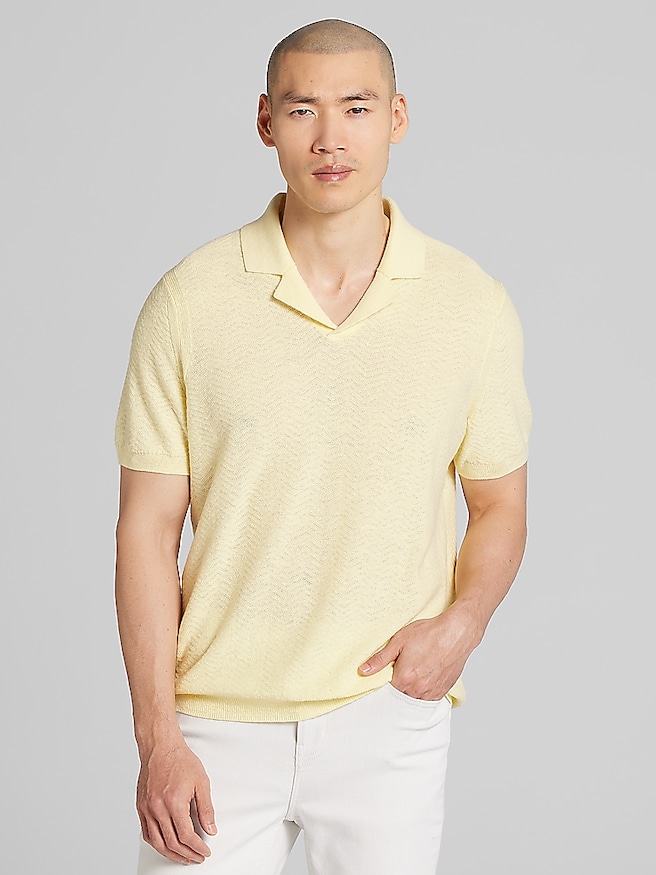
Cool sweaters bring personality to everyday knitwear through distinctive texture, confident color, thoughtful proportions, or a pattern that gives a simple outfit a focal point. For men, that can mean anything from a richly textured cable-knit pullover to a graphic sweater, a colorblocked crewneck, or a cardigan with a relaxed shape. The common thread is character: a sweater should feel expressive without being difficult to wear. A bold geometric knit paired with dark jeans and clean sneakers creates a complete casual look without much extra styling. A solid crewneck with a pronounced rib adds depth to tailored trousers while keeping the overall effect understated. Stripes, contrast tipping, and textured stitches offer a middle ground between a plain basic and a statement piece, making them useful for someone who wants variety without a dramatic change in style. Necklines also influence the mood of an outfit. Crewnecks frame the face cleanly and work well over a simple T-shirt; V-necks leave space for a shirt collar; turtlenecks create a continuous line beneath a jacket. Cardigans offer more flexibility because they can be worn open for an easy outline or buttoned for a more composed finish. A shawl collar adds substance around the neckline, while a zip-front style introduces a sportier note. Color works best when it connects to something already in the outfit. A patterned sweater with navy in the design can echo navy trousers, while an earthy solid looks grounded with dark denim. Larger motifs tend to draw attention first, whereas small repeating patterns read more like texture from a distance. For a dinner out, a creative workplace, a casual celebration, or an ordinary day that calls for something beyond a T-shirt, the right knit adds visual interest without requiring elaborate accessories. Its impact comes from how the color, stitch, and silhouette work together, not from how many details compete for attention.
Material and construction help determine how a sweater feels, drapes, and holds up to repeated wear. Cotton knits often have a familiar, substantial hand and can suit someone who prefers a less fuzzy surface. Merino wool typically uses finer fibers than many traditional wool knits, giving it a smoother feel, though comfort against the skin varies by person and garment. Cashmere is prized for softness and a light, plush feel, but it benefits from careful handling where bags, belts, and jacket linings create friction. Blended yarns combine characteristics: nylon or polyester may contribute strength and shape retention, while a small amount of stretch fiber can support flexibility. Fiber content alone does not establish quality or durability. Yarn twist, stitch density, finishing, and the way seams are joined all affect how a sweater performs. A loose, lofty knit drapes differently from a compact, tightly knitted fabric, and an open stitch can catch more easily on a watch clasp or rough edge. Fit deserves the same attention as fabric. On a conventional set-in sleeve, the shoulder seam generally sits near the shoulder’s edge; on an intentionally relaxed design, a dropped seam is part of the shape rather than a sign that the size is wrong. The body should allow comfortable movement without pulling across the chest, and the sleeves should let the hands move freely without excessive bunching. A ribbed hem that grips tightly can cause fabric to balloon above the waistband, while a straighter hem creates a looser line. Intended use helps settle the choice. A fine-gauge pullover fits beneath a blazer with less bulk, while a substantial textured knit can carry an outfit on its own. Someone who spends much of the day seated may appreciate a hem that stays comfortably in place and a neckline that does not crowd the throat. When layering over a button-down shirt, enough room through the upper arms and chest keeps the collar crisp and the sleeves from binding.
The most useful cool sweaters balance a distinctive look with the routines of the person wearing them. A musician heading to a small venue might favor a graphic knit with black denim, while someone moving from a casual office to dinner could reach for a textured pullover with chinos and leather shoes. An oversized sweater looks intentional when its generous shape is balanced by trousers with a clean line; a closer-fitting knit pairs well with fuller trousers because the proportions remain clear. Accessories can stay quiet when the sweater supplies the pattern. A simple watch, an unembellished belt, and shoes that pick up a supporting color are often enough. For a more streamlined expression of knitwear, Sleek Sweaters offers a related direction centered on a cleaner overall look. Sweaters can also make thoughtful gifts for a partner, father, brother, friend, or graduate, particularly when the choice reflects what that person already enjoys wearing. A favorite neckline, a familiar fit, and colors that work with an existing wardrobe are more reliable starting points than an unfamiliar trend. Sensitivity to fibers matters, too, especially for styles worn directly against the neck or forearms. Good care protects both appearance and fit after the gift is unwrapped or the sweater becomes part of a regular rotation. The garment’s care label should determine whether washing or professional cleaning is appropriate; not every cotton knit belongs in a machine, and not every wool sweater requires the same treatment. When washing is permitted, gentle handling helps limit stretching and surface friction. Avoid wringing a wet knit, and reshape it for flat drying when directed. Folding rather than hanging helps prevent shoulder bumps and lengthwise stretching in many sweaters. Pills can develop where fabric rubs and do not automatically signal poor quality; careful removal with a suitable sweater comb or fabric shaver can tidy the surface. Attention to these small details helps preserve the texture, shape, and distinctive finish that made the sweater appealing in the first place.