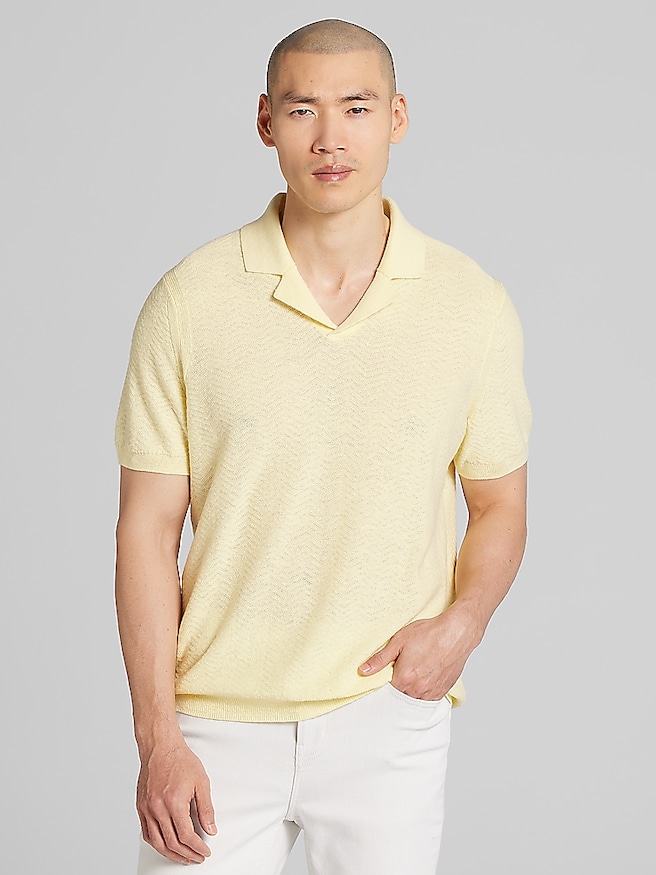
Sleek sweaters bring together a smooth knit surface, a clean silhouette, and proportions that work easily with tailored clothing. The effect comes from refinement rather than decoration: fine stitches, restrained detailing, and enough structure to hold a neat shape without looking stiff. Fine-gauge knitwear is especially suited to this look because its closely spaced stitches create a more even surface than a chunky knit, though gauge alone does not determine softness, weight, or quality. Materials make a noticeable difference in how a sweater feels and falls. Merino wool can provide a supple hand and natural resilience, while cashmere is valued for its softness and light, fluid feel. Cotton tends to have a more familiar, substantial touch, and silk blends can add subtle luster and a graceful drape. Blended yarns may balance the qualities of several fibers, with some incorporating nylon or polyester for strength or shape retention. The best choice depends on whether the sweater will sit directly against the skin, layer over a shirt, or spend much of the day beneath a jacket. A smooth, fine-knit crewneck can offer a clean backdrop for a blazer, while a V-neck leaves room for a shirt collar and a narrow glimpse of the layer beneath. A turtleneck creates an uninterrupted line from the chest to the neckline, giving tailored trousers a composed, understated companion. Cardigans can carry the same sleek character when the button band lies flat and the pockets do not add unnecessary volume. Ribbing at the cuffs and hem should finish the shape rather than dominate it. Solid colors emphasize the texture of the yarn, while a subtle heather can introduce depth without making an outfit feel busy. Navy, charcoal, black, cream, and muted earth tones are easy foundations, particularly when the goal is knitwear that moves comfortably between a desk, a dinner reservation, and an afternoon gathering. The appeal is quiet versatility: a sweater that looks considered without needing conspicuous details to make its point.
The fit of a sleek sweater should follow the body without pulling across it. A close silhouette is not the same as a tight one; the fabric needs enough ease to move across the shoulders, chest, and arms without outlining every layer underneath. On a traditional set-in sleeve, a shoulder seam near the edge of the shoulder usually supports a tidy profile. Sleeves should reach the wrist without forming heavy stacks of fabric, and the body should generally finish around the waistband or upper hip, depending on the cut and the rise of the pants. A hem that repeatedly rides up, a neckline that pulls backward, or horizontal tension lines across the chest can interrupt the smooth appearance. Excess length can be equally distracting when it bunches beneath a jacket. For someone who wears dress shirts regularly, a little extra room through the torso and upper arms helps keep the shirt from catching and gathering. A fine-knit V-neck over a crisp collar can look appropriate for a business-casual office, while a crewneck over a low-profile undershirt keeps the neckline simpler. With a blazer, a sweater works best when the jacket still closes comfortably and the sleeves move freely. A fine-knit turtleneck with tailored pants offers another polished combination for an evening out without relying on a tie. For less formal plans, dark denim or clean-lined chinos keep the same sweater grounded and relaxed. Texture matters as much as color in these pairings: smooth knitwear beside softly textured trousers can create contrast without a loud pattern. Tonal dressing also suits the theme, such as charcoal knitwear with black pants or a cream sweater with tan trousers. A slight difference in shade keeps the pieces distinct. The result should still feel wearable when seated at a meeting table, reaching for a bag, or settling into a restaurant booth. Those everyday movements reveal whether the sweater’s proportions are genuinely comfortable or simply look sharp while standing still.
Durability in sleek sweaters depends on the fiber, yarn construction, knitting, and care, not just how soft the fabric feels at first touch. An even knit, neatly finished seams, and cuffs that recover after gentle stretching are useful signs of thoughtful construction. Very soft fibers can develop pills where the arms rub against the body or where a bag strap repeatedly crosses the shoulder; some pilling does not automatically mean a sweater is poorly made. Removing pills carefully with an appropriate knitwear tool can help maintain a smooth surface, but aggressive brushing or shaving may damage delicate yarns. The care label should determine the cleaning method, since similar-looking sweaters can have very different requirements. When washing is permitted, gentle handling and the specified water temperature help protect the fabric. Avoid wringing, and dry flat when directed so the weight of a damp sweater does not stretch the shoulders or lengthen the body. Folded storage generally supports the shape of knitwear better than leaving it on a narrow hanger. Clean sweaters before extended storage, and keep them in a dry space protected from pests. Allowing a sweater to rest between wears can also give the knit time to recover its shape. These practical details matter most for pieces intended to become regular parts of a wardrobe rather than occasional accents. They also make sleek sweaters thoughtful gifts for a father, brother, partner, or friend marking a birthday, graduation, or new job. A familiar neckline, an established favorite color, and the recipient’s usual layering habits are more useful starting points than guessing at a dramatically different style. Someone drawn to expressive knitwear may also appreciate the visual variety associated with Cool Sweaters, while a preference for simplicity points toward subtle texture and restrained finishing. Across these preferences, a well-chosen sweater earns its place through an easy fit, a pleasing feel, and a shape that makes everyday outfits look more deliberate.