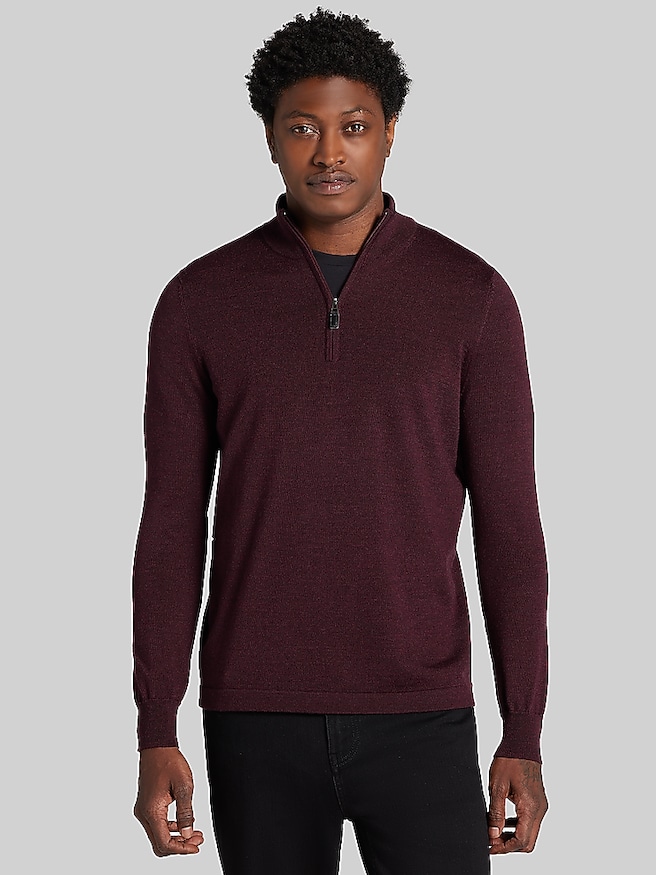
Cool men’s sweaters bring personality to everyday clothing through texture, proportion, and thoughtful details rather than loud decoration. A clean crewneck, a softly structured cardigan, or a quarter-zip with a neat stand collar can give familiar pants and shoes a distinct point of view. The appeal is in the balance: enough character to make an outfit memorable, with enough versatility to wear it again in another setting. Fine-gauge knits have a smooth, compact surface that sits comfortably beneath a jacket, while substantial ribbing and cable patterns create depth even in a single solid color. Navy, charcoal, oatmeal, and deep brown make easy foundations; burgundy, muted green, and rich blue introduce color without demanding an entirely new wardrobe. A textured crewneck with straight-leg jeans and suede loafers feels relaxed but considered, while a smooth V-neck over a collared shirt adds definition to an office outfit. Sweater polos offer another approach, combining the familiar shape of a polo collar with the softer drape of knit fabric. Cardigans can function as an alternative to a casual jacket, especially when their shoulder shape and button placement keep the silhouette tidy. For a similar emphasis on clean lines and versatile styling, Modern Men's Sweaters offers a related perspective on everyday knitwear. The most convincing looks usually have one clear focal point: a pronounced stitch, an interesting neckline, or a distinctive color. Keeping the surrounding pieces simple lets that feature stand out. A cable-knit sweater, for example, needs little more than dark denim and clean leather shoes to look complete. A plain, finely knit pullover leaves more room for patterned trousers or a checked shirt. These are clothes for office days with a relaxed dress code, dinner reservations, casual celebrations, and weekends that include more than one stop. Their usefulness comes from looking intentional without requiring the structure of a full tailored outfit. Even a familiar combination of a sweater and chinos can feel fresh when the hem, sleeve length, and knit texture work together.
Materials shape both the appearance of a sweater and the way it feels over hours of wear. Cotton often has a comfortable, familiar hand and can give knitted stitches clear definition, making it well suited to everyday pullovers and casual sweater polos. Merino wool is known for relatively fine fibers, a smooth drape, and natural resilience; in a fine-gauge knit, it can look especially polished over a shirt or beneath a blazer. Cashmere is valued for its softness and light feel, though the fiber name alone does not establish quality or durability. Yarn construction, knit density, finishing, and care all influence how a sweater holds up. Blends combine characteristics from multiple fibers, sometimes adding shape retention, strength, or stretch, depending on their composition. The care label and fabric description provide a better picture than appearance alone, particularly for anyone with sensitive skin or a preference for simple laundering. Fit matters just as much as fiber. A sweater worn mainly over a T-shirt can sit closer to the body than one intended to accommodate a button-front shirt. With a conventional set-in sleeve, the shoulder seam generally belongs near the edge of the shoulder; dropped shoulders are a deliberate exception that creates a more relaxed outline. Across the chest, the knit should lie comfortably rather than stretch into horizontal tension lines. Sleeves that finish near the wrist leave the hands free and help cuffs retain their intended shape. At the waist, a hem that rests around the upper hip often works well with untucked styling, though the right length depends on torso proportions and the rise of the pants. Seated comfort deserves attention, too: a sweater should not pull sharply across the back or bunch heavily above the lap. When layering under a jacket, smoother knits and less bulky sleeves help preserve easy movement. For a looser silhouette, balanced proportions keep the effect purposeful; relaxed shoulders and a straight body look cleaner when the sleeves and hem are not excessively long.
Construction details often become more noticeable after repeated wear. Even stitches, neatly finished seams, secure buttons, and resilient ribbing contribute to a sweater that continues to look composed beyond its first outing. A zipper should move smoothly without catching the surrounding knit, and a cardigan’s front edges should lie flat rather than twist or pull apart. Heavier fabric is not automatically more durable, just as a softer surface does not necessarily mean a sweater is delicate; the relationship between fiber, yarn, and construction matters more than any one feature. Friction from bag straps, desk edges, and repeated contact at the underarms can produce pilling, particularly on softer, fuzzier surfaces. Small pills do not always signal that a sweater is worn out, but removing them gently with an appropriate sweater comb or fabric shaver can help maintain its appearance. Following the garment’s care instructions is essential, since some knits tolerate machine washing while others require hand washing or professional cleaning. When washing is permitted, avoid wringing or aggressive agitation, and reshape the garment as directed. Many sweaters benefit from drying flat, supported across their full shape, rather than hanging while wet. Folded storage also helps prevent hanger marks and stretched shoulders. Practical details like these are worth considering when choosing knitwear for frequent use or as a gift. Someone who wears collared shirts to work may appreciate a smooth crewneck or V-neck with room for a shirt underneath, while someone whose routine centers on jeans and sneakers may prefer a relaxed ribbed pullover. A cardigan can suit a person who likes adjustable styling, and a sweater polo can appeal to someone who prefers a neckline with built-in definition. Familiar colors and a silhouette close to the recipient’s usual clothing make a thoughtful starting point. The lasting appeal of cool men’s sweaters is not tied to a single trend: it comes from an appealing texture, a comfortable fit, and the ease of reaching for a piece that already feels right with the rest of the closet.