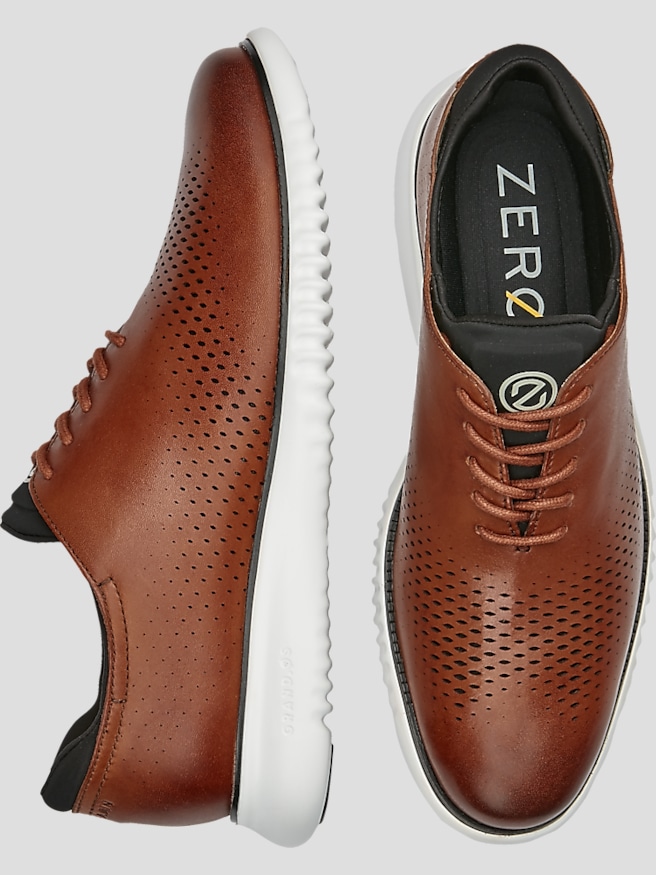
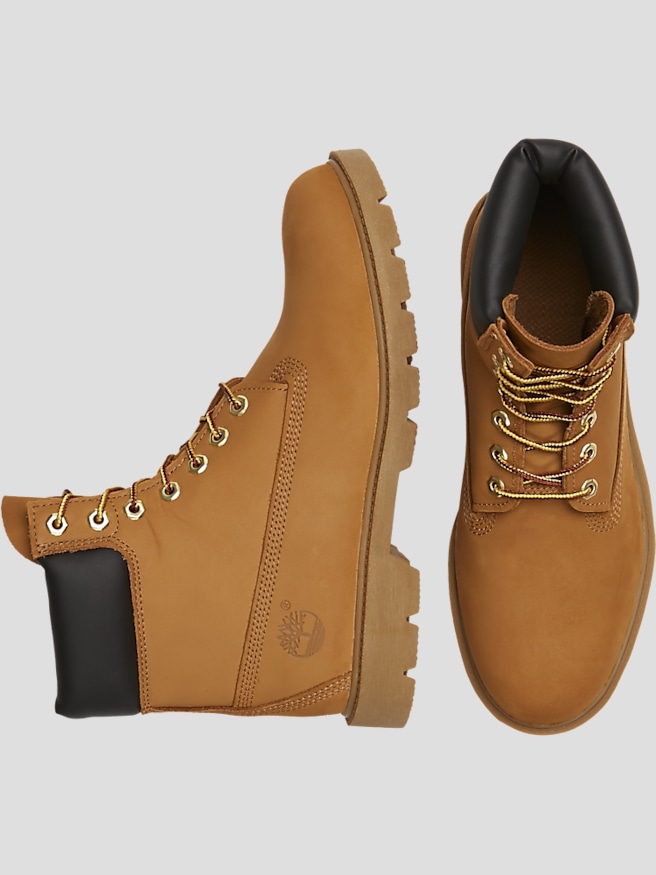
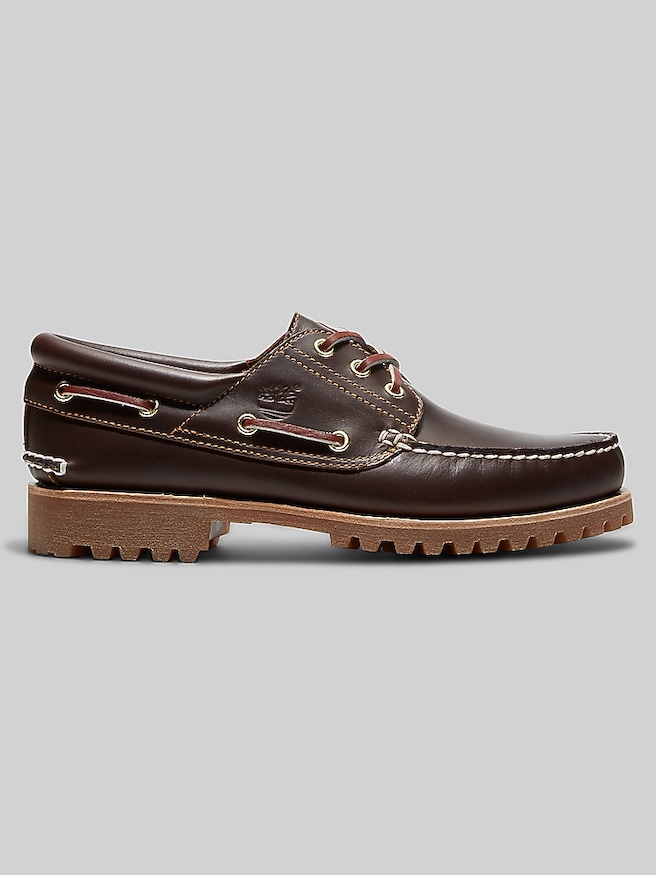
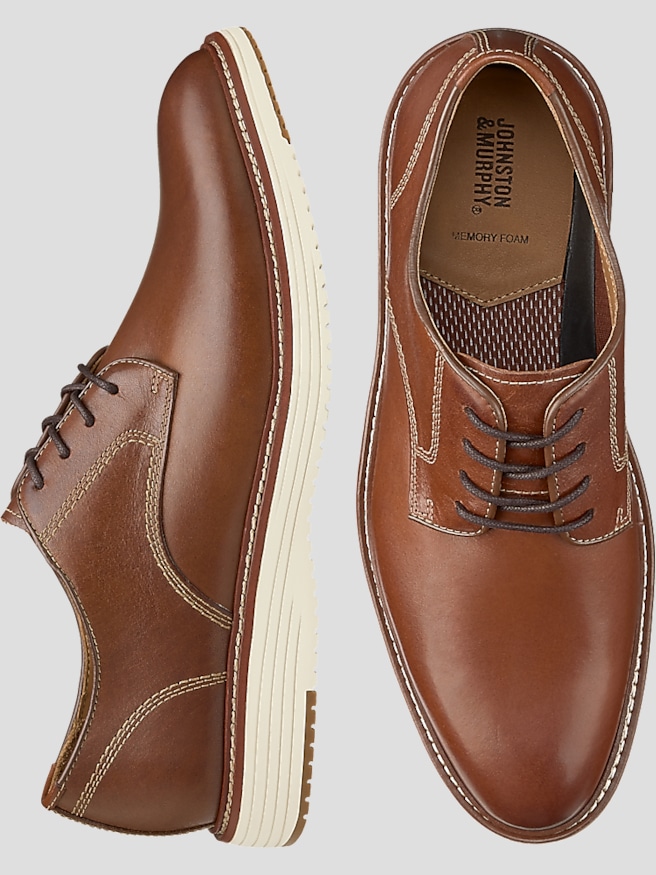
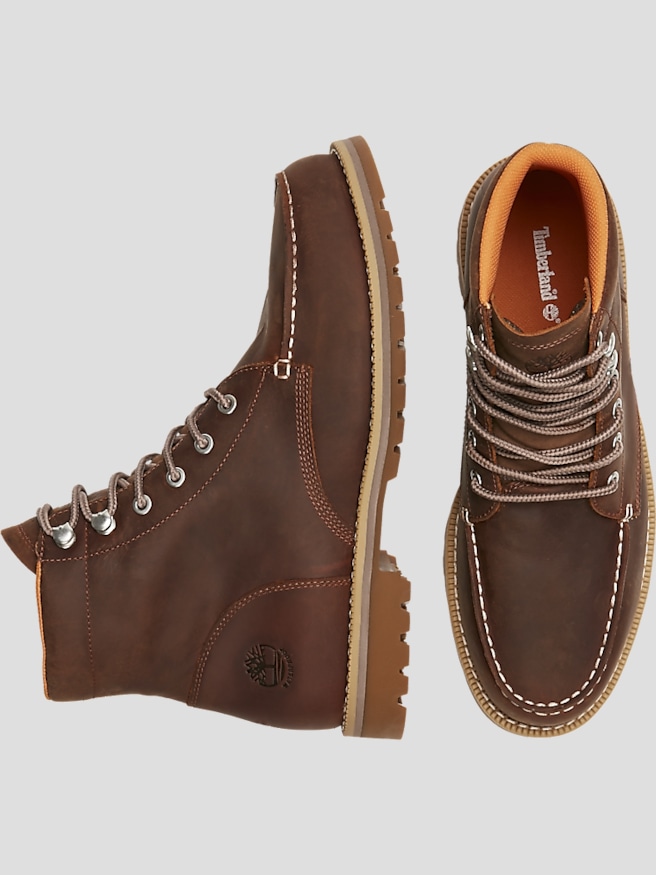
Classic dress-shoe styling and a lighter, more flexible feel come together in footwear designed to move comfortably between polished and casual settings. This approach combines familiar details, such as smooth leather uppers, lace-up closures, and neatly shaped toes, with cushioning and sole designs influenced by athletic footwear. The result can be a shoe that looks appropriate beneath tailored pants without feeling as structured underfoot as a traditional leather-soled dress shoe. Within this broader category, dress-casual lace-ups, understated sneakers, and easy slip-ons serve distinct purposes. A streamlined lace-up keeps an outfit composed for a client meeting or presentation, while a low-profile leather sneaker brings a relaxed finish to chinos and an unstructured jacket. A loafer offers a clean silhouette for dinners, office days, and celebrations where a full formal outfit is unnecessary. Shape and proportion matter as much as the overall style: a slim sole tends to blend into a tailored outfit, while a thicker, contrasting sole gives the shoe a more noticeably casual character. Black leather creates a crisp visual connection with charcoal or black trousers; brown shades work naturally with navy, tan, and many textured fabrics. Minimal stitching and discreet detailing generally make footwear easier to coordinate across several outfits. Decorative perforations, mixed textures, or prominent sole patterns add personality but also draw more attention toward the feet. For someone whose day includes a commute, desk time, and an evening reservation, the appeal lies in that balance of appearance and practical comfort. These shoes suit wardrobes built around pieces that work together rather than outfits reserved for a single occasion. They are not interchangeable with every type of footwear, however. A casual hybrid does not automatically replace a formal dress shoe at a black-tie event, and an athletic-looking sole does not make a leather lace-up suitable for running or gym training. Intended use remains the clearest starting point for judging whether a style belongs in an everyday rotation.
Materials and construction influence how a shoe looks, feels, and holds up through repeated wear. Smooth leather can develop gentle creasing and character, while suede has a softer, more textured appearance that usually reads as less formal. Textile panels may reduce bulk or allow more airflow, depending on their construction, but they also change the visual character of a dress-inspired shoe. Inside, lining materials, footbed contours, and cushioning all contribute to comfort; softness alone does not establish whether a pair will feel supportive after several hours. A cushioned midsole can soften the sensation of walking on hard surfaces, while the outsole supplies the contact layer that wears against the ground. Rubber placement, tread design, and flexibility vary, so a substantial-looking sole should not be assumed to provide a particular level of grip. Fit deserves equally close attention. Toes need room to lie naturally without pressure across the forefoot, and the heel should feel secure without rubbing. Lace-up styles allow some adjustment over the instep, whereas slip-ons rely more heavily on the relationship between the shoe’s shape and the foot. A size that works in one silhouette may not feel the same in another, especially when the toe shape or width changes. Trying footwear with the socks intended for regular wear gives a more useful impression than testing it with an unusually thick or thin pair. Walking across a room, turning, and standing still can reveal pressure points that are easy to miss while seated. Anyone who uses an orthotic should also consider interior depth and whether the existing footbed is removable, checking the relevant specifications rather than assuming compatibility. Persistent pinching or significant heel movement is not a dependable basis for a good fit. Leather may soften with wear, but a shoe should not require an uncomfortable break-in period to compensate for the wrong length or width. For days spent moving between appointments, a secure fit and balanced cushioning are more meaningful than an especially plush first impression.
Thoughtful care helps preserve both the appearance and usefulness of dress-casual footwear. Dust and grit can collect around seams and sole edges, so routine attention with a soft brush or suitable cloth keeps buildup from becoming part of the finish. Smooth leather benefits from cleaning and conditioning products appropriate to its surface, used according to the footwear maker’s directions; suede needs its own brush and compatible treatments rather than ordinary leather polish. Any care product is best tested on a discreet area before broader application. If shoes become damp, allowing them to dry naturally away from direct heat helps protect their shape and materials. Shoe trees sized appropriately for the pair can help maintain the uppers between wears, and alternating footwear gives the interiors time to air out. A shoehorn also reduces repeated crushing at the heel, a small habit that can make a noticeable difference in how neatly shoes retain their shape. Durability depends on more than the thickness of the sole: upper quality, stitching, attachment methods, and patterns of use all matter. Some constructions allow more repair options than others, so repairability should be confirmed rather than inferred from a dress-shoe appearance. In everyday outfits, the most useful pair often complements pants already worn frequently and feels appropriate for the places its owner actually goes. A simple leather sneaker can make sense for a relaxed office or a weekend lunch, while a refined lace-up may better serve someone who regularly wears tailored trousers. For a graduation gift, a career milestone, or a birthday, versatile footwear can be a thoughtful choice when the recipient’s size, width, and preferred silhouette are known. Matching an established favorite shape is usually more practical than guessing at an unfamiliar fit. For another view of this style category, Cool Hans Shoes provides a related browsing destination. Across dress-inspired and casual designs, lasting usefulness comes from the same combination: proportions that suit the wardrobe, materials that receive appropriate care, and comfort that remains convincing beyond the first few steps.