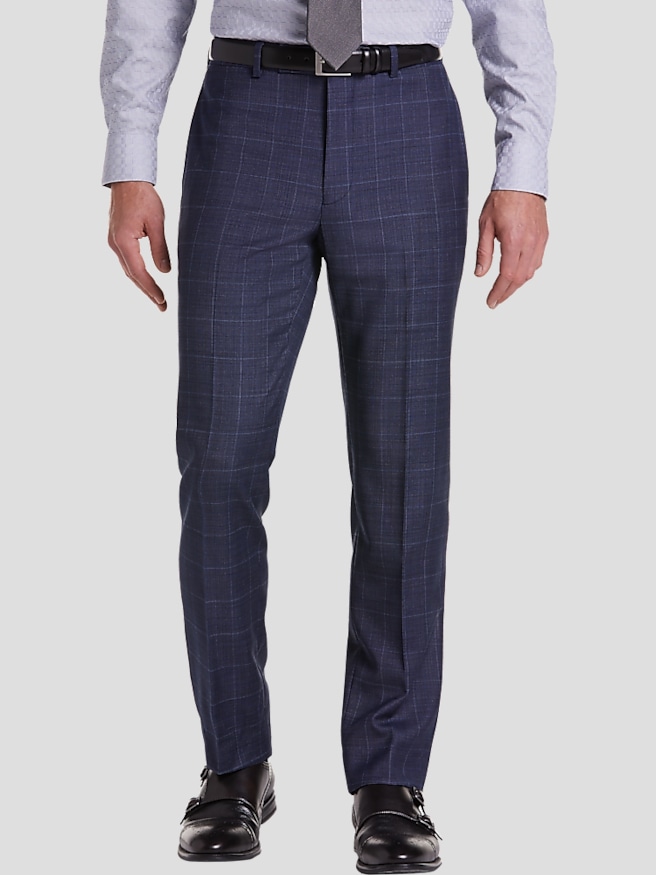
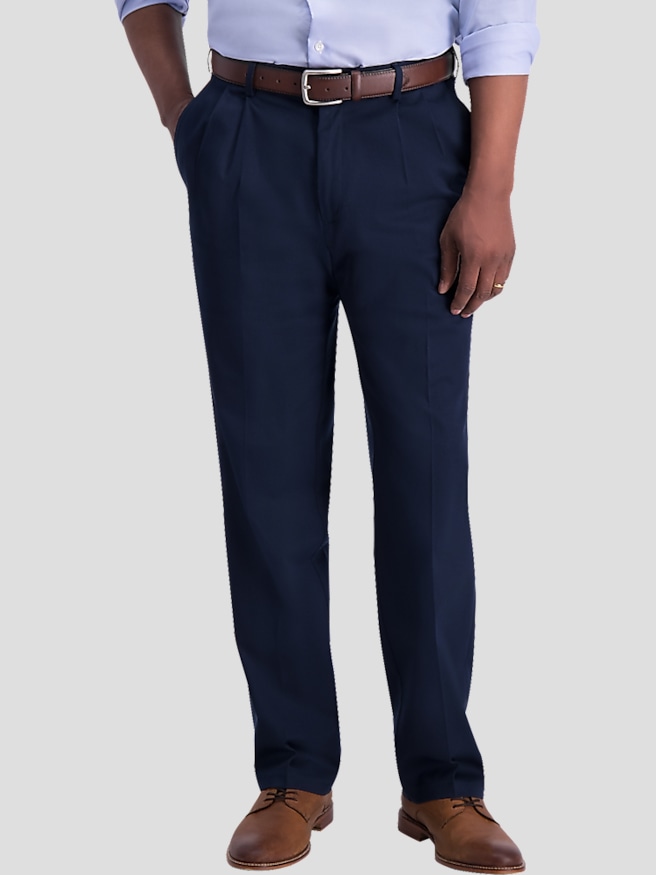
Cool blue pants bring a clean, composed look to a wardrobe, with shades ranging from pale sky blue and muted slate to rich cobalt and deep navy. For men, blue pants can serve as casual staples, office-ready separates, or tailored foundations for a dressed-up occasion, depending on their fabric and construction. The color alone does not determine how formal they look: a soft cotton twill with visible stitching feels more relaxed than a smooth wool trouser with a pressed crease, even when both are navy. Lighter blues create a noticeable contrast with dark jackets and brown shoes, while deeper blues offer a subtle base for patterned shirts and textured layers. White, light gray, cream, and beige are straightforward companions across the blue spectrum. Burgundy adds richness, olive brings an understated contrast, and a pale pink shirt can soften the look of dark blue dress pants without making the outfit feel overly coordinated. A navy trouser with a white button-down and brown leather loafers works well for a client lunch or an office that favors business casual clothing. A slate blue chino with a knit polo and simple sneakers feels more at home at a casual dinner or an afternoon gathering. Brighter blues make a stronger statement, so restrained shirts and footwear help keep the overall outfit balanced. When combining blue pants with a blue jacket, either choose clearly distinct shades and textures or use pieces intended to form a matching suit; two nearly identical blues can look unintentionally mismatched. For an approachable option between denim and dress trousers, Blue Khaki Pants offer another way to explore the color in a familiar casual silhouette. Here, khaki describes the style of pants rather than a requirement that the fabric be tan. That distinction makes blue an easy choice for anyone who likes the everyday usefulness of chinos but wants a different foundation for familiar shirts, jackets, and shoes.
Fabric and fit have as much influence on blue pants as the shade itself. Cotton twill has a diagonal weave that lends texture and often suits repeated everyday wear, though fabric weight, finishing, and construction all affect how it performs. Cotton-rich blends may include stretch fibers for easier movement when sitting at a desk, climbing stairs, or getting in and out of a car. Stretch can add comfort, but it should not compensate for a waistband or thigh that is too tight. Wool trousers generally have a more fluid drape and can hold a crisp crease, making them a useful choice for professional settings and dressier gatherings. Some blended fabrics are designed to resist wrinkles or recover their shape, but those qualities vary, so the fiber content and care label matter more than broad assumptions about a material. Surface texture changes the impression, too: matte fabrics tend to feel understated, while a smooth finish can make the same blue look sharper and more formal. A good fit allows the waistband to sit securely without a belt doing all the work. Front pockets should lie reasonably flat, the fly should close smoothly, and the seat should allow movement without pulling or excessive loose fabric. Slim fits follow the leg more closely; straight fits maintain a more consistent line; tapered cuts narrow toward the ankle while potentially leaving more room above the knee. These names are useful starting points, not universal measurements. Someone with fuller thighs may prefer more room through the upper leg even when seeking a narrow hem. Rise also matters because it determines where the waistband sits and affects comfort while seated. At the hem, little or no break produces a neat ankle line, while a slight break gives the fabric a small fold over the shoe. Trying pants with the footwear intended for them helps establish the right length, especially when alternating between low-profile loafers and shoes with a bulkier shape.
The best use for cool blue pants comes down to how they fit into a real routine. A professional who moves between desk work and in-person meetings may appreciate a tailored pair that sits comfortably and looks composed beneath an open-collar shirt or sport coat. For travel, sufficient room at the waist and knees can matter as much as wrinkle resistance, especially on a long seated journey. For celebrations with a smart-casual dress code, a blue trouser offers a polished alternative to jeans, particularly with a tucked-in shirt, leather belt, and clean shoes. More formal invitations may call for a suit or other specified attire, so separate pants should be considered in the context of the event rather than treated as suitable for every occasion. Blue pants can also make a thoughtful gift for someone who already wears the color regularly, provided the waist, inseam, preferred rise, and usual fit are known. Measurements from a well-fitting pair are often more useful than guessing from a size label alone. Once the fit is right, consistent care helps preserve both shape and color. Follow the garment’s care instructions first, since washable cotton pants and tailored wool trousers can require very different treatment. For machine-washable fabrics, turning pants inside out and washing with similar colors can help limit visible abrasion and color transfer. Use the recommended water temperature and drying method, and avoid excessive heat when the label cautions against it, particularly with stretch blends. Remove washable pants promptly after the cycle to reduce settled-in wrinkles. Tailored trousers benefit from being hung neatly, with seams aligned and any intended crease preserved; pressing or steaming should follow the fabric’s requirements. Give extra attention to hems, pocket edges, and the seat, where friction often shows first. Reinforced stitching and securely attached closures contribute to durability, but even sturdy pants last better when they are not strained by an overly tight fit or dragged under shoes. With considered proportions, complementary colors, and appropriate care, blue pants can become dependable pieces that work naturally with the rest of a wardrobe.