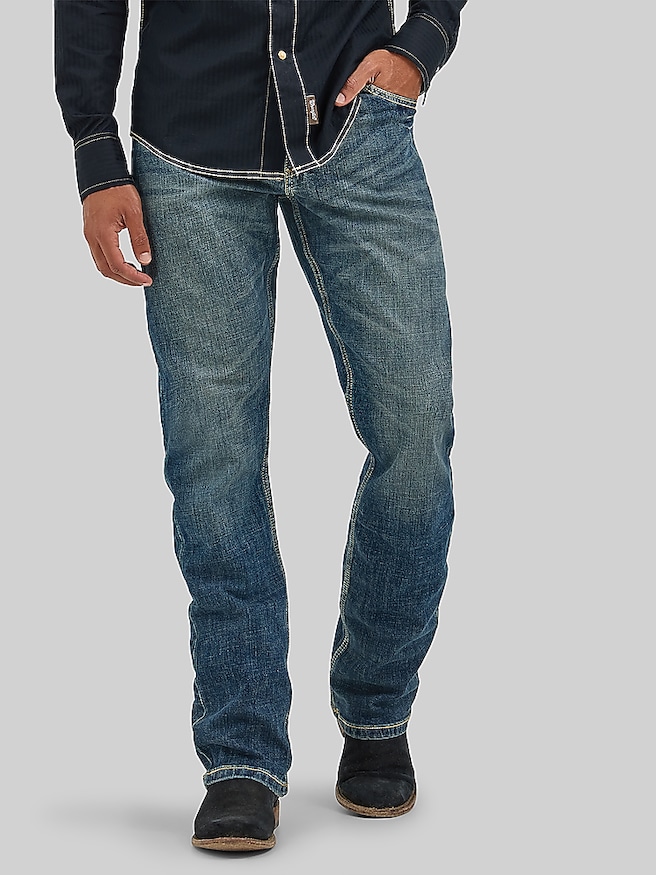
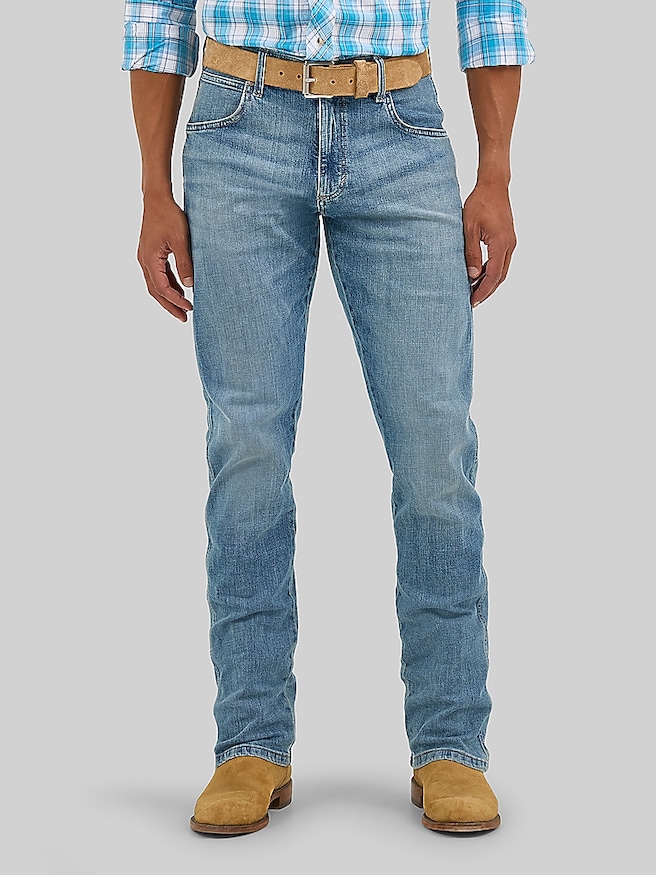
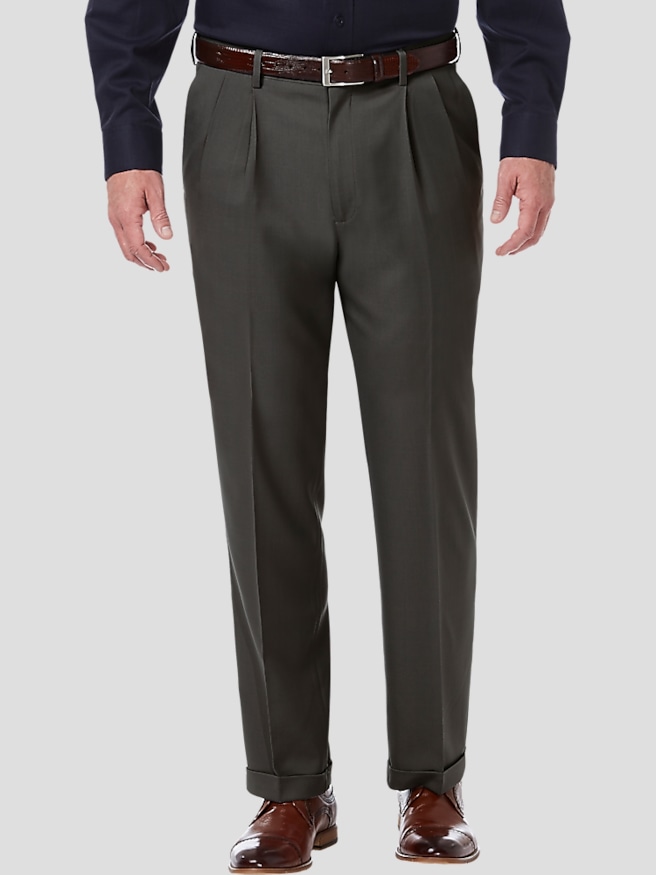
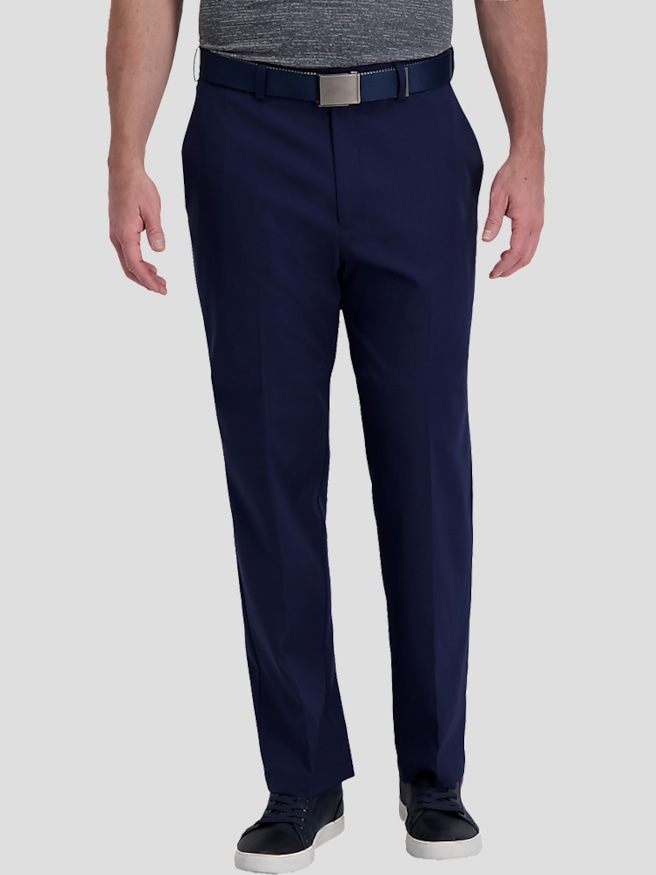
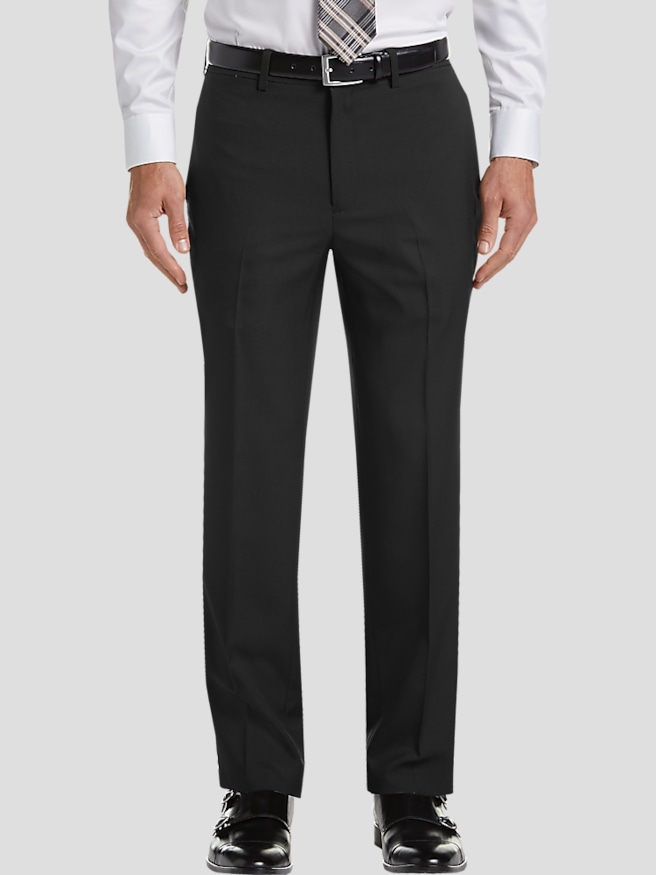
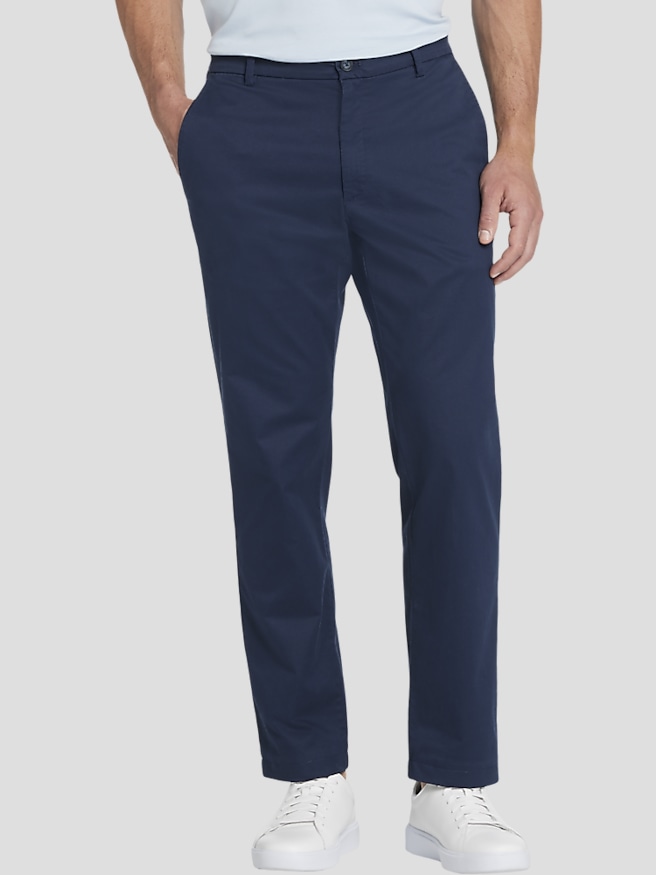
Blue khaki pants are casual trousers, typically made from cotton twill or a cotton blend, that pair the familiar construction of khakis with shades such as navy, medium blue, and muted slate. Although khaki traditionally refers to a tan color, the term also commonly describes the easygoing trouser style associated with chinos. Blue versions offer that same balance of structure and comfort while bringing a different color into an everyday wardrobe. Navy creates a clean foundation for white Oxford shirts, gray knitwear, and brown leather shoes, making it especially useful for offices with a business-casual dress code. Medium blue feels a little less formal and pairs naturally with an ivory polo, a small-check button-down, or a plain crewneck T-shirt. Muted blue shades can soften the contrast of an outfit without drawing attention away from the rest of it. Compared with jeans, blue khakis generally have a smoother surface and a more understated appearance; compared with tailored dress trousers, they usually feel more relaxed. That middle ground makes them useful for a workday followed by dinner, a birthday gathering at a neighborhood restaurant, or a weekend spent visiting friends. A tucked-in shirt and leather belt emphasize their trouser shape, while an untucked shirt with a tidy hem keeps the effect casual. Footwear changes the impression just as easily: loafers lend polish, lace-up leather shoes add structure, and simple sneakers keep the outfit informal. With a navy jacket, a lighter blue pair creates enough separation to look intentional rather than like mismatched suit pieces. With a dark navy pair, a gray or subtly textured sport coat can provide clearer contrast. Blue khaki pants work best when the rest of the outfit supports their straightforward character, with clean proportions, complementary colors, and details suited to the setting rather than unnecessary formality.
Fabric and fit account for much of the difference in how blue khakis feel throughout a full day. Cotton twill has a diagonal weave that gives the cloth substance and helps it stand up to regular wear, though durability also depends on fabric weight, construction, and care. All-cotton fabric can feel crisp at first and become softer with use, while blends containing elastane or spandex can provide extra give when sitting, bending, or climbing stairs. A modest amount of stretch does not replace a proper fit; the waistband should still sit comfortably without needing a belt to hold excess fabric in place. Some blends include polyester, which can contribute to shape retention and wrinkle resistance, but the exact behavior depends on the fabric and finish. A smooth, finer twill tends to look more polished, while a more pronounced weave gives the trousers a sturdier, casual appearance. Slim fits follow the leg more closely, straight fits maintain a consistent line, and relaxed fits provide additional room through the seat and thighs. These labels vary, so the relationship between the waistband, rise, and leg shape matters more than the name alone. Pants that feel comfortable while standing should also allow an easy seated position without pulling across the lap or opening at the pockets. Horizontal strain lines, twisting seams, or a waistband that digs in can indicate that the cut is not the right match. Hem length influences the silhouette, too. A slight break over the shoe creates a traditional finish, while little or no break gives a cleaner outline with loafers or understated sneakers. Excess fabric pooling at the ankle can obscure an otherwise good fit. Secure buttons, neatly finished seams, and pocket openings that lie flat are useful construction details. For commuters, desk workers, and anyone moving between several settings in a day, that combination of comfortable proportions and dependable construction matters more than a narrowly defined fit trend.
Regular care helps blue khaki pants keep their color and shape, particularly in deeper navy shades where fading or pressed-in shine can be noticeable. The garment’s care label should determine washing, drying, and ironing methods because cotton, stretch blends, and special finishes do not all respond the same way. When machine washing is permitted, turning trousers inside out, washing with similar colors, and avoiding unnecessary heat can help limit surface wear and color loss. Prompt attention to a small food spill is usually easier on the fabric than repeated scrubbing after the stain sets; any stain treatment should be compatible with the care instructions. Overdrying may contribute to shrinkage or stress stretch fibers, so the recommended drying method matters as much as the wash cycle. Removing pants promptly and smoothing the waistband, pockets, and legs can reduce the need for extensive ironing. If ironing is allowed, the appropriate heat setting and a pressing cloth can help prevent shine, especially on dark fabric. Hanging trousers neatly between wears also helps preserve their line, and rotating pairs gives each one a break from repeated friction at the seat, knees, and pocket edges. For everyday use, blue khakis can anchor a compact wardrobe because the same pair can accompany a patterned shirt, a solid knit, or a casual jacket without demanding a different set of accessories for each outfit. For occasions with a more tailored dress code, Light Blue Dress Pants offer a related direction when a dress-trouser silhouette is more appropriate than casual twill. Blue khakis can also make a practical gift for a dad, partner, or recent graduate who appreciates clothing that works across familiar routines. Knowing the recipient’s preferred rise, usual waist and inseam measurements, and favored leg shape makes that choice more personal. A pair that sits comfortably, coordinates with shoes already in regular rotation, and suits the wearer’s actual day is more likely to become a dependable wardrobe staple.