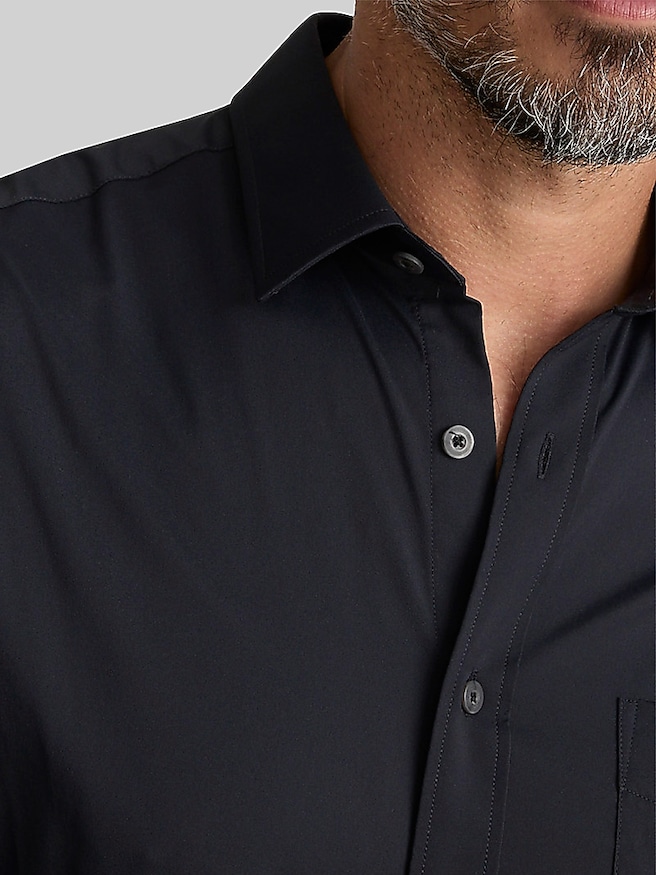
Conference shirts are shirts suited to professional gatherings, from polished dress shirts for presentations and client meetings to button-downs and polos for business-casual sessions. The right choice reflects the event’s dress code, the wearer’s role, and the impression the outfit should make. An attendee moving between breakout sessions may prefer an easy-to-wear button-down with chinos, while a keynote speaker may want a crisp dress shirt that sits neatly beneath a suit jacket. Exhibitors and event staff often benefit from a consistent shirt color or silhouette that makes a team recognizable without requiring every outfit to look identical. White, light blue, and subtle striped shirts are versatile foundations because they work with many suit colors and keep attention on the conversation. Solid navy or other deeper shades can give a polo or casual button-down a more understated look, particularly with tailored trousers. Fabric texture also changes the impression: a smooth shirt reads more formal, while an oxford weave brings a slightly more relaxed character to a blazer-and-chinos combination. For conferences with a business-professional dress code, a long-sleeve dress shirt with a structured collar creates a dependable foundation for a tie and jacket. At less formal industry gatherings, an open collar can look intentional when the collar holds its shape and the shirt fits cleanly across the shoulders. Speakers appearing on camera may prefer solid colors or restrained patterns, since very tight stripes and small checks can produce distracting effects on some screens. A shirt should support the setting without becoming the focus of it. Whether the day includes a panel discussion, introductions at an exhibit booth, or a dinner with colleagues, conference shirts help bridge the gap between a professional appearance and the practical demands of an event schedule. Their usefulness extends beyond the venue to office presentations, interviews, and other occasions where a considered outfit matters.
Material and construction have a direct effect on how a conference shirt feels through hours of sitting, standing, and reaching for a handshake. Cotton is a familiar choice for its softness and breathability, with the weave influencing both the surface and the overall character of the shirt. Poplin typically has a smooth, fine texture that works well with tailored clothing; oxford has a more noticeable woven texture; and twill is recognizable by its diagonal weave and often has a supple drape. Cotton blends can balance a natural feel with easier maintenance, although performance depends on the blend and finish. Stretch fabrics may offer additional flexibility across the back and arms, useful when carrying a laptop bag or moving between sessions. Features described as wrinkle-resistant or moisture-wicking can also be helpful, but those properties should be confirmed on the garment label rather than assumed from appearance. Fit is equally important. Shoulder seams should sit near the edge of the shoulders, the collar should close comfortably if worn with a tie, and the chest should lie smooth without pulling at the buttons. A slim fit can create a close silhouette beneath a jacket, while a classic fit generally allows more room through the torso. Neither should restrict a natural reach across a table or feel strained when seated. Sleeve length matters when a jacket comes off: cuffs that finish near the wrist look composed without sliding over the hands. Shirts intended to stay tucked need enough length to remain secure through repeated movement, while styles designed for untucked wear should end neatly rather than hanging far down the thigh. Durable details include tidy seams, securely attached buttons, and well-finished cuffs and collars. These areas receive repeated handling, so sound construction helps a shirt maintain its appearance beyond a single event. For professionals who attend conferences regularly, consistent fit and dependable construction can be more useful than an attention-grabbing pattern.
Care and packing help preserve the qualities that make conference shirts useful in the first place. The care label is the best reference for washing, drying, and ironing, especially when a fabric includes stretch fibers or a special finish. Some shirts can be machine washed, while others call for professional cleaning or a gentler routine. Prompt attention to marks around the collar and cuffs can help keep a frequently worn shirt looking fresh, and replacing a loose button before travel avoids an unnecessary distraction at the venue. Removing a washable shirt from the dryer promptly, when its care instructions permit tumble drying, can reduce the amount of pressing needed. A suitable iron setting or careful steaming may smooth creases, but fabric instructions should always take priority. For travel, fastening a few buttons and folding along clean lines helps limit bunching inside a suitcase; unpacking and hanging shirts upon arrival gives folds a chance to relax. An extra shirt is practical for a multiday conference or a schedule that moves directly from presentations to an evening reception. Coordinating shirts around the same trousers, belt, and shoes also makes a compact travel wardrobe easier to use. A light blue button-down might accompany a navy suit for a formal session, then work with gray trousers once the jacket and tie are set aside. A neatly fitted polo can suit a casual networking event when the dress code allows it, while a textured button-down offers another option for workshops and informal introductions. Beyond professional gatherings, Play Shirts can complement a wardrobe built for more relaxed plans. Conference shirts also make thoughtful gifts for someone starting a new role, preparing for a first major presentation, or building a professional wardrobe, provided the collar size, sleeve length, and preferred fit are known. A shirt that fits comfortably and works with clothing already in the closet is likely to have a useful life well beyond the closing session.