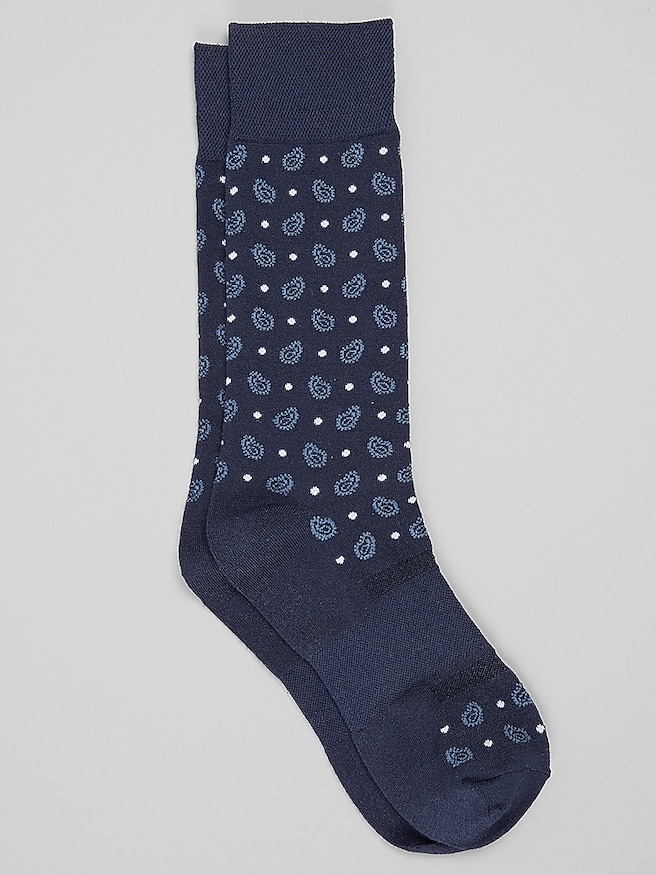
Comfortable dress socks combine soft fibers, a smooth interior, and a secure fit that stays in place without squeezing the leg. Their comfort depends on more than the fabric alone: toe seams, cuff construction, thickness, and the shape of the heel all affect how a pair feels inside dress shoes. A fine, even knit creates a less bulky layer between the foot and the shoe, especially across the toes and beneath a fitted vamp. Cotton blends offer a familiar softness and breathable feel, while fine merino wool can help manage moisture and remain comfortable through extended wear. Viscose blends often have a silky texture that feels smooth against the skin. Nylon and polyester can add strength and help fabric hold its shape, and a small amount of spandex provides stretch for a closer, more flexible fit. Fiber percentages matter because a blend’s performance depends on its overall construction, not simply the presence of one desirable material. A cotton-rich sock with well-balanced stretch, for example, may sit more neatly inside a loafer than a thicker knit with a softer initial feel. Flat or carefully finished toe seams help minimize rubbing across the tops of the toes, particularly in shoes with a close-fitting toe box. Light cushioning at the heel or sole can soften contact underfoot, provided there is enough room in the shoe to accommodate it. Reinforced heels and toes add support in areas that experience repeated friction, although reinforcement should still feel smooth rather than stiff. For someone moving from a morning commute to several hours at a desk and an evening event, that balance of softness, breathability, and low-profile construction matters more than plushness alone. The most comfortable dress sock is not necessarily the thickest or stretchiest; it is one that works with the foot and the shoe without folds, pressure points, or frequent adjustment. Even a beautifully finished fabric can become distracting when excess material gathers beneath the arch or a bulky seam presses against a toe.
Fit gives comfortable dress socks their dependable feel throughout the day. The heel pocket should sit around the heel rather than pulling beneath the foot or climbing toward the ankle, and the fabric across the toes should allow natural movement without loose material collecting at the front. Size ranges based on shoe size provide a useful starting point, but foot width, calf shape, and the amount of stretch in the knit also influence comfort. A cuff should hold the sock securely without leaving an uncomfortable band of pressure, and the leg should remain smooth instead of sliding down into folds. Mid-calf lengths work well with many dress trousers and business casual outfits, while over-the-calf lengths provide more coverage when sitting or crossing a leg. That extra height can help maintain an uninterrupted line between the trouser hem and the shoe during a meeting, interview, or formal dinner. Neither height should require repeated pulling or feel stretched to its limit. Shoe fit is equally important: a thin dress sock typically suits a closely fitted oxford, while a little more cushioning may feel appropriate in a roomier derby or boot. The same pair can feel quite different across those shoe shapes, making overall volume an important consideration. For a particularly gentle feel against the foot, Soft Dress Socks offer a related focus on fabric texture, though softness still needs to work alongside secure construction and a suitable fit. Appearance remains part of the equation. Navy, charcoal, brown, and black create understated combinations with tailored clothing, and choosing a shade close to the trousers helps the outfit look continuous when seated. Fine ribs, small geometric patterns, or restrained stripes add detail without overwhelming a polished look. Raised textures and heavier knits can occupy more space inside a shoe, so visual interest should not come at the expense of comfortable movement. A smooth, well-fitted sock can finish an outfit quietly, without calling attention to itself or interrupting the way a trouser leg falls.
Lasting comfort also depends on how dress socks hold up between wears. Resilient fibers, neatly finished seams, and reinforcement at high-friction areas can help a pair retain its shape through repeated use, but care needs vary by blend. The care label is the best reference for washing and drying, especially for wool-containing fabrics or delicate knits. Turning socks inside out before washing can help clean the surfaces closest to the foot and reduce abrasion on the visible side. A gentle wash cycle and a mesh laundry bag may help protect finer fabrics from snagging against zippers or other hardware. Where the label permits, air-drying can limit exposure to dryer heat that may weaken stretch fibers or contribute to shrinkage. Socks should be completely dry before being put away, and folding pairs together rather than stretching one cuff over the other can help preserve the opening’s shape. Checking the heels, toes, and elastic periodically also makes everyday wear more comfortable: thinning fabric, rough repairs, or a cuff that no longer holds are signs that a pair may not perform as intended. For office routines, having several suitable pairs makes it easier to keep clean socks in rotation without repeatedly washing the same pair after every workday. For weddings, presentations, and other occasions involving long stretches of standing followed by sitting, a familiar fit can be especially valuable; the sock should remain unobtrusive through both movement and stillness. Comfortable dress socks also make a practical gift for a graduate preparing for interviews, a father who wears tailored clothing, a wedding attendant, or someone building a professional wardrobe. Shoe size, preferred height, and usual clothing colors are useful details when choosing a gift, while fabric sensitivities deserve consideration before selecting a blend. Understated patterns and versatile shades tend to fit easily into an established wardrobe. Across daily wear and special occasions, the details that matter remain consistent: a smooth feel, reliable coverage, appropriate thickness, and construction that keeps its shape without making the wearer think about it.