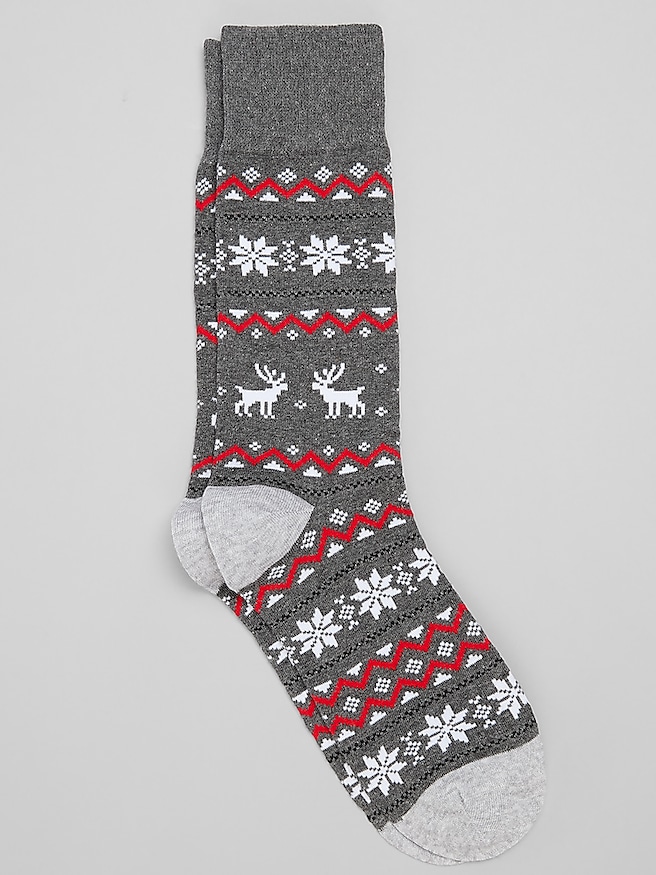
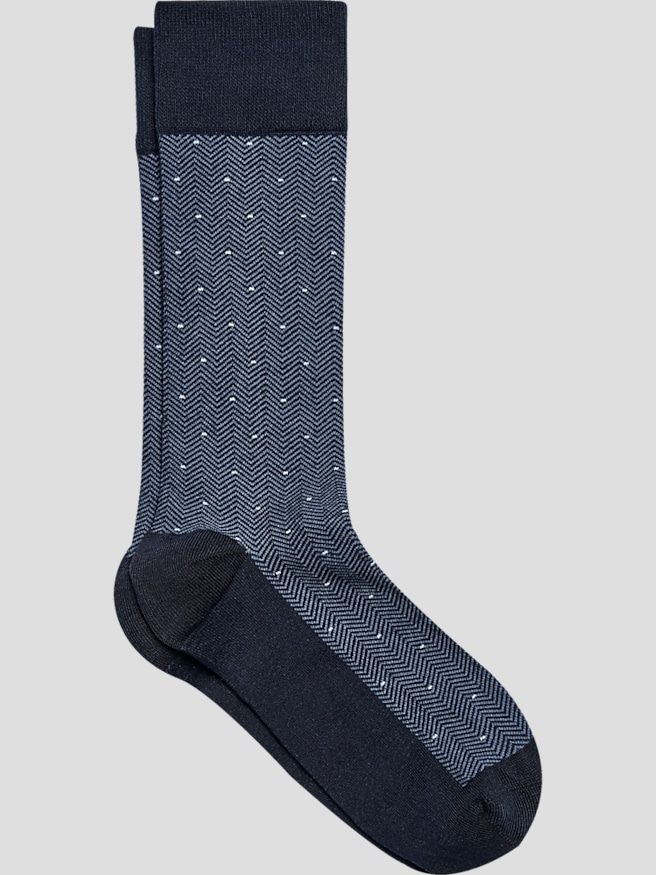
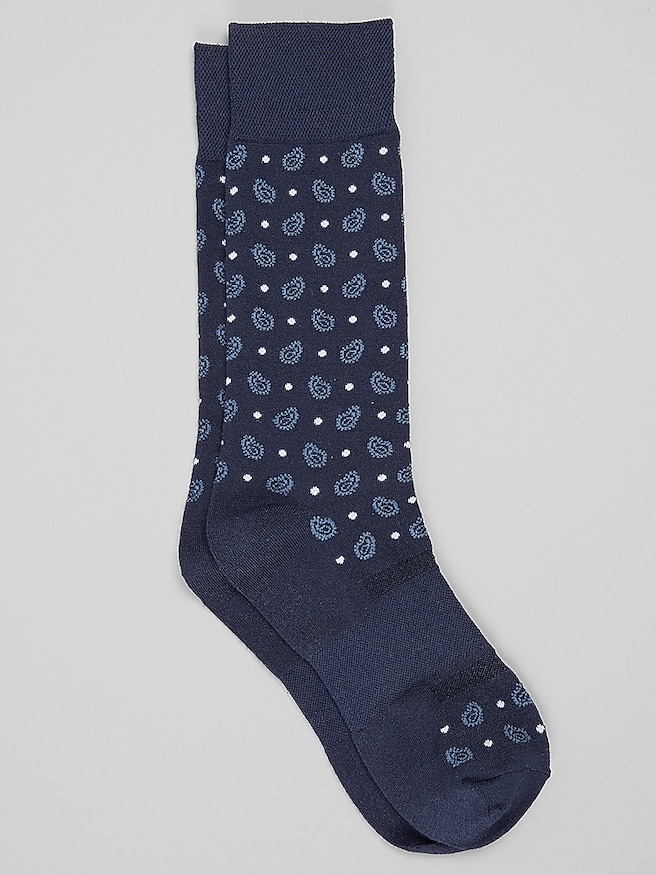
Men's comfortable socks bring together a soft feel, a secure fit, and enough cushioning for the shoes and activities that shape the day. Comfort is not simply a matter of choosing the thickest fabric: a lightweight pair can feel better inside close-fitting dress shoes, while a more substantial knit can soften the feel of boots on a long commute. The most useful features are often the least noticeable once shoes are on, including a smooth toe area, a heel that stays in position, and a cuff that holds without digging into the calf. Materials help determine how socks feel from the first step to the last. Cotton blends offer familiar softness for everyday wear, though cotton absorbs moisture and can take longer to dry than many performance fibers. Merino wool blends can help manage moisture and temperature, making them useful during the cooler months when the day moves between chilly sidewalks and heated rooms. Fine wool fibers can feel soft against the skin, while the finished knit and blend influence thickness, stretch, and texture. Polyester and nylon are often included to support moisture transport, quicker drying, or resistance to abrasion; a small amount of elastane or spandex helps the fabric recover its shape. No single fiber guarantees comfort, because yarn quality, construction, sizing, and shoe fit all work together. A smooth dress sock may suit someone spending the day in leather lace-ups, while a cushioned crew can make more sense with casual sneakers or roomy boots. For someone whose feet warm up easily, a lighter knit may be preferable to a plush one, even in cool weather. The best match leaves toes room to move, keeps excess fabric from collecting under the foot, and feels appropriate for the pace of an ordinary day, whether that means sitting at a desk, walking between appointments, or standing through an evening celebration.
Fit deserves as much attention as fabric when choosing comfortable socks for men. Sock size ranges should correspond to shoe size, but foot width, instep height, and calf shape also influence the feel. A properly positioned heel pocket helps keep the sock from twisting, while a close, flexible fit through the foot reduces loose folds that can rub inside a shoe. Toe seams should feel unobtrusive rather than forming a ridge across the front of the foot. Stretch through the arch can help a sock stay in place, though an overly tight band may become distracting over several hours. At the top, a broad, flexible cuff can distribute pressure more comfortably than a narrow band with a firm grip. Height changes both coverage and appearance. No-show socks work with low-cut footwear when their shape stays below the shoe opening, but heel retention matters because slipping fabric quickly becomes uncomfortable. Ankle socks provide limited coverage for casual wear, while crew socks extend farther up the leg and pair naturally with sneakers and boots. Longer dress socks help maintain coverage between trousers and shoes when sitting down or crossing a leg. Cushioning should also match the space inside the footwear. Extra padding beneath the heel and forefoot can add softness, but a thick sock squeezed into a snug shoe may leave less room for the foot and create pressure. For a workday that ends with dinner out, a fine-gauge sock with a smooth finish can feel comfortable without adding bulk beneath tailored trousers. For a relaxed afternoon in jeans and boots, a medium-weight knit may offer a more substantial feel. Color and pattern provide another way to make an everyday essential feel considered: dark solids create a quiet transition from trousers to shoes, while men's argyle socks introduce a familiar diamond pattern that complements textured trousers, chinos, and polished footwear without changing the need for a comfortable fit.
Durability and care help preserve the qualities that make socks enjoyable to wear. Reinforcement at the heel and toe can strengthen areas exposed to repeated friction, while a resilient knit helps maintain shape through regular wear and washing. Thickness alone is not a reliable measure of longevity; a lighter sock with sound construction may hold its shape better than a heavier one with weak elastic recovery. Small signs of wear are worth noticing, including thinning beneath the ball of the foot, stretched cuffs, and rough patches around the toes. Keeping toenails smooth and checking shoes for worn linings can also limit unnecessary snagging and abrasion. Care instructions on the label should take priority, since cotton, wool, and synthetic blends may call for distinct washing and drying methods. Turning socks inside out can help expose the inner surface to cleaning while reducing friction on the exterior. A gentle wash cycle and moderate temperatures are often useful, but wool blends may require a dedicated setting or flat drying. Excessive dryer heat can weaken stretch fibers or cause shrinkage, changing a comfortable fit into one that feels tight or slips out of position. Fabric softener may interfere with moisture-managing finishes, so label guidance matters for performance fabrics. Letting socks dry fully before wearing them again and rotating several pairs can reduce repeated stress on the same fabric. These practical details matter for office commuters, frequent travelers, people who spend much of the day on their feet, and anyone who appreciates a fresh, comfortable start when getting dressed. Socks can also make a thoughtful gift for a parent, partner, graduate, or colleague when the choice reflects everyday habits rather than appearance alone. Fine knits suit a tailored wardrobe, softer cushioned constructions complement casual routines, and versatile colors are easy to coordinate. Across workdays, weekends, and dressier occasions, well-chosen socks provide a simple foundation: fabric that feels good against the skin, coverage that suits the shoes, and a fit that stays comfortable as the day unfolds.