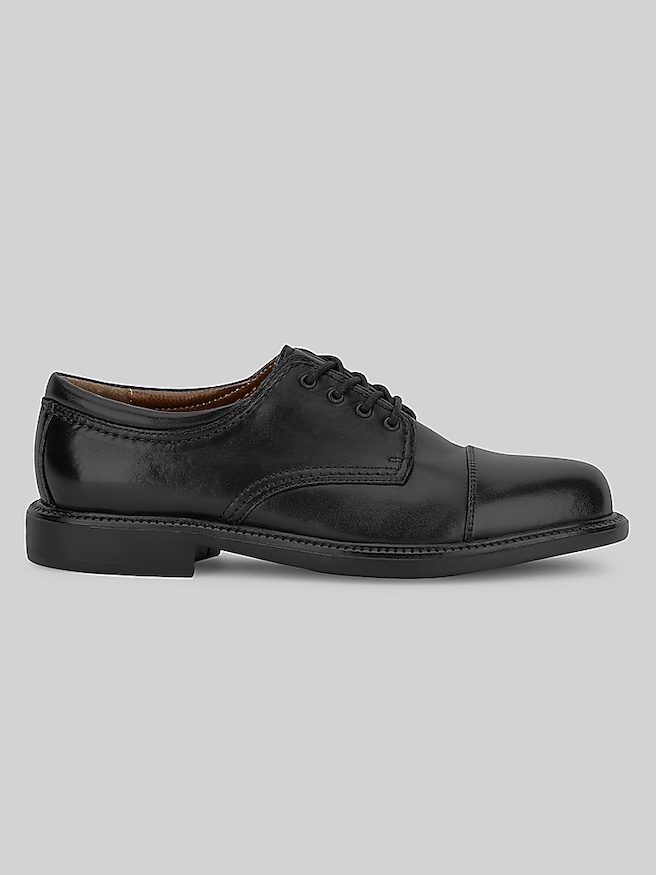
Comfortable business shoes for men bring together a professional appearance and the kind of fit that makes sense beyond a seated meeting. A workday can include a walk from the parking garage, several flights of stairs, a presentation delivered on your feet, and an evening event before heading home. Shoes that look appropriate with tailored clothing should also accommodate that movement without distracting from the day’s responsibilities. The balance starts with a shape that suits both the foot and the workplace: a streamlined profile for a formal office, a slightly more relaxed silhouette for business casual settings, and enough room through the forefoot to avoid a cramped feeling. Oxfords have a clean, close-laced appearance that complements suits and dress trousers, while derbies offer an open-lacing design that allows more adjustment across the top of the foot. Loafers bring a less formal character to chinos, tailored separates, and offices where a jacket is optional, though their slip-on construction makes a secure heel fit especially important. Detailing also changes the overall impression. A plain toe keeps the look understated, a cap toe adds definition, and subtle broguing introduces texture without overwhelming an outfit. Color can help establish a dependable work wardrobe, too. Brown tones pair naturally with navy trousers and many business casual combinations, while Black Business Shoes for Men complement charcoal tailoring and more formal professional settings. A restrained finish is often easier to coordinate than a highly contrasting sole or pronounced decorative detail. For consultants moving between client offices, educators spending hours standing, or managers balancing desk work with time on a busy floor, the right business shoe needs to feel appropriate in several settings. Comfort and polish are not competing priorities; they are separate qualities worth considering together, especially when the same pair will accompany an interview, a regular office day, and a company dinner.
Materials and construction have a substantial influence on how business shoes feel over time. Leather uppers can gradually become more flexible with wear, while retaining the structure that gives a dress shoe its defined shape. Smooth leather offers a crisp finish that responds well to regular cleaning and polishing; textured leather can lend a less formal appearance and make small surface marks less noticeable. Suede has a softer, more casual visual character that works particularly well with chinos and textured tailoring, although its nap needs care suited to that material. Synthetic uppers vary in flexibility, surface finish, and breathability, so the material label alone does not tell the whole comfort story. Interior details deserve equal attention. A smooth lining, neatly finished seams, and padding placed where the heel meets the collar can reduce distracting friction. Underfoot cushioning may soften the feel of a firm floor, but excessive softness is not automatically better for a long day. A stable base and an insole that supports the foot without creating pressure can be more useful than padding that compresses immediately. Some shoes have removable footbeds, which can provide space for a compatible insert when the overall fit allows it. The outsole also affects the wearing experience. Rubber soles can offer flexibility and grip, while leather soles bring a traditional dress appearance and a distinct feel underfoot. Low-profile combinations can preserve a refined silhouette while adding practical cushioning or traction. The best balance depends on whether the day involves mostly sitting, repeated walking, or extended periods of standing. A shoe should flex comfortably near the ball of the foot rather than feel rigid through every step, and its weight should remain manageable during repeated movement. Construction quality shows up in details such as even stitching, secure sole attachment, and a heel that feels steady rather than wobbly. Those features matter most when business footwear is expected to become a regular part of the workweek rather than an occasional finishing touch.
Fit is the foundation that brings those details together. A polished upper and a cushioned footbed cannot compensate for toes pressed against the front or a heel that lifts noticeably with each stride. There should be comfortable space around the toes, a secure hold through the midfoot, and no concentrated pressure across the instep. Trying shoes with the socks normally worn to work gives a more realistic sense of how they will feel with the complete outfit. Feet can differ slightly in size, and their dimensions can change over the course of a day, making fit on both feet more informative than a size label alone. For broader feet, an appropriate width is generally a better solution than extra length, which can leave the heel loose and place the shoe’s flex point too far forward. Laces should allow adjustment without needing to be pulled excessively tight. Slip-on styles should stay secure without gripping the foot harshly. New leather may soften, but a painful fit is not something to accept in anticipation of a break-in period. Care helps preserve both appearance and wearing comfort after the fit is established. Removing surface dust with a soft brush or cloth keeps buildup from settling into seams, while material-appropriate conditioner and polish can help maintain smooth leather. Suede benefits from a dedicated brush rather than products intended for polished leather. Letting shoes dry naturally after cleaning and allowing them to rest between wears helps manage interior moisture. Shoe trees can support the original shape, and a shoehorn helps protect the heel counter from being crushed when putting shoes on. Periodic attention to worn heel edges, thinning soles, and compressed insoles can reveal when maintenance or replacement deserves consideration. Business shoes can also make a thoughtful gift for a graduate starting an office role, someone preparing for interviews, or a professional taking on new responsibilities. Knowing the recipient’s size, width, typical dress code, and preferred fastening style makes that choice more personal. A dependable pair earns its place through repeated use: looking composed at a conference table, feeling comfortable during a walk between buildings, and fitting naturally into the routines of a working day.