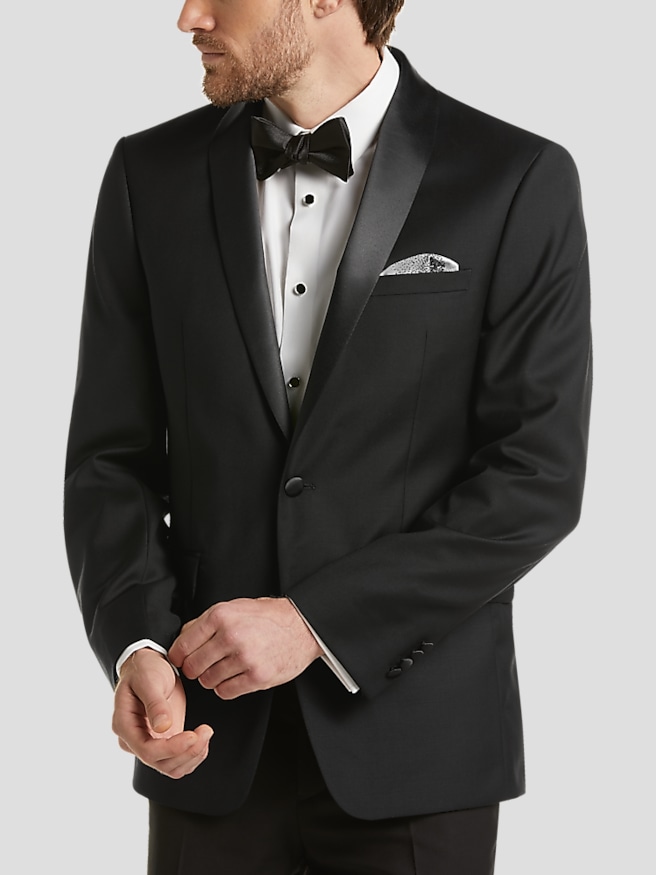
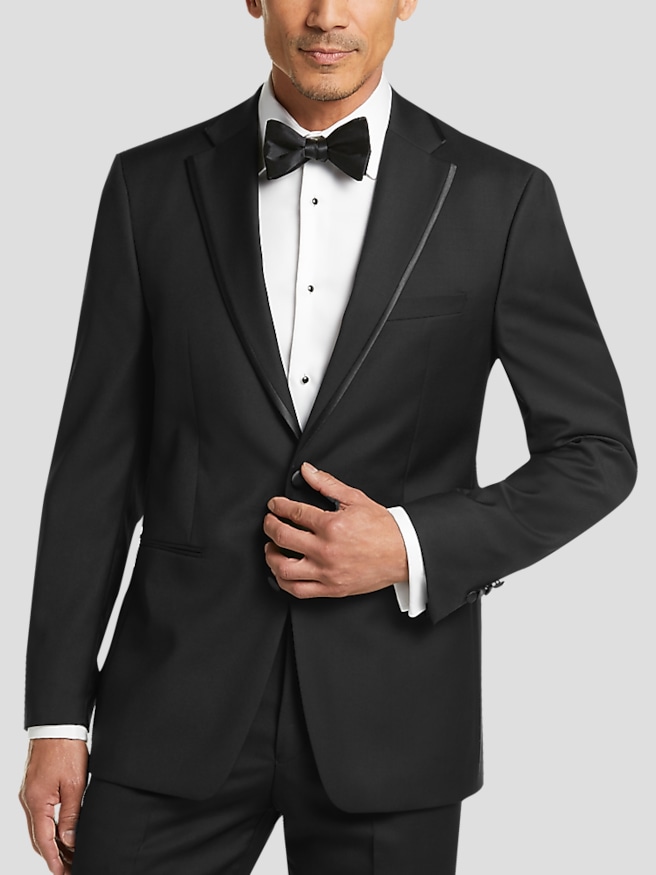
Colored tuxedos bring personality to formal dressing without losing the polished structure that makes a tuxedo distinct. A rich burgundy jacket, a deep blue ensemble, or an emerald tone can create a memorable presence at a wedding, prom, gala, or awards reception, especially when the color is balanced by clean lines and restrained accessories. The effect comes from more than the shade alone: the relationship between the fabric, lapel finish, shirt, and trousers determines whether the overall look feels understated or expressive. Midnight blue has a long association with eveningwear and offers a subtle alternative to black, while jewel tones make color a more noticeable part of the outfit. Lighter shades create a different impression, with the contrast between the jacket and its trim becoming especially important. Satin or grosgrain lapels often provide the visual distinction associated with tuxedos, and a coordinating stripe along the trouser seam can reinforce that formal character. A peak lapel gives the chest a defined frame, while a shawl collar creates a smooth, continuous line around the neckline. For a groom standing beside a wedding party, a colored tuxedo can establish a clear focal point without requiring every accessory to match the event palette. For a prom attendee, it can reflect personal style while still looking deliberate in portraits and group photographs. Color also changes under different lighting: a blue that looks bright in daylight may appear deeper in a ballroom, while a textured fabric can catch the light differently from a smooth weave. That makes the fabric’s finish as important as the color name. A crisp white formal shirt creates clear contrast, and a simple bow tie leaves room for the jacket to carry the look. The occasion’s dress code remains the starting point, particularly when an invitation calls for traditional black tie rather than a more expressive interpretation of formalwear.
Fabric and fit give colored tuxedos their depth, comfort, and shape. Wool is valued in tailored clothing for its natural breathability, drape, and ability to recover from minor wrinkles, although the weight and construction of the cloth influence how it feels during extended wear. Wool blends can offer a different balance of texture, resilience, and ease of care, with the fabric composition and care label providing useful details about each garment. Velvet has a plush surface that gives saturated colors an especially rich appearance; its pile also reflects light directionally, so the shade may look different across folds or under flash photography. Smooth woven fabrics tend to emphasize the jacket’s silhouette, while more textured cloth adds dimension without needing a pattern. None of those qualities can substitute for a balanced fit. The jacket should lie cleanly across the shoulders, with the collar resting against the shirt rather than pulling away from the neck. Lapels should sit smoothly when the jacket is fastened, and the front should not strain into an obvious X across the button. A close silhouette can look sharp, but enough room through the chest, upper back, and arms matters during a handshake, an embrace, or an evening on the dance floor. Jacket length should work with the wearer’s proportions, and sleeve length should allow a small amount of shirt cuff to show without exposing too much of the wrist. Trousers need similar attention: a comfortable rise, a stable waistband, and adequate room through the seat and thighs help preserve a clean line while sitting or walking. The hem should meet the shoes neatly rather than gathering into heavy folds that distract from the outfit. Tailoring can refine these details, but the underlying shoulder shape and overall proportions should already suit the wearer. For someone who spends much of an event seated at a dinner table before moving into a reception, comfort in both positions is just as important as the standing silhouette.
The strongest colored tuxedo outfits usually give each element a clear role. A saturated jacket paired with quiet accessories feels different from a head-to-toe color statement, and both approaches benefit from a consistent level of formality. A bow tie, pocket square, and formal shirt can complement the tuxedo without repeating its shade exactly; subtle differences in texture often look more considered than several pieces competing for attention. Black formal footwear provides a grounded finish for many deeper colors, while polished leather and well-kept soles help the entire outfit look intentional. A patterned pocket square can introduce a secondary color, but a simple white fold keeps the emphasis on the tailoring and lapels. For celebrations with a less formal dress code, Colored Suits offer another way to build an outfit around color without the distinctive finishing details of a tuxedo. Keeping those differences in mind helps match the clothing to the occasion rather than relying on color alone to establish formality. Care also plays an important role in how a tuxedo looks over repeated wear. The garment’s label should determine cleaning and pressing methods, especially when the outer fabric and lapel trim have different compositions. Direct heat can mark delicate finishes, and velvet requires particular attention to avoid flattening its pile. After an event, allowing the jacket and trousers to air in a ventilated space before storage helps release moisture. A broad, shaped hanger supports the jacket’s shoulders, while trousers should hang in a way that avoids unnecessary creasing. Breathable storage protects against dust without trapping moisture, and prompt attention to spills can prevent a small accident from becoming a lasting mark. Durability depends on fabric, construction, fit, and care together; clothing that pulls at seams or drags along the floor is more likely to show wear. With thoughtful proportions, coordinated details, and appropriate maintenance, a colored tuxedo can serve as a distinctive formal option for more than one important occasion.