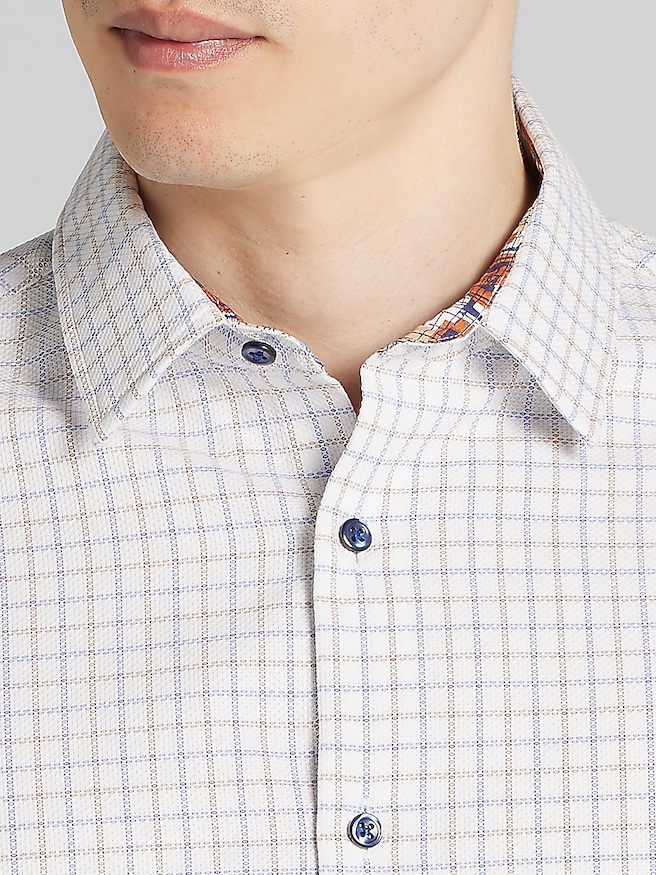
Collared shirts bring a defined neckline to everyday outfits, business attire, and clothing for special occasions. The category includes casual knit polos, woven button-front shirts, and dress shirts, with differences in fabric, construction, and collar shape that influence how each style looks and feels. A polo typically has a soft folded collar and a short button placket rather than an opening that runs the full length of the shirt. Its knit construction gives it an easygoing character that works with chinos, jeans, or tailored casual pants. A woven shirt generally has a more structured appearance, whether it features the textured surface of Oxford cloth or the smooth finish of poplin. Button-down refers specifically to a collar with points that fasten to the shirt, not simply to a shirt with buttons down the front. That detail helps keep the collar points in place and often lends a relaxed, traditional look. Point collars have a narrower opening between the tips, while spread and semi-spread collars leave more space for a tie knot. Collar height and stiffness also affect the overall impression: a soft collar feels less formal, while a crisp, structured collar creates a sharper frame beneath a jacket. For an office presentation, a smooth dress shirt with tailored trousers offers a clean foundation; for a casual dinner, a knit polo or patterned woven shirt can feel polished without requiring a tie. Weddings and other dressier gatherings generally call for a dress shirt when a suit and tie are expected, although the event’s dress code remains the deciding factor. Solid white and light blue shirts make straightforward partners for many suit colors, while stripes, checks, and deeper shades introduce variety. Smaller patterns tend to blend more quietly into an outfit, especially when paired with a patterned tie or jacket. The distinction between casual and dressy is not the collar alone. Fabric texture, sleeve length, hem shape, pocket details, and the way the shirt fits all contribute to its intended use.
Fabric makes a noticeable difference in the feel and drape of men’s collared shirts. Cotton is widely used for its softness and breathability, with the weave or knit determining much of the finished texture. Cotton piqué has a lightly raised surface that gives polos dimension, while jersey knit feels smoother and often drapes more fluidly. Oxford cloth has a recognizable basket-weave texture that suits everyday button-down shirts. Poplin offers a comparatively smooth, even surface, and twill has subtle diagonal lines that can give a shirt a fuller feel. Fiber content matters alongside these constructions. Cotton blends may combine a familiar hand feel with easier care, while fabrics containing elastane can provide additional give through the shoulders and torso. Performance-oriented fabrics may be designed for moisture management or wrinkle resistance, but those features depend on the fabric and finish rather than the presence of a collar. Fit is equally important when choosing a shirt for long workdays, frequent travel, or time spent sitting at a desk. Shoulder seams should generally sit near the edge of the shoulders, with enough room through the chest and upper back to reach forward comfortably. A slim fit follows the torso more closely; a classic or relaxed fit typically leaves more room through the body. Neither should pull noticeably across the button placket when seated. A dress-shirt collar needs enough space to button comfortably without feeling loose, particularly when worn with a tie. Long sleeves should reach the wrist without covering much of the hand, and cuffs should allow comfortable movement. Shirts intended to be tucked in usually have enough length to remain inside the waistband when reaching or sitting. Shorter hems can create a cleaner line when worn untucked. For a gift, an established shirt size, preferred fit, and familiar sleeve length are more useful than guessing from height alone. A father, partner, graduate, or colleague may appreciate a versatile style that fits the routines and dress expectations of his day.
Construction and care help determine how well a collared shirt holds its shape through repeated wear. Even stitching, securely attached buttons, and neatly finished seams are useful details, particularly around the collar, cuffs, and placket where handling is frequent. Reinforcement at stress points can support durability, although fabric weight alone does not establish how long a shirt will last. A lighter fabric can be well made, and a substantial fabric still needs appropriate care. The care label provides the most reliable direction for washing, drying, and pressing because fibers, finishes, and trims can require different treatment. Wrinkle-resistant or easy-care descriptions do not necessarily mean a shirt will never need ironing; a brief touch-up may still improve the collar and cuffs. Prompt attention to marks at the neckline and wrists helps prevent buildup, while avoiding more heat than the label permits can reduce the risk of shrinkage or damage to stretch fibers. Woven shirts often benefit from hanging neatly after laundering, while knit polos may hold their shape better when folded or stored without stretching the shoulders. Removable collar stays, when present, help support a crisp collar during wear and should be handled according to the shirt’s care instructions. Everyday styling can remain simple: a textured polo with chinos for a relaxed workplace, a button-down with dark jeans for dinner, or a solid dress shirt beneath a suit for an interview. A sport coat adds structure, but the shirt collar should sit neatly beneath its lapels rather than bunch at the neckline. For another layering option, collared jackets can pair with casual shirts when the necklines and proportions work comfortably together. Tucked shirts create a more tailored finish, while an appropriately cut untucked shirt feels less formal. With suitable fabric, comfortable proportions, and a collar that matches the occasion, collared shirts provide a dependable connection between relaxed dressing and a more polished appearance.