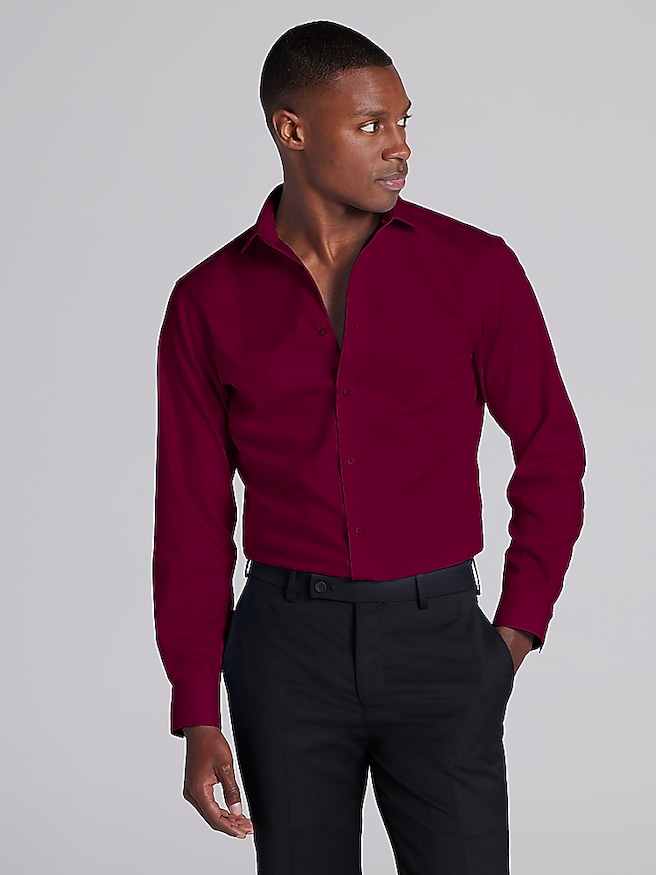
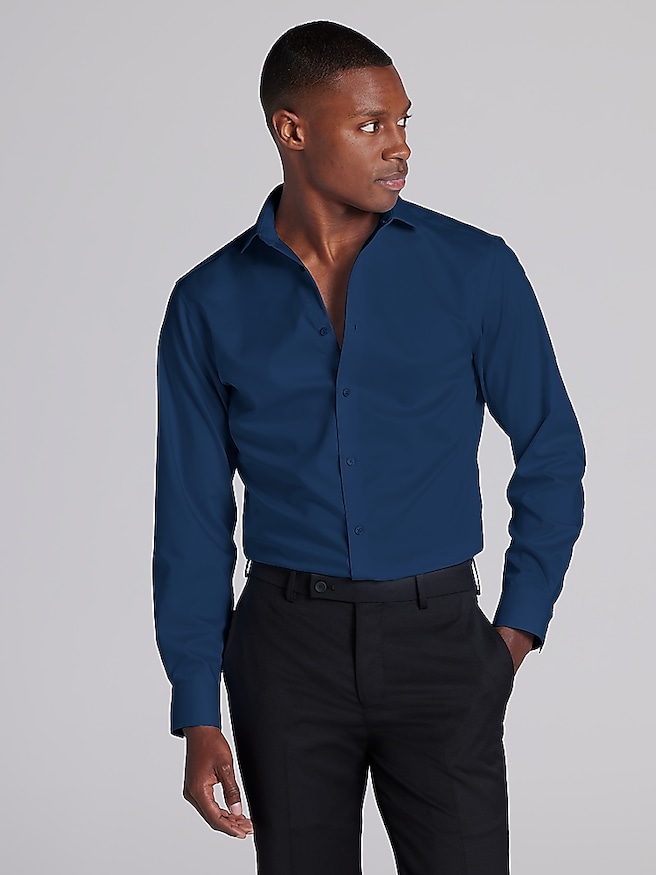
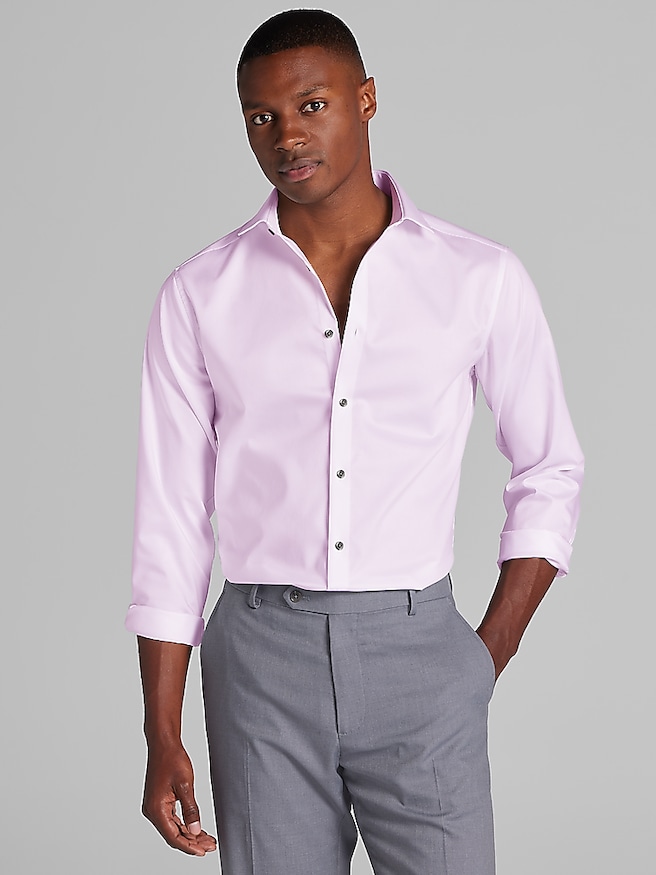
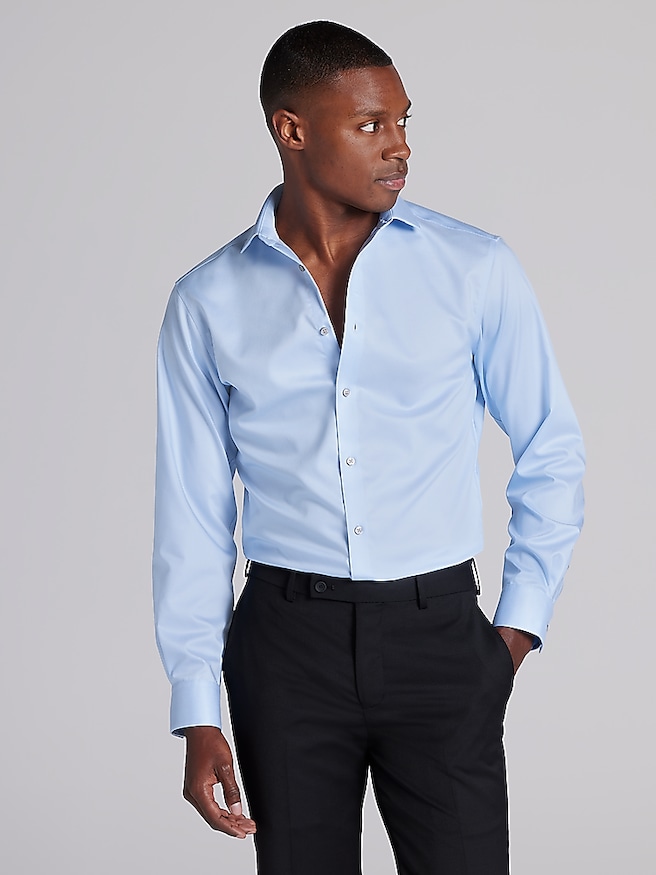
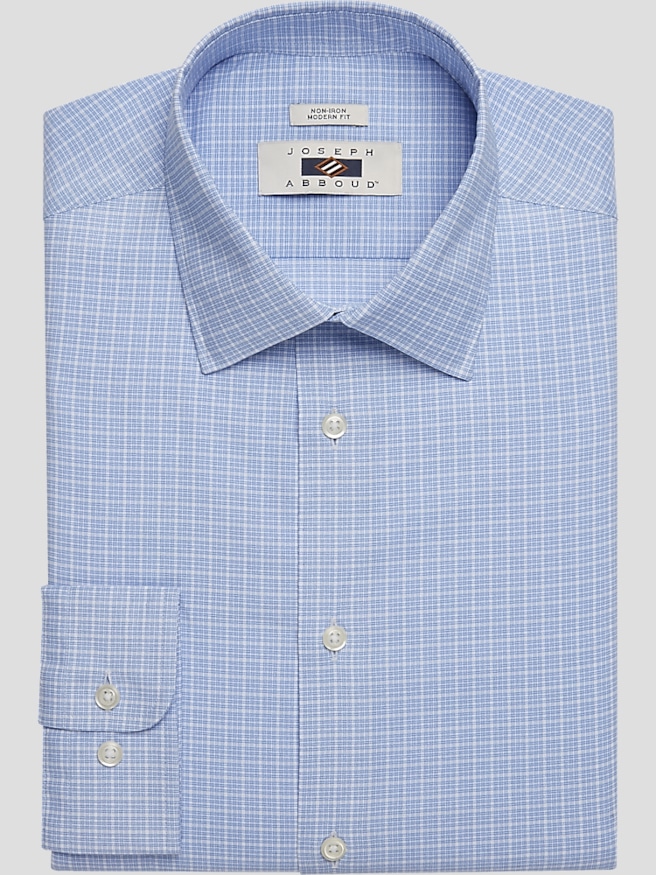
Blue collared shirts bring a defined neckline and versatile color to everyday outfits, business attire, and clothes for special occasions. The category includes dress shirts, casual button-front shirts, and polos in shades ranging from pale sky blue to deep navy. Unlike “blue-collar,” which describes an occupational category, “blue collared” refers to the shirt’s color and collar construction; these shirts are not necessarily designed for industrial work or protective use. Their appeal comes from how easily they move between settings. A light blue dress shirt creates a clean contrast beneath a charcoal suit, while a navy polo offers a more relaxed option with chinos. Medium blue sits comfortably between those two looks, pairing naturally with gray trousers, tan pants, and darker denim. Small details help determine the overall impression. A smooth fabric, restrained pattern, and crisp collar tend to look more formal, while visible texture, a chest pocket, or a softer collar can make a shirt feel more casual. Collar style matters, too: a point collar provides a familiar frame for a tie, a spread collar leaves more room for a fuller knot, and a button-down collar keeps its points secured for a neat appearance without a tie. For an office presentation, pale blue under a navy jacket offers subtle contrast without competing with the rest of the outfit. For dinner or a gathering with friends, an open collar and sleeves worn at full length can look finished without feeling overly dressed. Solid blue gives patterned ties and jackets room to stand out, while checks and stripes introduce visual interest on their own. For a more noticeable pattern, blue plaid shirts offer intersecting lines that can echo the colors of pants or a jacket. The scale of the pattern makes a difference: smaller checks often read more quietly from a distance, while larger checks create a stronger casual impression. Across these variations, blue provides a useful foundation for building outfits around pieces already in a closet.
Fabric and construction shape how a blue collared shirt feels, drapes, and holds up to repeated wear. Cotton is a familiar choice for its breathable feel, although a smooth, tightly woven cotton shirt behaves differently from a textured knit polo. Poplin generally has a fine, even surface that works well with tailored clothing. Oxford cloth has a more visible basketweave texture and often suits outfits that fall between dressy and casual. Twill is recognizable by its diagonal weave and can offer a softer drape, depending on the yarn and fabric weight. Linen brings a distinctive texture and a naturally relaxed appearance, with creasing that is part of its character rather than a sign of poor care. Blends may combine cotton with synthetic fibers to influence wrinkle resistance, drying time, or shape retention. A small amount of stretch can add ease when reaching across a desk or sitting through a long meeting, but fabric content alone does not determine comfort. The cut needs to provide room where the body moves. Shoulder seams should generally sit near the edge of the shoulders, sleeves should allow the arms to bend comfortably, and the button placket should lie flat rather than pull open across the chest or waist. A collar worn with a tie should close without pressing tightly against the neck. Slimmer cuts follow the torso more closely, while roomier cuts provide additional ease; neither should require constant adjustment. Length is another practical distinction. Shirts intended to stay tucked need enough coverage to remain inside the waistband when sitting or reaching, while untucked styles typically have a shorter hem with balanced proportions. For durability, secure buttons, evenly sewn seams, and cleanly finished edges are useful details to examine. Reinforcement at stress points can help, but no dress or casual shirt should be treated as safety equipment. Tasks involving machinery, chemicals, or other workplace hazards call for clothing that meets the employer’s specific requirements.
Care habits have a direct effect on the appearance and useful life of blue collared shirts, especially when they are worn frequently. The care label should determine washing, drying, and pressing methods because dyes, finishes, fiber blends, and collar components can respond differently to heat and moisture. Washing with similar colors and avoiding unnecessarily high heat can help preserve the fabric’s appearance when consistent with those instructions. Stains are best addressed promptly with a treatment suitable for the material, particularly around cuffs and collars where skin oils tend to collect. A shirt labeled easy-care or wrinkle-resistant may need less pressing, but that does not make it maintenance-free. Removing it promptly after drying and smoothing the collar, placket, and sleeves can reduce the amount of touch-up needed. When ironing is permitted, using the correct temperature and paying attention to the collar and cuffs helps restore a neat outline without exposing the fabric to excessive heat. Shirts can be hung with enough space to avoid crowding or folded carefully for travel; either approach works better when the fabric is fully dry before storage. These practical considerations matter when choosing shirts for a daily commute, client-facing work, a job interview, or a celebration where the dress code calls for a polished appearance. An interview outfit might pair a light blue shirt with dark tailored trousers and a coordinated jacket, while a casual workplace may call for a textured blue button-front shirt worn without a tie. For travel, a shirt’s care requirements and tendency to crease can be just as important as its color. Blue collared shirts can also make thoughtful gifts for a graduate beginning a professional role, a partner refreshing everyday clothing, or a father who appreciates dependable wardrobe staples. A successful gift reflects the recipient’s usual fit, preferred collar, and willingness to handle special care. Matching those everyday preferences gives the shirt a clear purpose, whether it becomes part of a regular work rotation or a reliable choice for occasions that deserve a little extra attention.