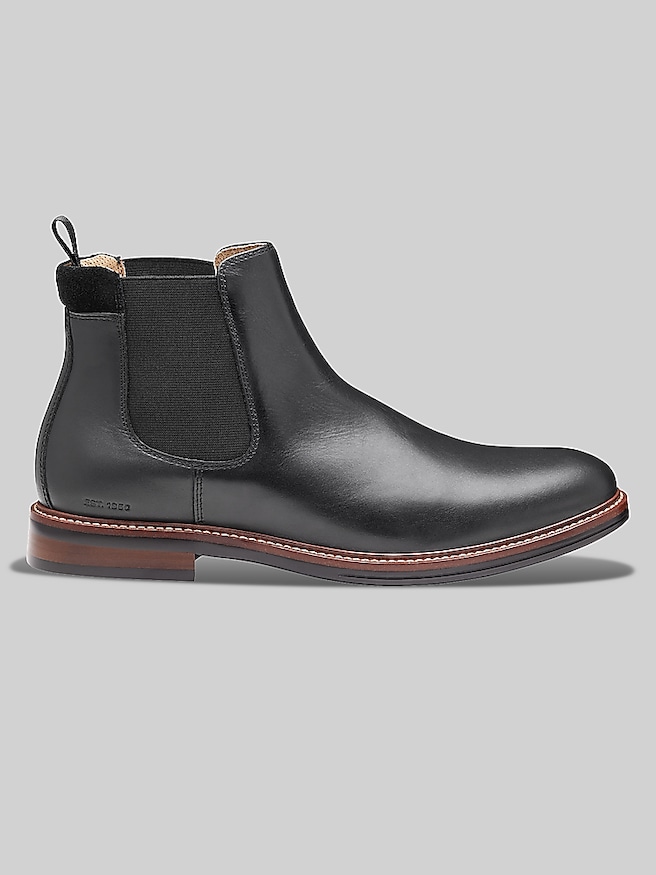
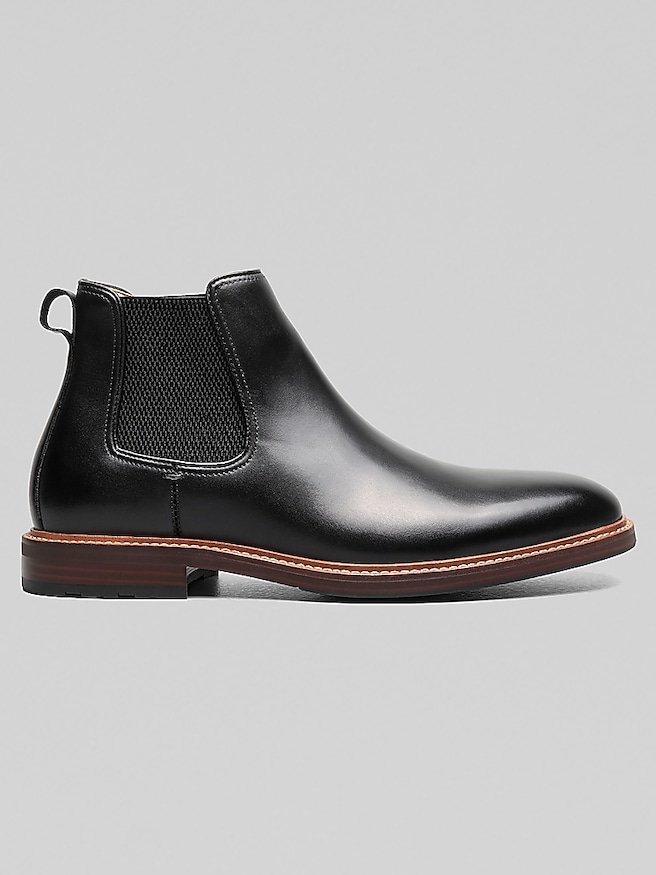
Chelsea work boots combine an ankle-height profile, elastic side panels, and pull-on construction with materials and soles suited to demanding everyday wear. The familiar Chelsea shape makes them easy to put on without adjusting laces, while work-focused designs may add reinforced toes, substantial tread, or cushioning for long stretches on foot. That combination appeals to people moving between a workshop and an office, handling maintenance tasks, or spending the day walking through a facility. The important distinction is between boots built and tested for occupational use and boots that simply borrow a rugged workwear appearance. A substantial leather upper and a thick outsole do not, by themselves, establish that a boot meets workplace safety requirements. Where protective footwear is required, documented ratings for impact, compression, electrical hazards, or other specified conditions matter more than appearance. A safety toe may use steel, a composite material, or another construction, and each boot’s stated specifications should match the job. Soft-toe Chelsea boots can make sense for everyday wear and workplaces without a protective-toe requirement, but they are not substitutes for required safety footwear. Slip resistance also depends on the outsole, the surface, and the substances underfoot; no tread pattern makes every floor safe. On smooth concrete, a sole designed for that surface may be more useful than deep lugs intended for loose ground. In an environment with fine dust or debris, tread that is straightforward to clean can be a practical advantage. The elastic panels deserve attention, too: they provide the flexibility needed for entry, but they are not equivalent to a sealed upper. Water resistance, puncture resistance, and other protective qualities should always be treated as specific features rather than assumptions about the Chelsea silhouette. These distinctions help separate a dependable everyday boot from footwear intended for a particular occupational setting, without sacrificing the clean lines that make the style so versatile.
Materials and construction influence how Chelsea work boots feel after several hours, how they age, and how much upkeep they need. Smooth leather offers a structured appearance and can develop creases and character with wear, while suede and nubuck have a softer, textured finish that calls for care suited to their surfaces. Leather thickness, lining materials, stitching, and reinforcement all contribute to performance; a material name alone does not tell the whole story. Synthetic components can serve useful purposes, including reducing weight or reinforcing areas subject to abrasion, depending on their design. Around the sole, welted construction may allow repair or resoling, although that depends on the individual boot and a repair professional’s assessment. Cemented construction bonds the upper to the sole and can support a lighter, more flexible feel. Neither approach automatically guarantees a longer service life. The quality of the components, the conditions of use, and regular maintenance matter just as much. Fit is especially important in a pull-on boot because there are no laces to adjust the hold across the instep. A comfortable pair should feel secure through the middle of the foot without squeezing, with enough room for toes to move naturally. A little heel movement can occur in some new pull-on boots, but pronounced slipping, rubbing, or forward sliding suggests that the shape or size needs reconsideration. Trying boots with the socks intended for work gives a more useful impression than trying them with an unusually thin pair. Protective toe caps should leave comfortable clearance rather than pressing against the toes, and pressure from a rigid cap is not something to count on breaking in. For someone who stands at a bench or walks between departments, cushioning, arch support, sole flexibility, and overall weight all deserve consideration. Thick padding is not automatically better support, and an overly soft footbed can feel very different after hours of standing than it does during a brief fitting.
The understated shape of Chelsea work boots also makes them easy to coordinate with clothing that needs to look neat without feeling dressed up. Straight-leg jeans, sturdy chinos, and work pants generally sit comfortably over the shaft, while a clean hem keeps fabric from bunching around the ankle. A trim profile can suit an office with a relaxed dress code; a broader toe and heavier sole tend to look more at home with substantial fabrics and practical layers. For a darker, streamlined version of the silhouette, Chelsea Black Boots offer a related style direction, though color alone does not indicate work suitability or protective performance. Keeping any pair presentable starts with care that matches its materials. Loose dirt is easier to remove before it builds up around stitching and the junction between the upper and sole. Smooth leather may benefit from an appropriate cleaner and occasional conditioning according to the maker’s instructions, while suede usually needs a suitable brush and material-specific treatment instead of conventional leather polish. Boots exposed to moisture should dry naturally away from direct heat, which can damage leather, adhesives, and elastic. Removing removable insoles when appropriate can help the interior dry, and alternating pairs gives worn footwear more time to air out between uses. Regular checks of the tread, seams, elastic panels, and heel lining can reveal wear before it becomes a comfort or safety concern. A worn sole or damaged protective component may require repair or replacement rather than cosmetic attention. Chelsea work boots can also be a thoughtful gift for someone who appreciates practical footwear, especially when their size, preferred fit, and workplace requirements are known. For daily use, the most useful pair is one whose construction matches the task, whose shape holds the foot comfortably, and whose care requirements fit into an ordinary routine. That combination gives the pull-on design a purpose beyond its appearance, from the first step into the day to the walk home.