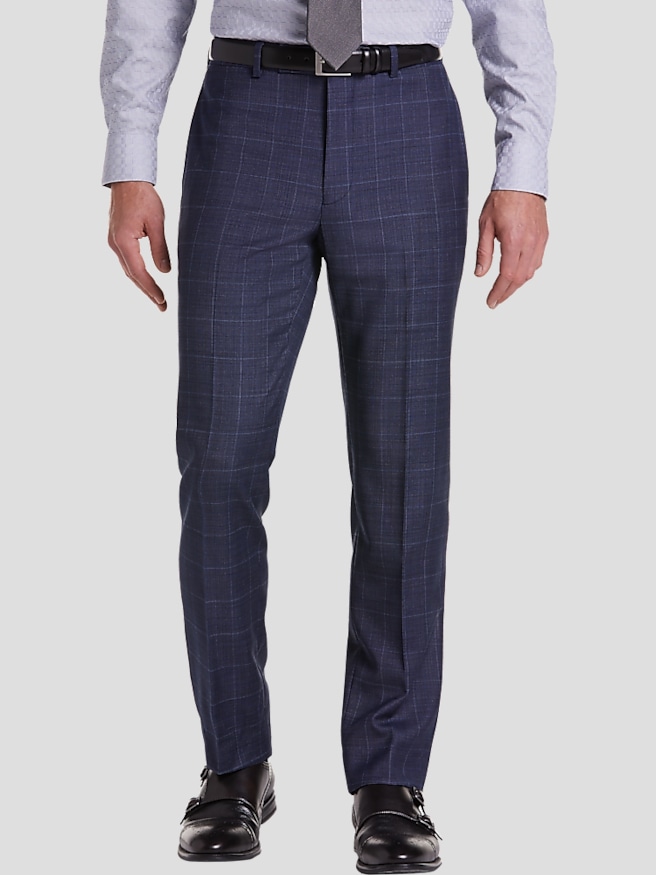
Gray trousers are a versatile foundation for a men's wardrobe, with a neutral color that works naturally with both warm and cool tones. They can look sharp with a dress shirt and sport coat, relaxed with a knit polo, or understated with a simple crewneck sweater. The shade makes a noticeable difference in the overall impression. Light gray creates a softer contrast with white, pale blue, and navy, while medium gray offers an adaptable starting point for everyday outfits. Charcoal has greater visual depth and often feels more formal, especially when paired with a crisp shirt and polished leather shoes. These distinctions are useful when dressing for an office meeting, a dinner reservation, or a celebration where a full suit is not required. For a work wardrobe, Grey Office Trousers pair naturally with button-down shirts, fine-gauge knits, and tailored jackets. A navy jacket over medium-gray pants creates clear separation between the two pieces without a distracting contrast. A burgundy sweater or an olive shirt adds color while allowing the trousers to remain an understated base. Texture also changes the effect: a smooth finish reads cleaner and more polished, while a subtle heathered surface gives the fabric a softer, more relaxed appearance. Black shoes create a crisp finish with charcoal, and dark brown shoes work well with many medium-gray shades. Tan footwear produces a more noticeable contrast, while clean, minimal sneakers suit settings with a casual dress code. The belt generally looks most cohesive when it relates to the color and finish of the shoes. Gray dress pants also provide room for patterned shirts and ties without competing for attention. A small check, narrow stripe, or restrained geometric pattern can add interest, particularly when the other pieces are solid. The result is a wardrobe staple that supports a range of personal styles rather than dictating one specific look.
Fabric and construction influence how gray trousers feel, hang, and hold up to repeated wear. Wool is valued for its drape and ability to recover from some everyday creasing, making it a useful choice for tailored pants. Fine wool fabrics can have a smooth, refined surface, while more textured weaves give the same color additional dimension. Wool blends may combine that tailored appearance with other qualities, depending on the fibers and proportions involved. Cotton offers a familiar feel and often gives trousers a more casual character, particularly in twill constructions. Blended fabrics containing stretch can provide extra ease when sitting at a desk, walking between appointments, or getting in and out of a car, though stretch does not replace an appropriate fit. Synthetic fibers may contribute wrinkle resistance or durability, but those qualities depend on the fabric and should be confirmed in its description and care instructions. The right fit starts at the waist, where trousers should stay in place without relying on a tightly fastened belt. Through the seat and thighs, the fabric should lie smoothly without pulling, and pockets should remain reasonably flat rather than flaring outward. Slim fits create a closer line through the leg, straight fits offer a more consistent width, and fuller cuts provide additional room. None is inherently more polished; the important distinction is whether the cut follows the wearer comfortably. Rise matters as well because it affects where the waistband sits and how the trousers feel when seated. Pleated fronts can provide extra room through the upper leg, while flat fronts have a simpler appearance. At the hem, a slight break creates a traditional finish, and little or no break gives a cleaner outline that shows more of the shoe. Excess fabric pooling around the ankle can obscure an otherwise good fit. Checking the length with the footwear intended for the outfit helps clarify whether hemming is needed. For a gift, a well-fitting pair already in the recipient's wardrobe can provide a useful reference for waist size, inseam, and preferred cut.
The appeal of gray trousers extends beyond any single dress code. They can serve the professional who needs dependable office attire, the graduate preparing for interviews, or the guest dressing for a wedding reception with a jacket-and-trousers dress code. For travel involving meetings and dinners, their compatibility with several shirt and shoe colors can simplify outfit planning. A dressier pair can move from a presentation to an evening meal with a change of jacket or knitwear, while a more casual fabric suits lunches, family gatherings, and everyday outings. Their usefulness over time depends partly on care. The garment's care label should determine whether cleaning involves machine washing, hand washing, or professional care; color alone says nothing about the correct method. When washing is permitted, following the specified settings and avoiding excessive heat can help protect fit and finish. For trousers that require professional cleaning, airing them between wears and addressing marks promptly may reduce unnecessary cleaning, provided the care instructions allow it. A suitable hanger helps prevent deep folds, and supporting the trousers neatly can preserve the leg line and crease. Pressing or steaming should also follow the fabric's requirements, since inappropriate heat may leave shine or damage fibers. Allowing trousers to rest between wears gives creases time to relax and helps the fabric recover its shape. Durability is also influenced by everyday habits: overfilled pockets can distort the silhouette, and hems that drag against the ground are more exposed to abrasion. Secure seams, tidy stitching, and fabric suited to the intended activity all contribute to reliable wear. For someone who spends much of the day seated, comfort through the waistband and upper leg may matter as much as appearance when standing. For someone who wears tailored clothing frequently, easy coordination and a consistent fit can make gray pants especially practical. With a suitable shade, comfortable proportions, and appropriate care, gray trousers bring a composed, flexible foundation to outfits for work, occasions, and everyday life.