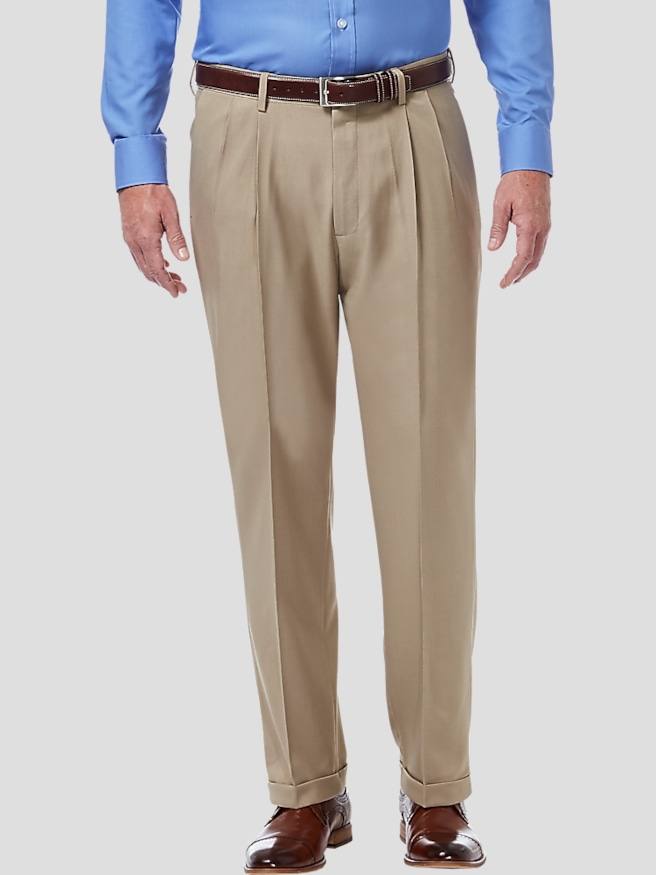
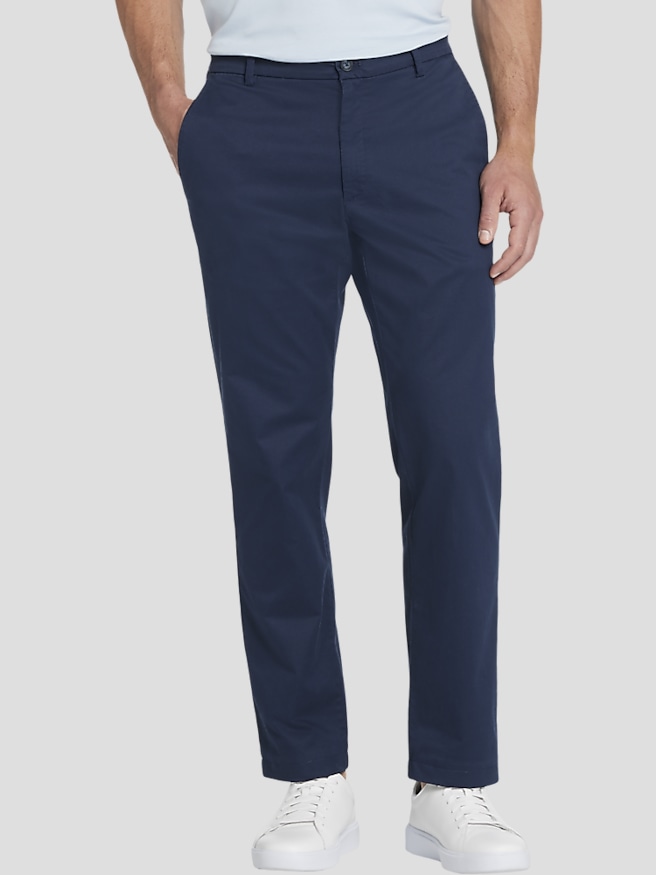
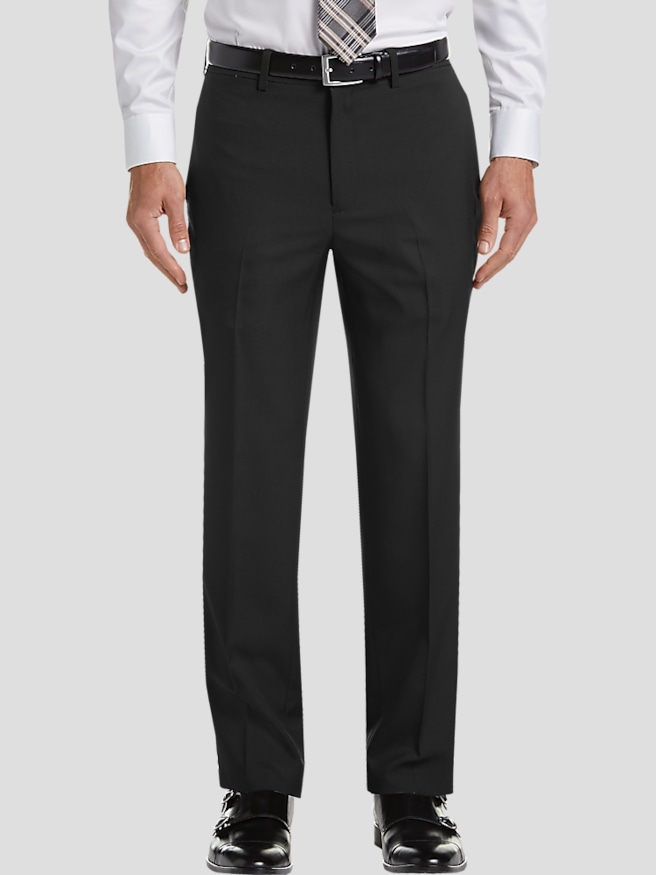
Casual work trousers are everyday pants that combine a polished appearance with the ease expected from less formal clothing. They suit business-casual offices, shared workspaces, customer appointments, and days that move between a desk and an off-site meeting. Chino-style construction, understated pockets, and a clean leg line help distinguish them from both dressier suit trousers and rugged utility pants. The right level of formality depends on the workplace: a tucked-in button-down and leather lace-ups create a sharper impression, while a knit polo and simple loafers feel more relaxed without looking unfinished. Navy, charcoal, khaki, and medium gray are practical foundations because they pair easily with shirts and layers in a range of colors. Olive and deeper brown can add variety while remaining understated. A matte finish generally looks more casual than a smooth fabric with noticeable sheen, and a pressed crease can make even a simple outfit appear more structured. Flat-front trousers offer a streamlined appearance, while pleats introduce additional fabric around the upper leg and a more traditional character. Neither detail determines comfort by itself; the cut through the waist, seat, and thigh matters more. For someone who spends the morning presenting to colleagues and the afternoon catching up on paperwork, trousers that hold a neat shape without feeling restrictive can make the same outfit work for both settings. Men’s casual work trousers also fit naturally into dinners after work, professional networking events, and other occasions where denim may feel too informal but a full suit would be unnecessary. For outfits that lean closer to tailored dressing, Formal Casual Trousers offer a related direction to explore. The distinction is less about rigid rules than about proportion, fabric, and the pieces worn alongside the trousers. A smooth waistband, tidy hem, and shoes in good condition often contribute more to an appropriate office appearance than elaborate styling details.
Fabric and fit determine how casual work trousers feel through a full day. Cotton twill is a familiar choice for its soft hand and diagonal weave, which gives the surface subtle texture without demanding attention. Cotton blends may incorporate synthetic fibers to improve shape retention or reduce wrinkling, although performance varies with the blend and construction. A small amount of elastane can provide useful give when sitting through a meeting, climbing stairs, or reaching into a low drawer. Stretch should complement a well-proportioned fit rather than compensate for trousers that are too tight. Wool and wool-blend fabrics can provide a fluid drape and a more tailored appearance, while textured weaves can soften that formality. Fabric weight influences how firmly a trouser leg holds its line; lighter cloth tends to move more freely, while a more substantial weave can feel structured. Through the waist, the trousers should stay comfortably in place without relying on a tightly cinched belt. The rise affects where the waistband sits and how much room the garment provides between the waist and crotch. A mid-rise often works easily with tucked shirts, while a higher rise changes the proportions and can pair well with a fuller leg. Slim cuts follow the leg more closely, straight cuts maintain a relatively even line, and tapered cuts narrow toward the ankle. An athletic build may benefit from additional room through the seat and thigh without needing extra width at the hem. A useful fit check includes sitting, bending, and walking: pockets should lie reasonably flat, the fly should not pull open, and the fabric should not strain across the thighs. Hem length also shapes the result. A slight break gives a traditional finish, while little or no break produces a cleaner line over loafers or low-profile lace-ups. Excess fabric gathering over the shoes can obscure the silhouette, even when the waist fits well. Alterations to the hem or waist can refine the overall appearance when the underlying cut already suits the wearer.
Durability comes from the relationship between fabric, construction, fit, and care, not simply from how heavy the trousers feel. Closely finished seams, secure pocket edges, and a stable waistband help clothing withstand repeated wear. Stress at the seat, crotch, and pocket openings can increase when the fit is too narrow or when pockets carry bulky objects throughout the day. Keeping a phone, wallet, and keys from crowding the same pocket helps preserve a smoother outline and reduces concentrated strain. Care requirements deserve attention before trousers become part of a regular work rotation. Some cotton and blended fabrics can be machine washed, while certain wool fabrics or tailored constructions require dry cleaning; the garment’s care label is the authority. Where washing is permitted, the specified water temperature, a suitable cycle, and prompt removal from the machine can help limit avoidable creasing. Excessive dryer heat may cause shrinkage or affect stretch fibers, so drying instructions matter as much as washing instructions. Pressing or steaming should also follow the label, with particular care around fabrics that can develop shine under direct heat. Between wears, hanging trousers neatly gives folds a chance to relax and keeps the next outfit easier to assemble. Rotating pairs allows time for airing and avoids placing all the wear on one garment. For frequent commuters, wrinkle resistance and comfortable movement may matter most; for a client-facing role, a consistent drape and crisp finish may take priority. Someone working in a creative office might favor a fuller silhouette with a tucked knit shirt, while a more traditional setting may call for a restrained taper and a woven shirt. Casual office trousers are intended for everyday professional dressing, not as a substitute for protective clothing where a job requires it. Their lasting value lies in versatility: comfortable enough for hours at a desk, composed enough for an unexpected introduction, and easy to combine with the clothing already in a work wardrobe.