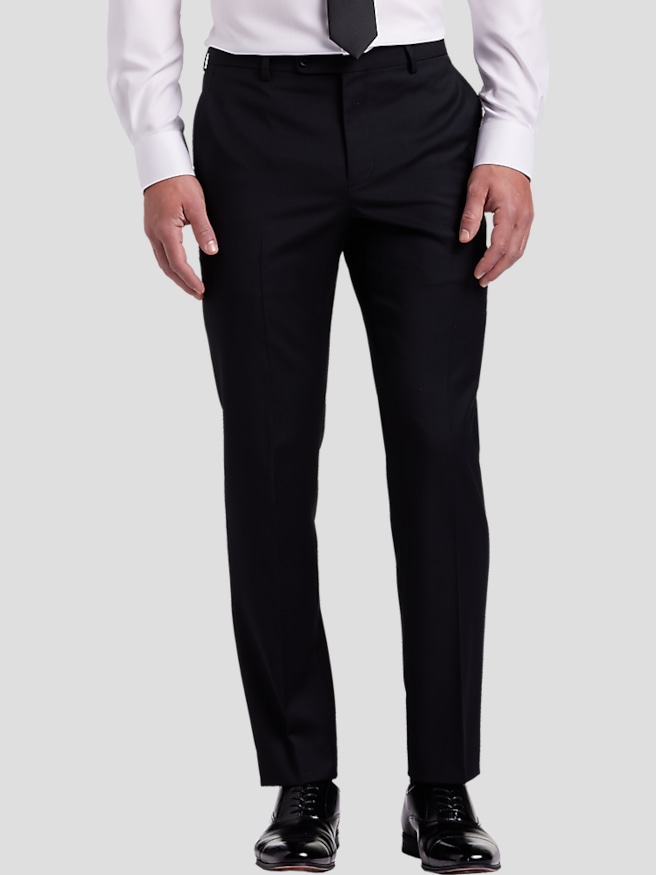
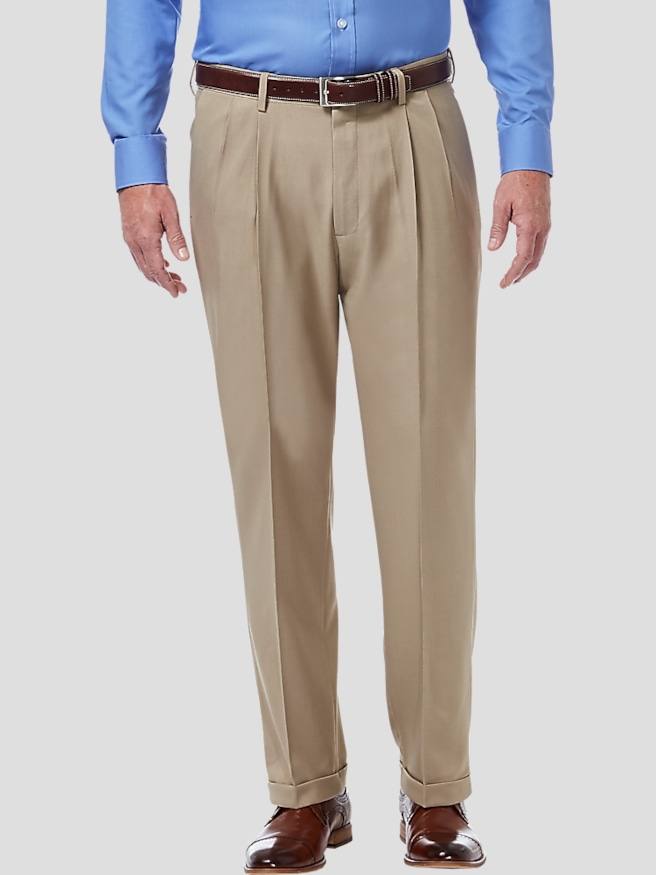
Workplace trousers are pants designed for professional settings, with the fabric, cut, and construction helping balance a presentable appearance with comfort throughout the workday. The category spans tailored dress pants for formal offices and client meetings, chinos for business casual settings, and more relaxed trousers suited to creative studios or workplaces with flexible dress codes. Unlike heavy-duty work pants built around tool storage or reinforced knees, office trousers generally emphasize a clean silhouette, comfortable movement, and easy coordination with shirts, jackets, and shoes. The right level of formality depends on the setting: a defined crease and smooth fabric can complement a blazer in a conference room, while cotton twill and a softer finish feel natural with an oxford shirt at a shared desk. Navy, charcoal, medium gray, and khaki provide useful foundations because they pair easily with common shirt colors without demanding an exact match. Dark trousers can create a clear contrast with a light blue button-down, while medium gray offers a softer backdrop for a navy jacket. Subtle patterns, including fine checks and understated stripes, add depth without becoming the focus of an outfit. Details such as pocket shape, waistband construction, and the presence or absence of cuffs also influence how dressed-up trousers look. Slanted front pockets often blend into a tailored outline, while prominent patch pockets usually read as more casual. In offices where jackets are optional, trousers carry more of the outfit’s structure, making a neat waistband and an appropriate hem especially noticeable. They also need to suit the practical rhythm of a working day, from sitting through a long presentation to walking across a campus or heading directly to dinner. For a dress code that welcomes natural texture, Linen Work Trousers offer a distinctive alternative to smoother dress fabrics, with a relaxed surface that works well alongside an unstructured jacket or a neatly tucked shirt.
Fit determines much of how workplace trousers look and feel, particularly when the day involves frequent transitions between sitting, standing, and walking. A comfortable waistband rests securely without digging in at a desk or relying on a tightly fastened belt to stay in place. The seat should follow the body without pulling, and the pockets should lie reasonably flat rather than flare open. Horizontal strain across the front, a fly that does not sit smoothly, or fabric that catches at the thighs can signal that the cut needs more room. Slim fits generally create a narrower line through the leg, while straight and classic fits offer more space, although those labels vary across designs. The shape through the thigh matters as much as the opening at the ankle; someone with a more athletic build may need additional room above the knee even when a tapered finish is preferred. Rise also changes the overall feel. A higher rise can help keep a tucked shirt in place and create a longer visual line, while a lower rise sits farther down the torso and may feel less natural during extended periods of sitting. Flat-front trousers give a streamlined appearance, and pleated designs can provide useful room through the upper leg without necessarily looking oversized. Hem length brings these details together. A slight break lets the fabric rest lightly on the shoe, while a shorter, clean finish creates a sharper outline with less fabric gathering at the ankle. The intended shoes matter because a hem that sits neatly over a loafer may fall differently over a substantial lace-up. Trying trousers while seated, taking a few steps, and reaching into the pockets reveals more about everyday comfort than standing still alone. For commuters and professionals who move between meeting rooms, the best fit leaves space for natural motion while keeping the leg line orderly.
Fabric composition and construction help determine how workplace trousers hold their shape, feel against the skin, and respond to repeated wear. Wool is valued for its drape and resilience, making it a familiar choice for dress trousers that need to look composed through meetings and presentations. Cotton twill has a recognizable diagonal weave and a more casual character, while cotton blends can combine that familiar feel with other performance qualities. Polyester may contribute durability and wrinkle resistance, and a small amount of elastane can add stretch, though the actual feel depends on the full fabric blend and how it is woven. Stretch supports movement but does not replace adequate room through the waist, seat, and thighs. Linen has an airy structure and visible texture; its tendency to crease is part of its character rather than evidence of poor construction. Fabric weight, weave density, and finishing also affect wear, so fiber content alone cannot predict how a pair will perform. Secure pocket openings, even stitching, and a waistband that lies smoothly are useful construction details for trousers worn frequently. Care requirements deserve equal consideration, especially for a work wardrobe that needs a dependable routine. The garment’s care label determines whether washing, professional cleaning, pressing, or another method is appropriate. Excessive heat can affect some fibers and stretch components, while pressing with the wrong setting can leave shine on certain fabrics. Emptying pockets before putting trousers away helps prevent distortion, and hanging them neatly can reduce unnecessary creasing between wears. Alternating pairs gives each time to air out and helps distribute wear rather than repeatedly stressing the same fabric. Wrinkle-resistant and stain-release finishes can be helpful when present, but neither makes trousers maintenance-free, and any protective workplace requirement calls for clothing specifically designed and rated for that task. For office wear, lasting usefulness comes from matching the fabric and fit to the actual day: enough structure for a presentation, enough ease for the commute, and a care routine that keeps the trousers looking ready for the next meeting.