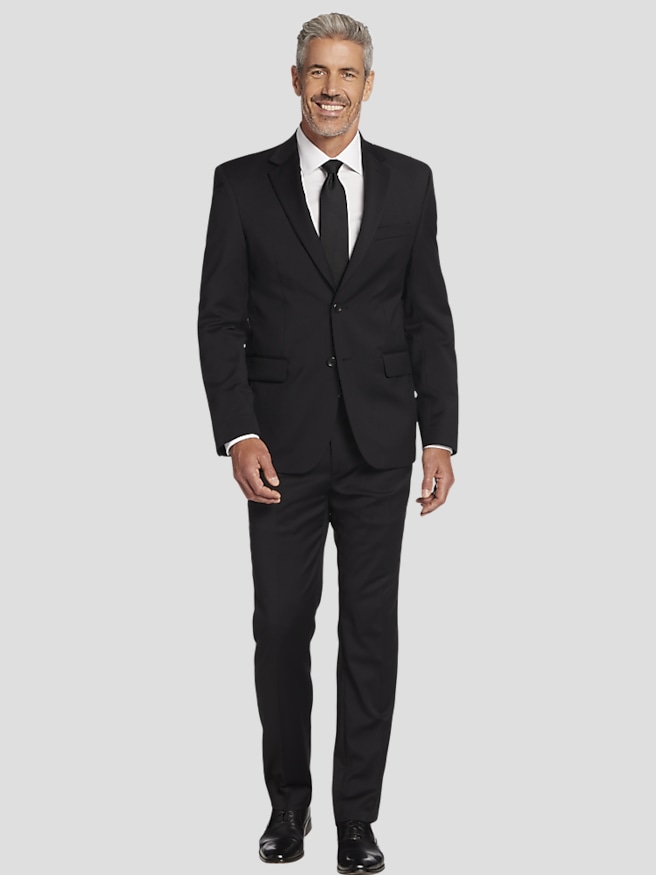
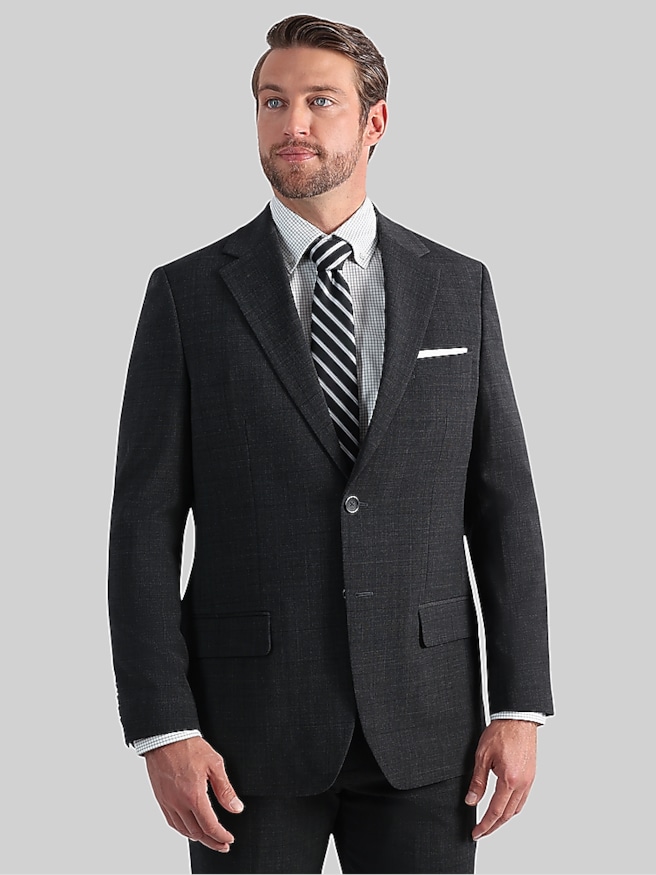
Career pants are men's work trousers that combine a professional appearance with the comfort needed for a full day on the job. The category spans tailored dress pants for traditional offices, versatile slacks for everyday business settings, and polished chinos for workplaces with a more relaxed dress code. A clean silhouette, comfortable waistband, and fabric that suits the demands of the day matter more than any single style label. For someone moving between a desk, conference room, and client lunch, trousers should look composed while allowing enough room to sit, walk, and take the stairs comfortably. Dress pants with a defined crease lend structure to a tucked-in shirt and sport coat, while cotton twill pants bring a softer texture to an outfit built around an Oxford shirt or fine-gauge sweater. Workplace expectations help determine the right level of formality: a financial office may call for tailored wool-blend trousers, while a creative studio may welcome chinos with a knit polo. In more relaxed settings, Business Casual Pants offer a natural connection between traditional tailoring and an easier everyday look. Color also influences how readily pants fit into a working wardrobe. Charcoal and navy provide a restrained foundation for white, blue, and subtly patterned shirts; medium gray can soften the contrast with darker jackets; and tan brings a less formal note to straightforward shirt-and-trouser combinations. Patterns such as fine checks or subtle windowpanes add interest without dominating an outfit, especially when paired with solid layers. Separate trousers do not need to imitate a matching suit. A deliberate contrast between jacket and pants often looks more cohesive than two nearly matching shades with noticeably distinct textures. For interviews, presentations, or a first day in a new role, understated colors and an unbroken trouser line keep attention on the person wearing them. For established routines, a few complementary colors make getting dressed less complicated without making every outfit look identical.
Fabric and construction shape how career pants feel after several hours of wear, not just how they look on a hanger. Wool offers a refined drape and natural resilience, making it a useful choice for trousers expected to maintain a tailored appearance through meetings and travel. Wool blends can combine that character with other fibers, though performance depends on the full fabric composition and construction. Cotton twill has a more casual surface and a substantial hand that works well in less formal offices. Polyester and viscose blends can provide a smooth finish and fluid drape, while a small amount of elastane can add stretch for bending, sitting, and walking. Stretch is helpful, but it cannot compensate for a cut that is too tight through the seat or thighs. A comfortable fit leaves fabric lying smoothly across the front, pockets resting flat, and enough room at the upper leg to sit without strain. Slim fits generally follow the leg more closely, straight fits create a consistent line, and roomier cuts allow additional space through the seat and thigh. Those labels are starting points rather than guarantees; rise, taper, and the wearer's proportions all affect the result. The waistband should stay comfortably in place without needing a tightly cinched belt, and the rise should allow a tucked shirt to sit neatly without crowding the body. Flat-front trousers create a streamlined appearance, while pleats can provide useful ease and a fuller drape. At the hem, a slight break offers a traditional finish, while little or no break creates a cleaner, shorter line. The right length depends on the shape of the leg opening and the shoes worn most often. Trying pants with work shoes helps reveal excess fabric pooling at the ankle or a hem that sits higher than intended. Practical details deserve attention, too: secure closures, neatly finished seams, and pockets that hold small essentials without pulling the fabric out of shape all contribute to everyday wearability.
A dependable work wardrobe also depends on care habits that preserve the fabric, fit, and finish. The care label is the best starting point because similar-looking trousers may require very distinct treatment. Some fabrics can be machine washed, while others need professional cleaning; drying methods and ironing temperatures also vary by fiber content and construction. Washable pants benefit from following the specified cycle, avoiding overloaded machines, and being removed promptly to limit deep creases. For trousers that require professional care, addressing spills promptly and identifying the stain can help a cleaner choose an appropriate treatment. Between wears, hanging pants neatly and allowing them to air out can reduce unnecessary cleaning and help the fabric recover its shape. A suitable trouser hanger supports a tidy drape without leaving pronounced marks, and emptying pockets prevents keys, cards, and other small objects from creating bulges or stressing seams. Pressing should follow the care instructions, with a pressing cloth when appropriate to help protect the surface from shine. Rotating pairs also gives each one a rest between long workdays. Durability comes from both sound construction and a fit that does not place constant tension on the waistband, seat, or inner thighs. Loose stitching, a shifting hem, or a fastening that begins to pull is easier to address before it becomes a larger repair. These details matter for commuters, professionals who spend hours seated, and anyone whose schedule moves from office work to an evening networking event. Career pants can also be a practical gift for a recent graduate, someone beginning a new position, or a professional refreshing a well-used wardrobe, provided the recipient's measurements, fit preferences, and workplace expectations are known. The most useful pair is not necessarily the most formal one. It is the pair that suits the person's routine, feels comfortable through ordinary movement, coordinates with familiar shirts and shoes, and remains presentable with realistic care. That balance gives career pants their lasting place in a professional wardrobe.