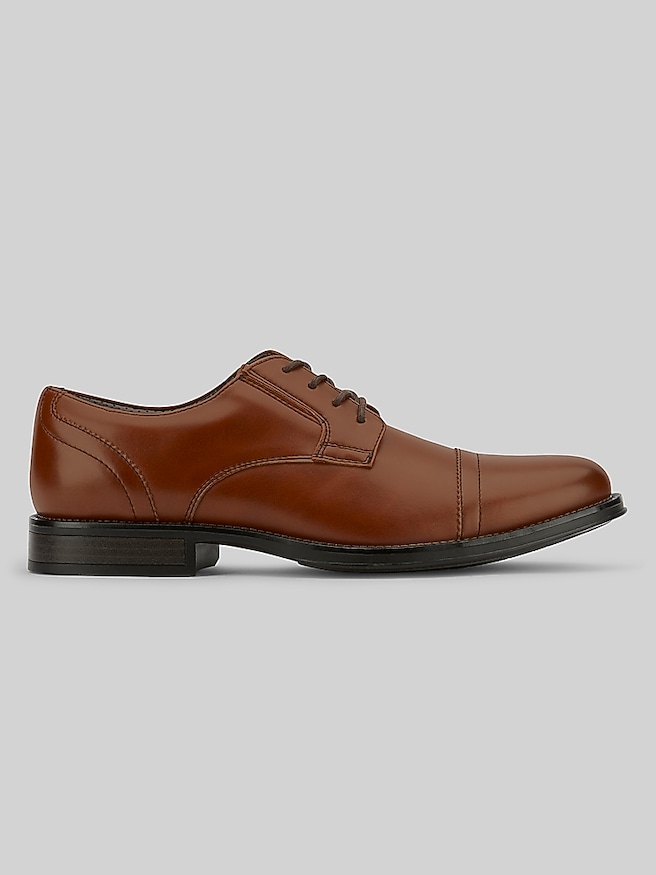
Cap toe shoes are dress shoes defined by a stitched seam across the toe box, creating a distinct panel at the front of the shoe. That panel is often formed by an additional piece of leather, giving the design its clean, structured appearance. The detail is restrained enough for business attire yet distinctive enough to add interest beneath a trouser hem. Cap-toe styling commonly appears on Oxfords and Derbies, two lace-up designs with different constructions. Oxfords have closed lacing, with the lace tabs attached beneath the upper for a close, streamlined look. Derbies have open lacing, with the tabs attached on top of the upper, creating a slightly more relaxed appearance and often allowing greater adjustment over the instep. Either can feature a simple toe cap or decorative perforations, although a smooth cap with minimal detailing generally looks more formal. Black cap toe shoes are a classic match for charcoal or navy suits at interviews, business meetings, and weddings where a suit is appropriate. Dark brown pairs naturally with navy, medium gray, and earth-toned tailoring, while burgundy or oxblood adds a richer accent without overwhelming an outfit. With chinos and a sport coat, a brown cap-toe Derby can bridge the gap between polished and approachable. Dark, clean denim can work with less formal versions, particularly when the shoes have a substantial sole or textured upper. The toe cap does not determine the shape of the shoe: a cap-toe detail can also appear on Rounded Toe Shoes, since the seam and the toe profile are separate features. A rounded or gently tapered front tends to work easily with traditional tailoring, while an exaggerated point makes a stronger visual statement. For an outfit that needs to carry someone from a morning presentation to an evening dinner, a balanced shape, restrained detailing, and a color that complements the belt create a dependable foundation.
Materials and construction influence how cap toe shoes feel, look, and hold up to repeated wear. Smooth leather is a traditional choice because it takes a polish and complements the crisp finish of tailored clothing. Full-grain leather retains the outer grain surface and can develop character with proper care, while corrected-grain leather has been treated to create a more uniform appearance. Neither description alone tells the whole story; leather quality, finishing, stitching, and the way the shoe is assembled also matter. Suede brings a softer texture and a less formal mood, making it a natural companion to chinos, textured trousers, and relaxed tailoring. Synthetic uppers can have different cleaning needs and flexibility, so material information is useful when comparing options. Inside the shoe, lining, cushioning, and support deserve as much attention as the upper. A smooth lining should not rub at the heel or bunch around the toes, and cushioning should feel comfortable without making the foot unstable. Leather soles provide a traditional dress-shoe finish, while rubber soles often offer more grip and can feel practical for walking between an office, a parking garage, and a meeting across town. Traction still depends on the tread and the surface underfoot. Welted construction may allow a worn sole to be replaced, depending on the shoe and its condition; other construction methods can produce flexible or lightweight shoes but may be harder to repair. Consistent stitching and a secure connection between the upper and sole are useful signs to examine. Fit remains essential regardless of material. The toes need room to move without pressing into the front, the widest part of the foot should sit comfortably at the widest part of the shoe, and the heel should feel secure rather than slide excessively. Try shoes with the socks intended for everyday wear and walk enough to notice pressure across the instep. Leather may soften, but breaking in a shoe should not mean enduring pinching, numbness, or a cramped toe box.
Regular care helps preserve the sharp outline that makes cap toe shoes useful for dressier outfits. After wear, remove surface dust with a soft brush or cloth before it settles into creases or gathers along the cap seam. For smooth leather, use a suitable cleaner when needed, condition according to the material and care instructions, and apply a compatible cream or polish to maintain the finish. A light buff can restore a neat appearance without building up heavy layers of product around the stitching. Suede needs a different approach: a suede brush and appropriate cleaner help maintain its texture, while ordinary leather polish can alter the surface. If shoes become damp, let them dry naturally away from direct heat. Cedar shoe trees can help absorb residual moisture and support the shape, and allowing shoes to rest between wears gives the interior time to dry. Check heels and soles before wear becomes severe; replacing a worn heel or consulting a cobbler early may prevent more extensive damage. These habits matter especially for shoes that see regular use, such as a pair worn for client appointments or several days of office work. Intended use should also shape the choice. Someone who spends most of the day seated may prioritize a sleek silhouette, while someone who walks between buildings or stands through a reception may place greater weight on cushioning, secure fit, and sole grip. For a wedding party, coordinated color and a consistent level of formality create a cohesive appearance without requiring every foot to fit the same shape. Cap toe shoes can also make a thoughtful gift for a graduate starting a professional role or someone building a dependable dress wardrobe, provided the recipient’s size, width, and style preferences are known. Their lasting appeal comes from that combination of function and restraint: a recognizable design detail, enough versatility for multiple outfits, and a polished finish that supports the occasion rather than competing with it.