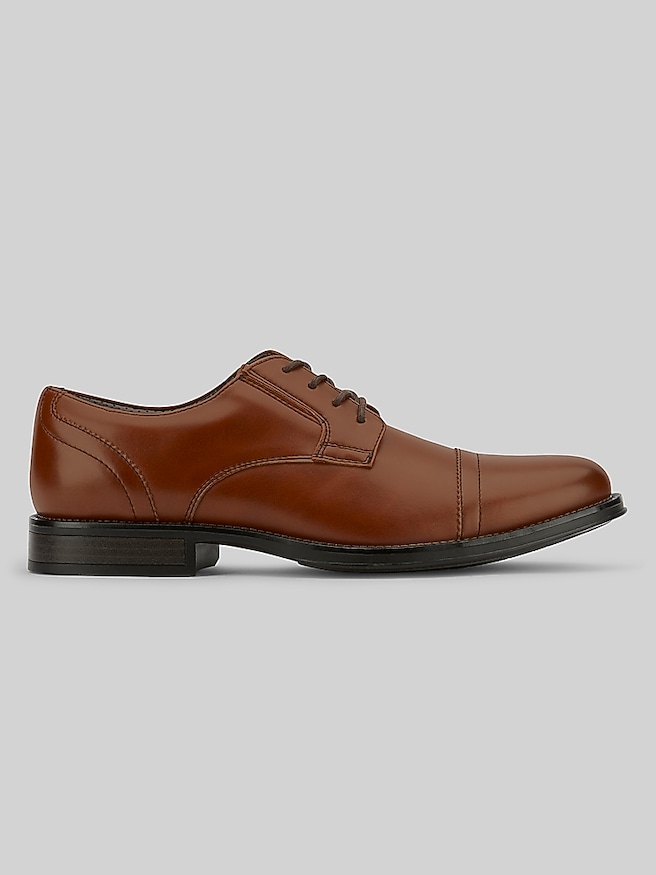
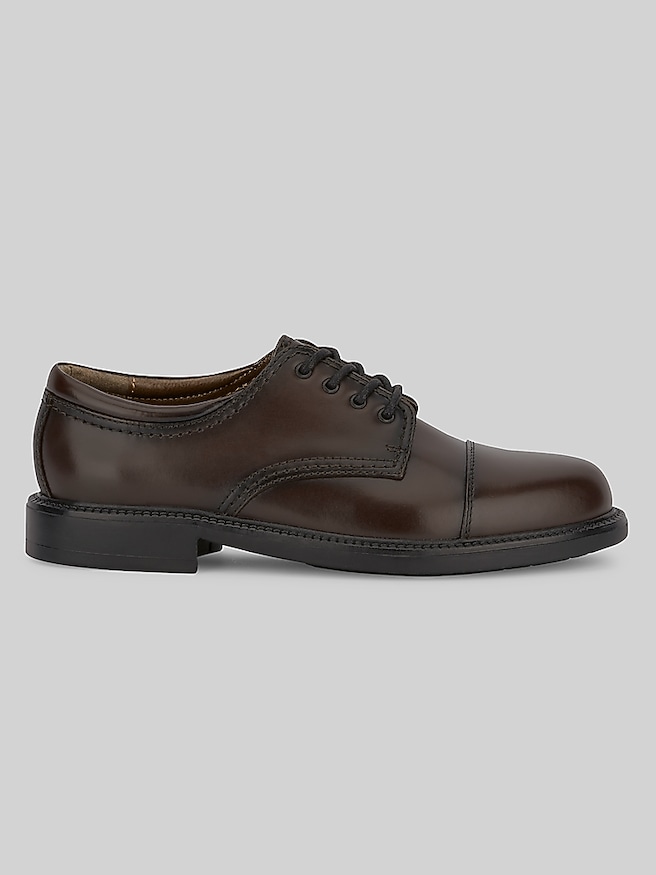
Black cap toe shoes are men’s dress shoes defined by a horizontal stitched seam across the toe box, separating the toe cap from the vamp, the section that covers the top of the foot. That simple detail gives the shoe a structured appearance without relying on elaborate decoration. Black leather, clean stitching, and a balanced silhouette make this style a dependable choice for business suits, interviews, weddings, and solemn occasions such as funerals. The cap toe describes the toe design, not the lacing construction: an Oxford has closed lacing, with the lace-facing sections attached beneath the vamp, while a Derby has open lacing, with those sections attached on top. A sleek black cap toe Oxford generally reads as more formal; a Derby can provide a slightly more relaxed appearance while remaining appropriate for many offices and dressed-up gatherings. Within the broader category of cap toe shoes, black is particularly useful for creating a restrained, coordinated finish with charcoal, navy, or black tailoring. A plain toe cap with minimal ornamentation keeps attention on the suit’s lines, while perforations or decorative stitching introduce more visual texture. Toe shape also changes the impression: a softly rounded or gently tapered profile usually works comfortably with traditional tailoring, whereas an exaggerated point or broad square toe makes a stronger style statement. For an interview, polished black cap toes beneath neatly hemmed charcoal trousers convey care without distracting from the conversation. At a wedding, the same basic silhouette can complement a dark suit and a coordinated leather belt. Tuxedo dress codes deserve separate consideration, since patent-leather formal shoes or other traditional evening footwear may be more appropriate than an everyday business pair. The overall effect depends as much on proportion and condition as on the design itself. Trousers that fall cleanly over the upper, dark dress socks, and tidy laces allow the toe-cap seam to remain a subtle finishing detail rather than the focal point of the outfit.
Materials and construction influence how black cap toe dress shoes feel, flex, and hold their appearance through repeated wear. Smooth leather uppers offer a traditional surface that can be conditioned and polished, although the finish determines which care products are suitable. Fine creasing across the flex point is normal in leather footwear; deep folds, uncomfortable pressure, or excessive movement may point to a fit issue rather than an unavoidable break-in period. Full-grain and top-grain describe aspects of leather processing, but neither term alone establishes the quality of the entire shoe. The consistency of the upper, the lining, the sole attachment, and the finishing all matter. Synthetic uppers can have a uniform appearance and their own care requirements, but they do not necessarily respond to leather conditioner or stretch like leather. Inside the shoe, a smooth lining, stable heel seat, and appropriately placed cushioning help support comfort through meetings, ceremonies, and time spent standing. Outsoles contribute another practical distinction. Leather soles offer a traditional profile and can flex with wear, while rubber soles may provide more grip and cushioning, depending on their composition and tread. A slim rubber sole can preserve a dressy appearance without the bulk of a heavy lug pattern. Welted construction may allow resoling, but repair options depend on the specific construction and the condition of the upper. Fit remains more important than any single feature. The heel should feel secure without rubbing, the ball of the foot should align with the shoe’s widest area, and the toes need room without sliding forward. The cap seam should not press painfully across the forefoot. Trying dress shoes with the socks intended for them gives a more useful sense of fit than trying them with thick athletic socks. A few steps can reveal heel lift, pinching, or stiffness that feels restrictive. Leather may soften with use, but a shoe that is too short or too narrow should not be expected to become comfortable simply through wear.
Regular care helps black cap toe shoes retain the clean finish that makes them useful for important occasions and everyday professional dressing. Surface dust and grit can dull the upper and collect along the toe-cap seam, so gentle brushing and a soft cloth are useful starting points. For compatible smooth leather, occasional conditioning helps maintain suppleness, while a suitable black cream polish can refresh color and soften the appearance of minor scuffs. Wax polish can add shine, especially over the toe and heel, but thin applications generally produce a cleaner result than a heavy buildup. The flexing area behind the toe cap benefits from restraint, since thick polish can collect in creases. Patent leather, coated finishes, and synthetic materials require their own care methods rather than an automatic application of standard leather products. Following the material’s care directions helps protect the surface. If shoes become damp, natural drying away from direct heat is gentler on the upper and its construction. Properly sized shoe trees help maintain shape between wears, and giving footwear time to air out supports a fresher interior. A shoehorn can protect the heel counter from being crushed when slipping shoes on, while loosening the laces before removal reduces strain on the opening. Over time, worn heel edges, loose stitching, or thinning soles deserve attention before they affect balance or damage surrounding materials. Black cap toes can also make a thoughtful gift for someone graduating, starting a professional role, preparing for a wedding, or building a more complete dress wardrobe. Shoe size alone is not always enough to predict fit, so knowing the recipient’s width and preferred shape makes the choice more personal and practical. For someone who spends much of an occasion standing, secure fit and comfortable support matter as much as a mirror-like shine. A well-proportioned pair, maintained with care, can bring the same quiet polish to a first interview, a routine workday, and a meaningful celebration.