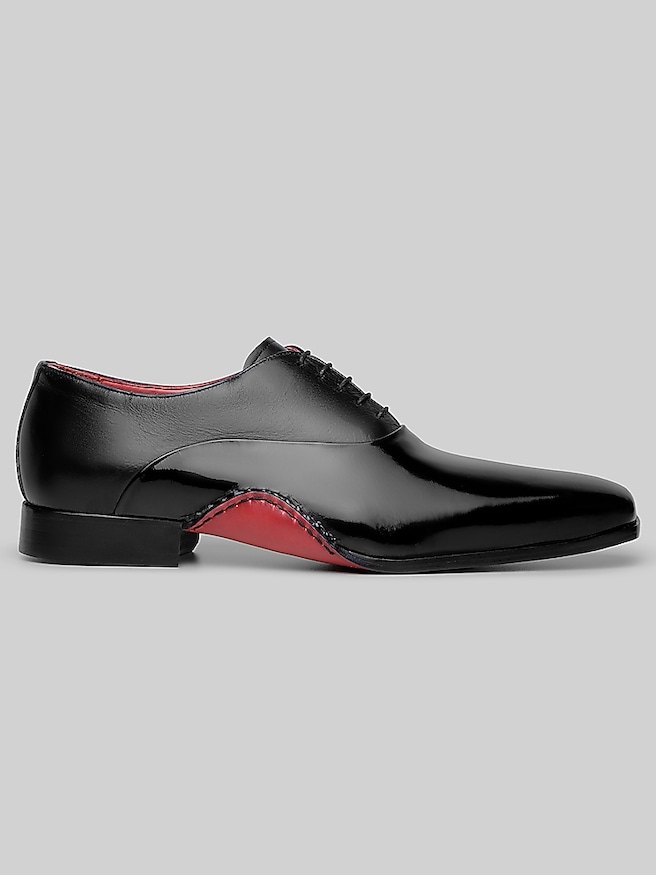
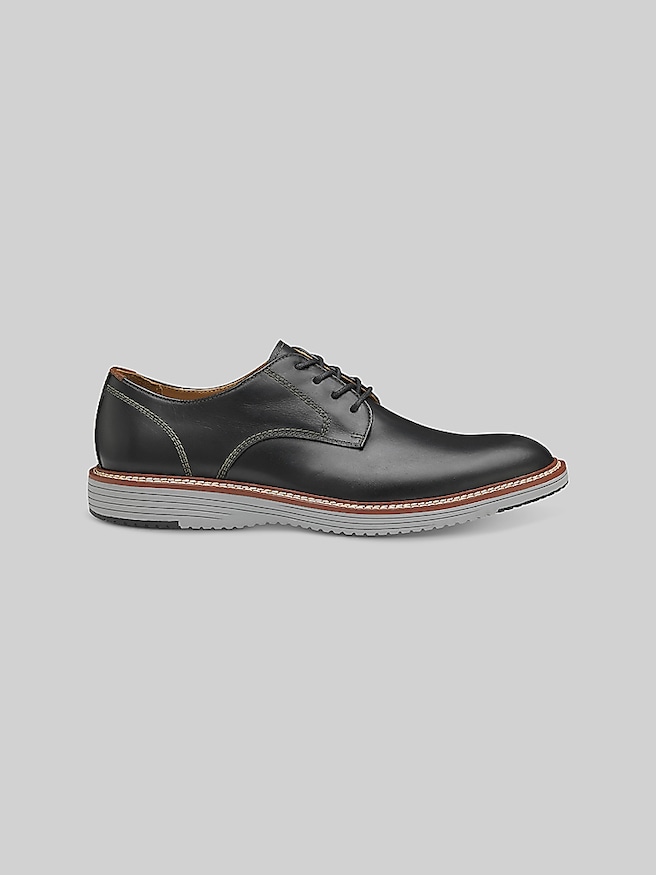
Calfskin dress shoes combine a fine-grained leather surface with the structure and polish expected of tailored footwear. Made from the hides of young cattle, calfskin is valued for its relatively smooth texture, supple feel, and ability to develop a rich finish. Those qualities make it well suited to shoes worn with suits, dress trousers, and refined business-casual clothing. The material can take a crisp shine without losing the subtle character of leather, although its appearance depends on the tanning process, surface treatment, and care it receives. Calfskin is a type of leather, not a construction method or a guarantee of quality; the cut of the hide, lining, stitching, and sole all contribute to how a shoe feels and wears. Within the broader category of leather dress shoes, calfskin offers a balance of a refined appearance and everyday practicality. Smooth black calfskin creates a clean foundation for dark tailoring, especially when the shoe has restrained detailing and a sleek profile. Brown shades bring depth to navy, gray, and earth-toned clothing, with darker browns generally presenting a dressier impression than lighter tan finishes. An Oxford’s closed lacing gives it a compact, formal appearance, while a Derby’s open lacing creates a slightly more relaxed look. Broguing adds decorative perforations and visual texture; a plain toe or simple cap toe keeps the emphasis on the leather and silhouette. Loafers offer another expression of calfskin, pairing a slip-on shape with the polish of a dress shoe. For a presentation, ceremony, or dinner with a stated dress code, the shoe’s shape and detailing matter as much as its color. A streamlined pair can sit neatly beneath a tailored trouser hem, while a heavier sole or broader toe gives the same material a more substantial presence. Matching the level of formality to the occasion helps calfskin footwear feel intentional rather than overly dressed up or too casual.
Fit determines whether that polished appearance translates into a comfortable day. Calfskin can become more flexible with wear, but a well-fitting dress shoe should not depend on a painful break-in period. The heel should feel secure, the ball of the foot should align with the shoe’s widest area, and the toes should have room without pressing against the front or sides. A tapered toe may extend beyond the foot as part of its design, so empty space at the tip does not necessarily mean the shoe is too long. Pressure across the forefoot, persistent heel rubbing, or numbness points to a fit issue rather than something to ignore until the leather softens. Trying shoes with the socks intended for regular wear gives a more useful sense of volume, especially with close-fitting Oxfords or unlined loafers. Width, instep height, and the shape of the last—the form around which a shoe is built—can matter just as much as the size marked inside. Open-laced styles often allow more adjustment over the instep, though the overall shape still needs to suit the foot. For someone moving between a desk, conference room, and evening reception, comfort also depends on the lining, footbed, flexibility, and sole. Leather soles can feel sleek and flexible once worn in, while rubber soles may offer more cushioning or traction depending on their design. Neither material alone guarantees all-day comfort or secure footing on every surface. A balanced profile is especially useful when dress shoes need to work with several outfits: dark brown calfskin can complement both a navy suit and gray trousers, while black lends a more formal finish to charcoal tailoring. Belts do not need to match every shade variation exactly, but keeping them in a similar color family creates a cohesive result. Subtle socks that relate to the trousers help maintain a clean line, particularly when sitting down or crossing a leg exposes more of the ankle.
Durability comes from the whole shoe, supported by consistent care. Calfskin can hold up well to repeated wear, but its fine surface still develops creases where the foot bends and can show scratches from chair legs, pavement, or crowded commutes. Natural creasing is part of leather wear, not automatically a flaw. Welted and some stitched constructions may allow resoling, depending on the shoe’s design and condition, while cemented construction can provide a lighter, more flexible feel but may offer fewer repair possibilities. A leather lining can help manage moisture, and well-finished seams reduce rough contact inside the shoe. These details are worth considering alongside the upper material when footwear will be worn regularly. For smooth calfskin, brushing away loose dirt and wiping with a lightly damp cloth helps keep grit from collecting in creases and around the sole edge. The leather should dry naturally, away from direct heat, before conditioning or polishing. A conditioner suited to the finish can help maintain suppleness, while a matching cream polish can refresh color and a small amount of wax can add shine, particularly at the toe and heel. Testing care products on an inconspicuous area helps avoid unwanted darkening or changes in sheen. Suede or other specialty calfskin finishes require their own care methods rather than a smooth-leather polishing routine. Cedar shoe trees help support the shape between wears and absorb some residual moisture; allowing shoes time to dry thoroughly before wearing them again also supports their condition. Storage should protect the leather from prolonged sunlight, excessive heat, and pressure from other footwear. With that attention, calfskin dress shoes can become a familiar part of a working wardrobe rather than something reserved for rare appearances. They can also make a thoughtful gift for someone building a professional wardrobe or marking a career milestone, especially when the recipient’s size, preferred fit, and usual dress code are known. The most useful choice brings together a versatile silhouette, appropriate construction, and leather that suits the wearer’s routine.