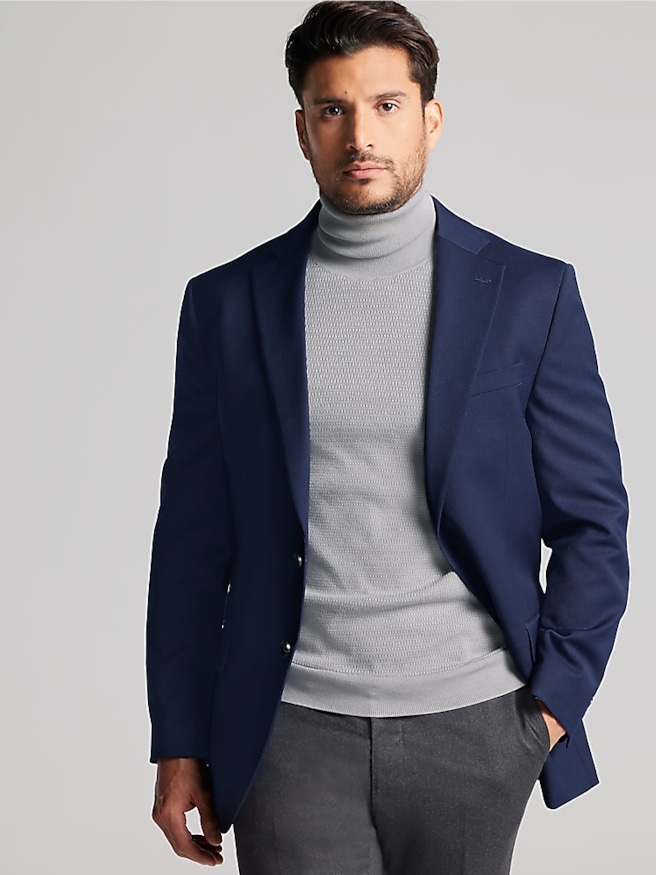
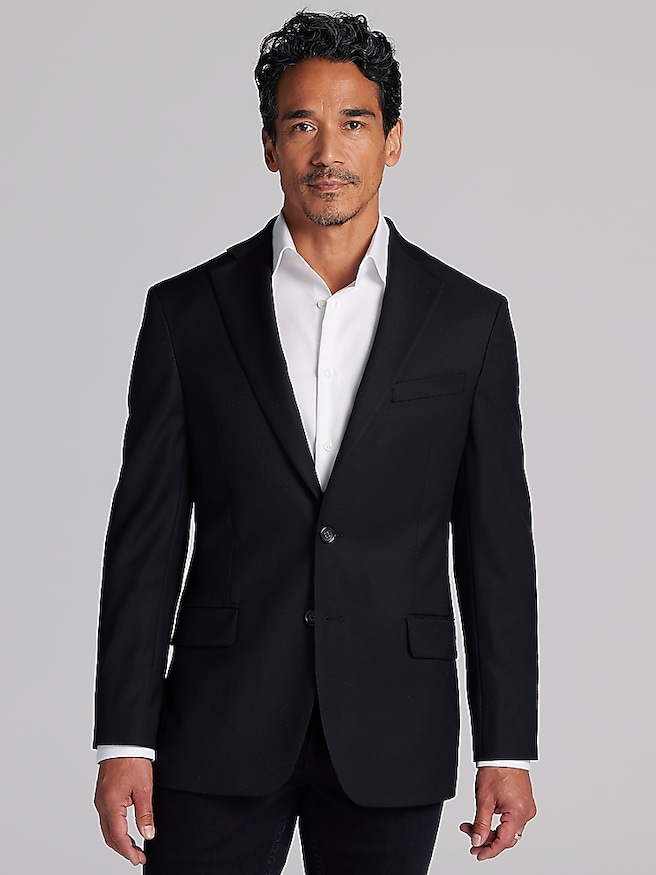
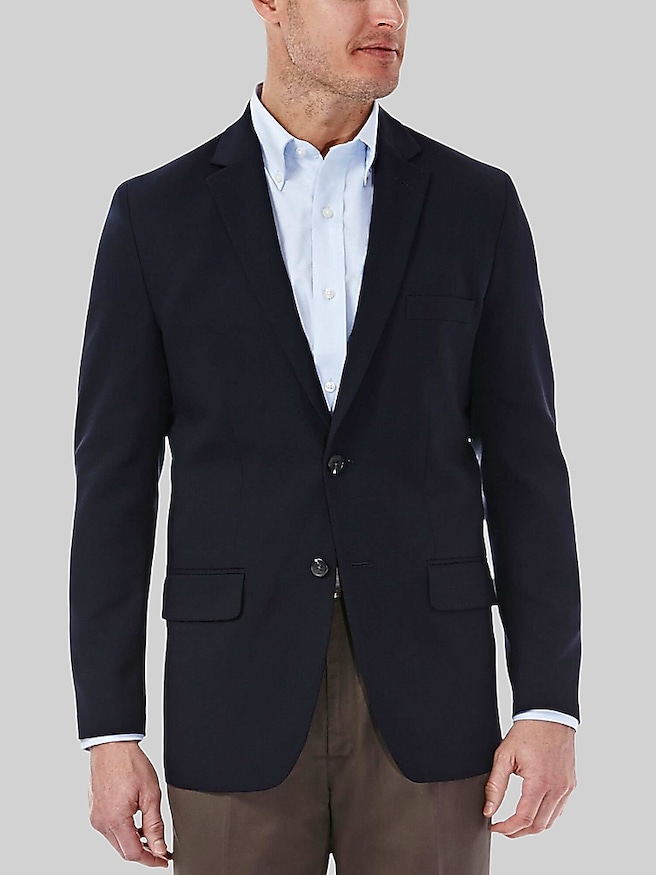
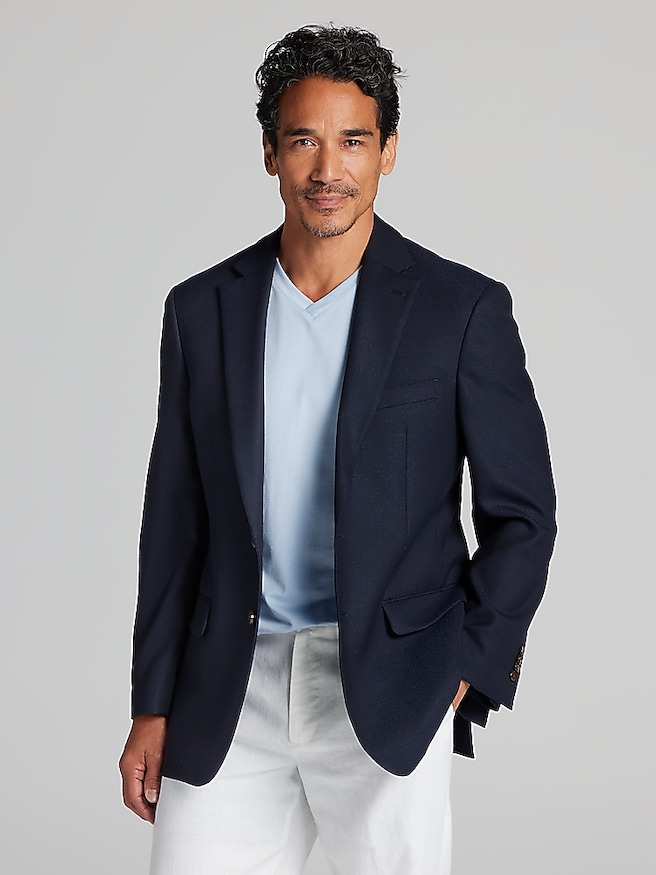
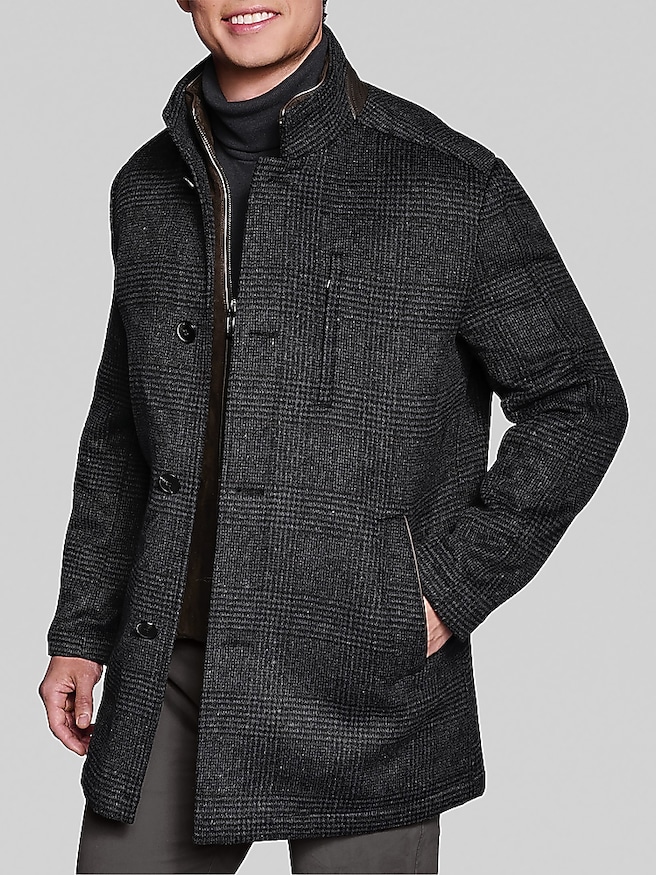
Business overcoats provide a polished layer of protection when a suit, dress shirt, or tailored business outfit needs more coverage during the cooler months. Typically reaching from mid-thigh to below the knee, an overcoat is designed to cover the jacket beneath it without bunching at the hem or pulling across the shoulders. That added length creates a clean, continuous line from collar to shoe while helping shield formal clothing from wind, rain, and cold air. Traditional business overcoats are often made from wool, cashmere-wool blends, or substantial woven fabrics that offer warmth, structure, and dependable wear through early fall, winter, and the changing weather that follows. Pure wool is valued for its natural insulation and ability to regulate temperature, while a cashmere blend can add a softer hand and a refined finish. Heavier tweed and other dense blends bring texture and wind resistance, making them useful for commutes, outdoor ceremonies, client meetings, and evenings spent moving between the car, office, and restaurant. When wet conditions are part of the forecast, explore Men’s All-Weather Overcoats for outerwear designed with changing conditions in mind. A well-chosen overcoat should feel comfortable over the layers you wear most often, including a suit jacket or blazer, while still looking composed when worn open over business-casual clothing. Try it on with the fullest jacket you expect to wear underneath and check that the shoulders sit naturally, the sleeves extend slightly beyond the shirt cuff, and the front closes without strain. The coat should allow easy movement through the arms and back, but it should not appear oversized or collapse around the torso.
The most versatile business overcoat styles balance traditional tailoring with practical warmth. A single-breasted silhouette offers a streamlined appearance that works easily with suits, trousers, and knitwear, especially when finished with a simple fly-front closure or understated buttons. A double-breasted design has a wider front overlap and two rows of buttons, creating a more substantial barrier against the cold while giving formal outfits a confident, structured shape. It can be especially useful for someone who spends time outdoors between appointments or prefers the visual weight of classic tailoring. A topcoat is generally lighter and shorter than a full overcoat, making it a comfortable choice for crisp days, transitional weather, and offices where temperatures vary throughout the day. A shorter peacoat-inspired option can suit casual or semi-formal business settings, though its hip-length cut may not fully cover a longer suit jacket. Lapel choice also affects the overall impression. Notch lapels deliver a familiar, versatile business look that feels at home in the office and at professional events. Peak lapels create stronger lines at the chest and can lend a sharper, more formal presence to evening attire or a tailored suit. Neutral colors such as black, charcoal, navy, and camel coordinate easily with common suiting shades, while subtle patterns or textured fabrics can add personality without distracting from the rest of an outfit. Think of the overcoat as the first impression seen outdoors: a charcoal layer over a navy suit, with a scarf tucked neatly beneath the collar, looks intentional before the wearer has even reached the office door. Small details such as interior pockets, a smooth lining, secure closures, and a collar that can be turned up in the wind add everyday value without compromising a refined appearance.
Business overcoats are useful for professionals who commute, attend meetings, travel for work, or spend part of the day at formal occasions. They also make thoughtful gifts for a recent graduate beginning a first office position, a partner who regularly wears suits, a family member preparing for interviews, or anyone building a dependable cold-weather wardrobe. For a gift, classic colors and restrained styling are generally the safest choices because they can work with several suits and dress shoes already in the closet. Pay attention to fit preferences and layering habits: someone who wears heavier jackets may need more room through the chest and shoulders, while a person who favors lightweight tailoring may prefer a closer silhouette. Length is another practical consideration. A coat that falls around the knee offers the most coverage and pairs naturally with longer formalwear, while a mid-thigh length can feel easier to manage in a car or on public transportation. During the cooler months, proper care helps preserve the fabric and shape. Use a sturdy hanger with broad shoulders, brush away surface lint after wear, and give the coat room to air before placing it in a closet. Avoid overloading the pockets, since the added weight can pull the front out of shape, and follow the care label when professional cleaning is needed. With thoughtful fabric, fit, length, and styling, a business overcoat becomes more than a seasonal layer; it is a reliable finishing piece that brings warmth, confidence, and polish to the daily rhythm of work and formal life.