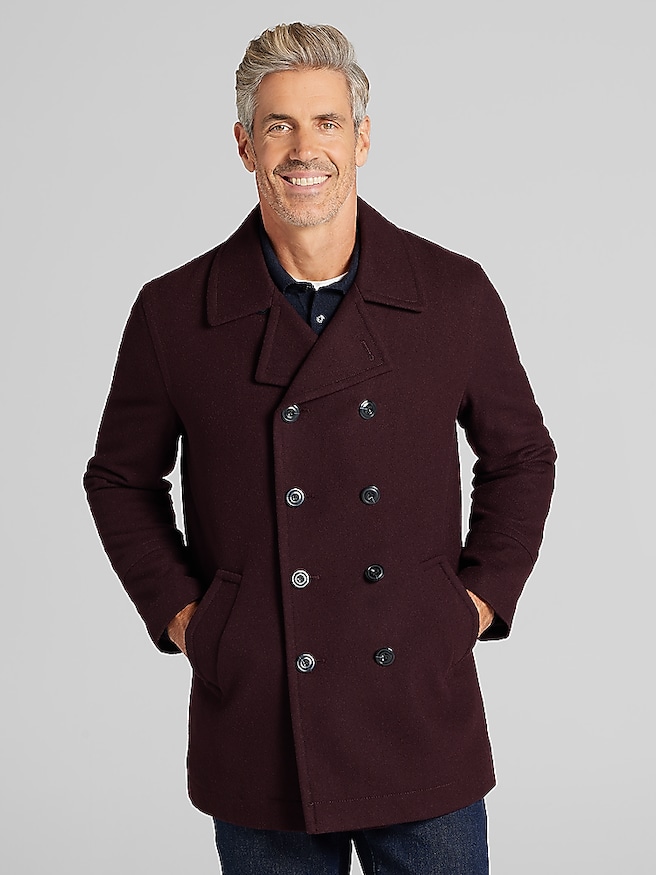
Men's business outerwear includes coats and jackets designed to layer over suits, sport coats, and polished office clothing without disrupting their shape. A tailored topcoat, a trench coat, or a streamlined jacket can provide that finishing layer, with the right choice depending on dress expectations, coverage, and the clothing underneath. The defining qualities are a clean silhouette, enough room for comfortable layering, and details that work with professional attire rather than compete with it. For someone walking into a client meeting, the outer layer should feel like part of the outfit, not an afterthought pulled over a carefully fitted suit. Wool and wool-blend fabrics are common choices for structured coats because they offer warmth, substance, and a refined surface that complements tailored clothing. Their performance varies with fabric weight, weave, and composition; a dense fabric may provide more protection from wind, while a softer finish can create a less rigid appearance. Blended fibers may contribute resilience or shape retention, but the fabric label and construction matter more than a broad material name alone. Woven shells with water-resistant finishes serve a different purpose, helping address light precipitation during a commute. Water resistance is not the same as waterproof protection, and sustained exposure calls for construction specifically intended for those conditions. Linings also affect how a coat feels in use. A smooth lining helps the garment slide over jacket sleeves, while an insulated lining can add warmth and bulk. Neither feature is automatically better; the useful balance depends on whether the day involves a short walk from a parking garage or several blocks between a train station and an office. Understated lapels, secure closures, and neatly integrated pockets help maintain a professional appearance. The result is business outerwear that supports the working day, providing practical coverage while allowing the suit, shirt, and other layers beneath it to sit naturally. For commuters, frequent business travelers, and professionals moving between buildings, that combination makes the outer layer as relevant to everyday comfort as the clothing worn indoors.
Fit becomes especially important when business outerwear is worn over a tailored jacket. A coat that looks trim over a shirt may become restrictive once shoulder padding, sleeves, and another layer are underneath it. The most useful fit leaves room across the upper back and chest without allowing excess fabric to collapse around the torso. Shoulder seams should sit cleanly, sleeves should accommodate the layers below, and the front should close without pulling into pronounced horizontal lines. Comfortable movement matters during ordinary tasks: reaching for a train handrail, carrying a laptop bag, or sitting through a drive should not turn the coat into a constraint. At the same time, added room should not erase the shape of the garment. A defined shoulder and an uncomplicated line through the body can preserve a tailored appearance without a close, restrictive cut. Length changes both coverage and the impression an outfit makes. A longer coat generally works well over a suit because it covers the jacket hem and creates a continuous outline. Shorter outerwear can suit offices where dress shirts, knitwear, and tailored trousers are standard, provided the proportions work together and the layer underneath does not extend awkwardly below the hem. Dark navy, charcoal, black, and muted earth tones coordinate easily with many business wardrobes, while subtle texture can add depth without drawing attention away from the overall outfit. A smooth, dark coat tends to read more formal; a textured surface or softer construction can feel at home in a business-casual setting. Pocket placement and closure style deserve equal attention. Accessible pockets are useful for gloves or a transit card, but overfilled pockets can distort the front and interrupt the drape. Buttons, zippers, and belts should be easy to operate and lie neatly when fastened. A collar that rests comfortably over a shirt collar or scarf also helps the neckline stay orderly. These small points become noticeable over repeated wear, particularly when the same outer layer needs to move comfortably from a morning commute to an evening business dinner.
Durability in men's business outerwear comes from the relationship between fabric, construction, fit, and care. Fabric alone does not tell the whole story: secure stitching, firmly attached closures, a well-set lining, and reinforcement around frequently used pockets all contribute to how a garment handles repeated wear. A coat that is too tight can place unnecessary stress on seams and buttons, while sleeves that constantly rub against bag straps or rough surfaces may show wear sooner. Thoughtful everyday habits help preserve the finish. A broad, supportive hanger gives the shoulders a place to rest without sharp pressure points, and enough closet space keeps the fabric from staying crushed. Emptying pockets before hanging a coat helps maintain its shape, especially after a day carrying keys, a phone, or a wallet. Care should follow the sewn-in label rather than assumptions about the main fiber. Some garments require professional cleaning, while others permit washing under specified conditions; shell fabrics, linings, insulation, and finishes can each influence those instructions. Gentle brushing may remove surface dust from suitable wool fabrics, and prompt attention to marks can prevent them from becoming harder to address. Damp outerwear generally benefits from drying with airflow away from direct heat, following the garment's care directions. For longer periods between wears, clean, dry storage helps protect both the fabric and the lining. The same balance of warmth, mobility, and proportion is central to Men's Winter Outerwear, particularly when a daily commute includes extended time outside. Business outerwear can also make a practical gift for a recent graduate entering an office role, someone starting a new position, or a professional building a more cohesive wardrobe. Knowing the recipient's usual jacket size, preferred fit, and typical commute is more useful than choosing on appearance alone. A well-considered outer layer earns its place through regular use: it fits over the clothing already worn, supports the demands of the day, and maintains a composed appearance from the first trip outside to the last appointment.