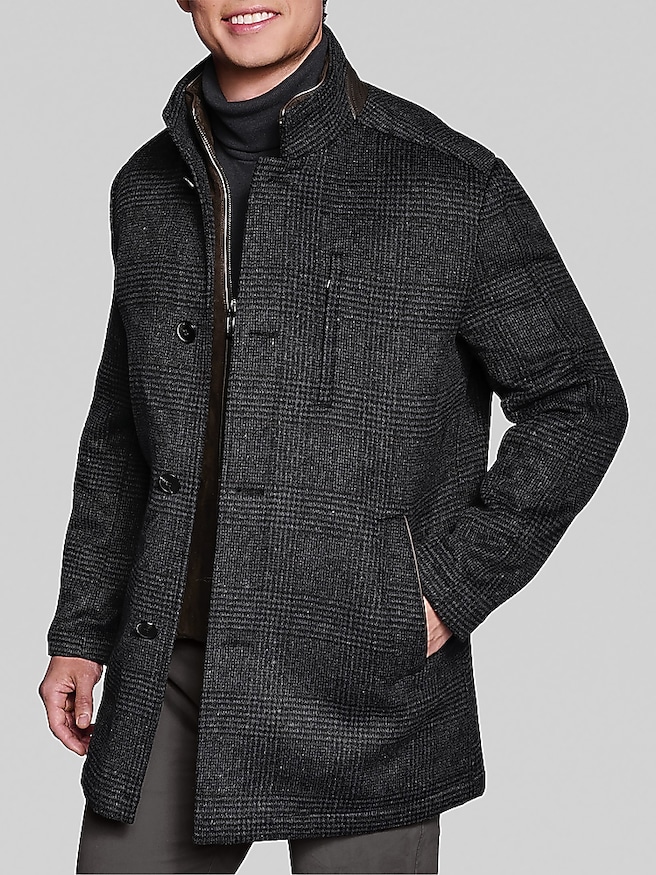
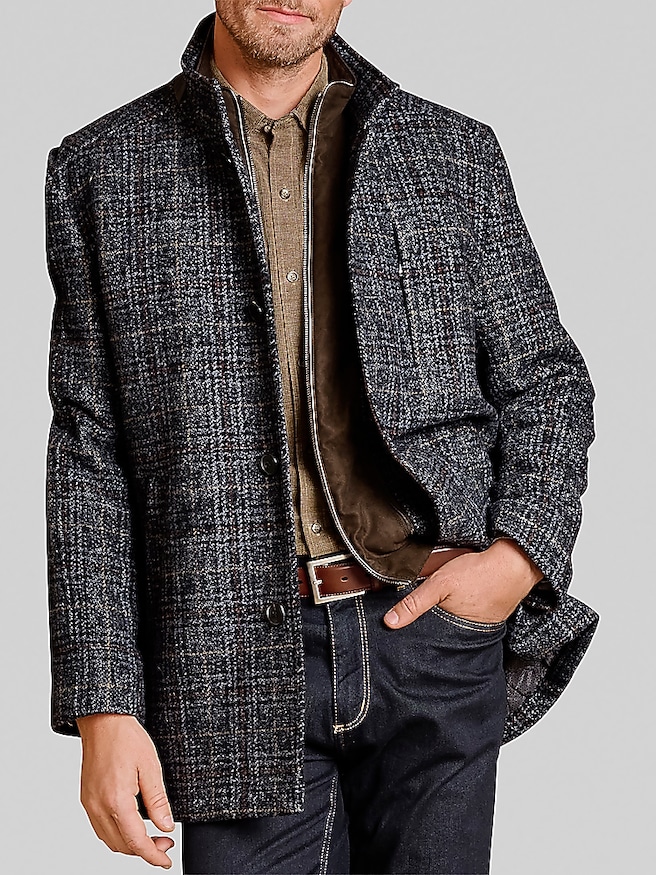
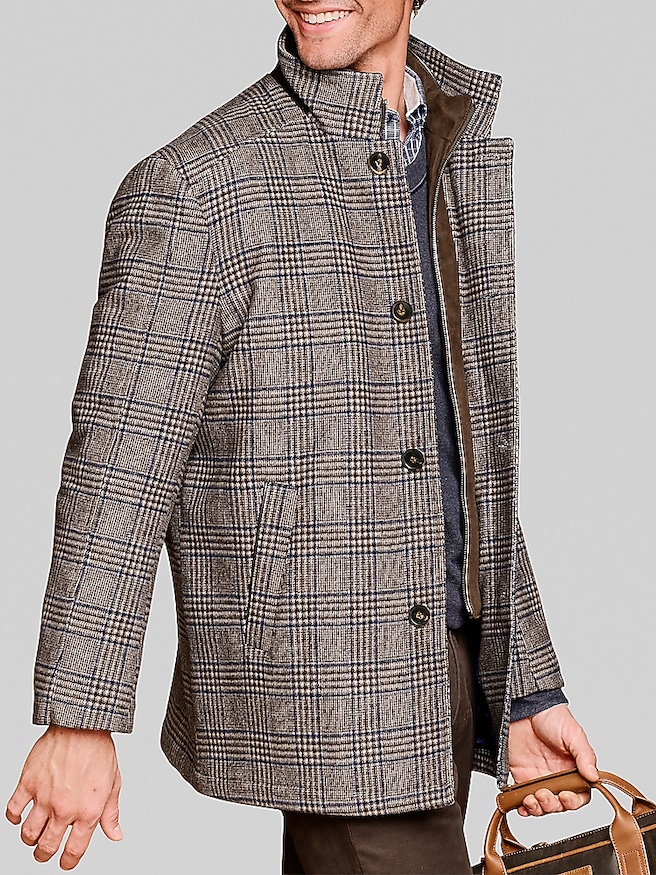
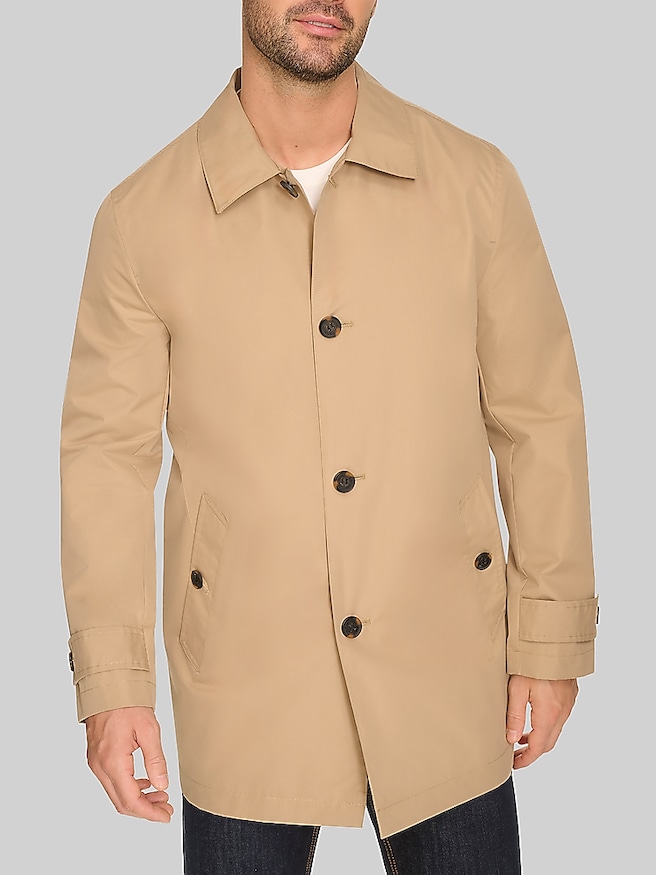
Men’s winter outerwear brings together warmth, weather protection, and the finishing layer that gives an outfit its shape. From a wool overcoat worn over tailoring to an insulated jacket paired with jeans and boots, the right silhouette depends on how much time is spent outside, what goes underneath, and how the coat needs to move throughout the day. A walk to the train platform calls for a different balance of coverage and mobility than a short trip from the driveway to an office entrance. Wool and wool-blend fabrics have a substantial feel and a textured appearance that complements dress trousers, knitwear, and suits. Their warmth varies with fabric weight, weave, lining, and construction; wool content alone does not determine how protective a coat will feel. Quilted outerwear uses stitched compartments to help distribute insulation, while down and synthetic fills provide warmth through loft that traps air. Down generally offers substantial warmth relative to its weight, but its insulating performance can diminish when wet. Many synthetic fills retain more insulating ability in damp conditions, although the shell fabric and overall construction also matter. A tightly woven exterior can help limit wind penetration, and a water-resistant finish can handle light moisture without making a garment fully waterproof. Waterproof protection depends on more than the surface fabric, including seams and closures. Longer coats extend coverage over the hips and upper legs, which can make a noticeable difference on exposed sidewalks or while waiting outdoors. Shorter jackets leave more freedom around the seat and thighs, a practical feature for driving and frequent movement. For everyday casual outfits, Winter Outerwear Jackets pair naturally with sweaters, flannel shirts, and denim, while longer coat silhouettes can complement tailored clothing. The most useful choice balances insulation with daily activity: a heavily insulated layer suited to long stretches outdoors may feel excessive during a brisk walk or inside a heated train. Winter outerwear works best when its fabric, coverage, and structure match the routine rather than simply looking substantial on a hanger.
Fit becomes especially important when winter outerwear sits over several layers. A coat that feels comfortable over a thin shirt may pull across the upper back when worn with a sweater or suit jacket. Shoulder seams should sit cleanly without restricting reach, and the chest should allow the intended layers to lie smoothly when the front is fastened. Raising the arms, reaching forward, and sitting down reveal more about comfort than standing still in front of a mirror. Sleeves need enough length to cover the wrists in a relaxed position without swallowing the hands, while cuffs should work comfortably with gloves. For tailored outfits, sufficient coat length helps cover the suit jacket beneath and keeps the overall proportions deliberate. A closer-cut silhouette can look sharp, but extra room is useful only when it supports layering and movement; unnecessary volume can feel cumbersome and allow cold air to circulate through open gaps. Details that seem small indoors often become important outside. A collar that closes higher at the neck reduces exposed space above a scarf, adjustable cuffs help limit drafts, and a hood adds coverage when wind or precipitation makes a hat alone insufficient. Front closures affect both appearance and function: buttons lend a traditional finish, while a zipper can create a more continuous barrier, particularly when backed by a protective flap. Pockets should be positioned where hands can reach them comfortably, with secure compartments useful for keys or a phone during a commute. These features also shape the character of the outfit. Smooth wool fabrics and restrained detailing tend to sit comfortably alongside business clothing, while visible quilting, textured shells, and roomier shapes often suit relaxed dressing. Black, navy, charcoal, and brown provide versatile foundations without requiring every accessory to match exactly. A charcoal coat over a navy suit, or a brown jacket with dark denim and a textured scarf, creates contrast while keeping the outfit cohesive. Practical winter dressing leaves room for personal style without sacrificing the comfort needed for an ordinary day.
Durability in men’s winter coats and jackets comes from a combination of fabric quality, sound construction, appropriate use, and consistent care. High-contact areas such as cuffs, pocket openings, elbows, and the edge of the front closure deserve attention because repeated friction can show there first. Even stitching, neatly finished seams, and closures that operate smoothly are useful signs of careful construction, though no single detail guarantees a garment’s lifespan. A substantial fabric can withstand regular wear yet still need protection from snagging, prolonged dampness, or repeated abrasion from a shoulder bag. Care requirements vary widely, so the garment label should determine whether cleaning involves laundering, professional cleaning, or another method. Wool outerwear often benefits from gentle brushing to remove surface dust and airing between wears, with a broad, supportive hanger helping preserve the shoulders. Insulated jackets need cleaning methods that protect both the fill and the shell; detergent choice, drying temperature, and drying technique should follow the label rather than assumptions about all puffers. Thorough drying matters before storage, since trapped moisture can affect fabric, insulation, and freshness. Water-resistant finishes may lose effectiveness through wear and cleaning, and any treatment used to restore them should be compatible with the garment’s instructions. Small issues, such as a loose button or an opening seam, are easier to address before they become larger repairs. Between outings, a coat should have space to dry and regain its shape instead of remaining compressed in a crowded entryway. For storage, clean, fully dry outerwear and a breathable cover can help protect structured fabrics from dust without trapping moisture. These everyday habits support an outer layer that stays comfortable and presentable through repeated wear. Winter outerwear can also make a thoughtful gift for a father, brother, partner, or friend, particularly when the choice reflects an established routine. Familiar sizing, preferred colors, and the layers typically worn underneath are more useful than guessing from appearance alone. A dependable coat earns its place through the mornings, commutes, walks, and gatherings it makes more comfortable.