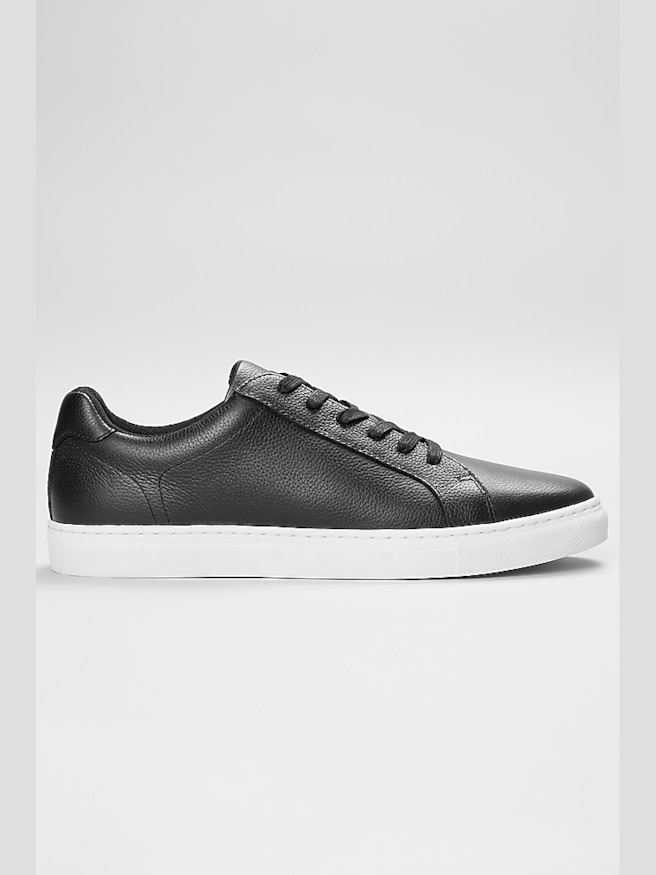
Business casual shoes bridge the gap between formal dress shoes and relaxed everyday footwear, bringing a finished look to chinos, tailored trousers, and, in less formal offices, dark jeans. Leather or suede loafers, derbies, streamlined chukka boots, and Chelsea boots are dependable choices because their shapes complement office clothing without looking overly ceremonial. Clean, low-profile leather sneakers can also fit a business casual wardrobe when the workplace permits them, though a traditional office or client-facing role may call for something more structured. The distinction often comes down to details: a neat toe shape, understated stitching, and a restrained sole tend to look more polished than oversized proportions or bold athletic accents. Penny loafers offer an easy balance of refinement and simplicity, especially with tapered chinos and a tucked-in button-down shirt. Derbies have open lacing, meaning the sections holding the eyelets sit on top of the vamp; that construction gives them a less formal appearance than oxfords and allows some adjustment across the instep. A brown leather pair can ground navy trousers, while burgundy adds subtle depth to gray or charcoal. Black works particularly well with sharper silhouettes and more conservative office expectations. Suede introduces a softer texture that feels at home beside cotton chinos, textured trousers, or an unstructured sport coat. For outfits that suit an ankle-height silhouette, Business Casual Boots provide another polished option, particularly in designs with simple uppers and modest soles. Chukkas typically have a short lace-up opening, while Chelsea boots use elastic side panels for a clean, uninterrupted profile. Neither needs heavy detailing to make an impression. The strongest combinations keep the shoe and clothing at a similar level of formality: refined loafers with tailored separates, understated derbies with office trousers, or minimal sneakers with an explicitly relaxed dress code. For presentations, interviews, and meetings with unfamiliar clients, the more polished end of that range is usually the safer choice.
Materials and construction influence how business casual footwear looks, feels, and holds up through a full schedule. Smooth leather offers a defined surface that can be conditioned and polished, with natural creasing developing where the foot bends. Full-grain leather retains its natural surface, while other leather finishes may have a more uniform appearance; the label alone does not establish how comfortable or durable a shoe will be. The lining, stitching, sole attachment, and overall construction matter as well. Suede has a soft nap that adds visual texture, but it benefits from regular brushing and careful handling to prevent flattened or marked areas. Synthetic uppers vary widely in flexibility and breathability, so their performance depends on the material and design rather than appearance alone. Inside the shoe, a smooth lining, well-placed cushioning, and enough room across the forefoot can make the difference between an easy workday and a distracting one. A cushioned footbed may soften the feel underfoot, but it cannot correct a shoe that is too narrow or too short. Fit should leave space for the toes to move without allowing the foot to slide forward. The heel should feel secure, the widest part of the foot should align with the widest part of the shoe, and the upper should not press sharply across the instep. Lace-up designs allow more adjustment, while loafers depend more heavily on the match between the foot and the shoe’s shape. Chelsea boots need a secure fit through the heel and instep without relying on laces. Trying footwear with the socks intended for work gives a more useful sense of fit than trying it with an unusually thin or thick pair. Removable footbeds can be helpful for people who use compatible inserts, provided there is enough interior depth. For a commute involving long hallways, stairs, or extended periods standing, sole flexibility, cushioning, and tread deserve as much attention as the upper’s finish. Rubber soles often provide practical grip, while leather soles offer a traditional profile; comfort and traction still depend on the particular construction and walking surface.
Good business casual shoes earn their place through repeat use, not just their appearance beneath a fitting-room mirror. A versatile pair should work with several outfits already in the closet, whether that means navy chinos and a pale blue shirt, charcoal trousers and a fine-knit sweater, or dark denim and a casually tailored jacket. Brown shades often connect easily with a broad range of office colors, while black creates a crisp, restrained finish. Keeping leather accessories reasonably coordinated can help an outfit feel intentional, though a belt and shoes do not need to match shade for shade. Trouser length matters, too: excessive fabric pooling over the upper can hide a clean silhouette, while a measured break allows the shoe to sit naturally beneath the hem. Regular care helps preserve that appearance. Smooth leather benefits from removing surface dust, applying a suitable conditioner when needed, and using polish appropriate to its finish. Suede requires a dedicated brush and care products made for its texture rather than conventional leather polish. Following the footwear maker’s care directions is especially important for mixed-material uppers and specialty finishes. Letting shoes air out between wears helps the interior dry, and properly sized shoe trees can support the shape without stretching the upper. Persistent odors, compressed cushioning, loose stitching, and worn tread are worth noticing early because they can affect everyday comfort or signal a need for maintenance. Some constructions allow resoling or other repairs, while others do not, so repairability is a useful consideration for footwear intended for frequent wear. Business casual shoes can also make a thoughtful gift for a graduate starting an office role, a professional moving into a client-facing position, or someone refining an everyday work wardrobe. Knowing the recipient’s size, preferred fit, and workplace expectations is more valuable than choosing the most decorative style. The right pair feels appropriate from the first morning meeting through an after-work dinner, with enough polish for the setting and enough comfort for the hours in between.