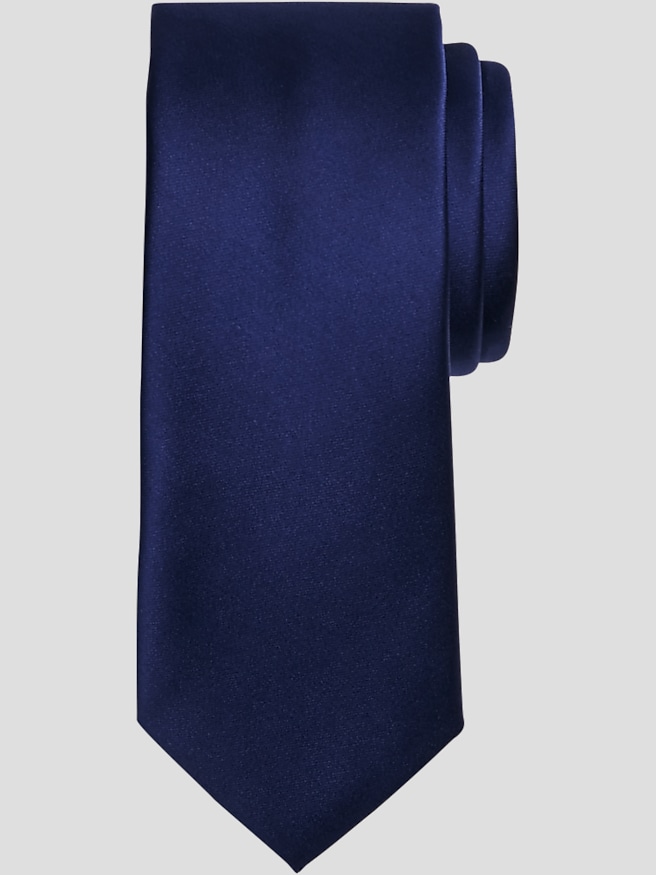
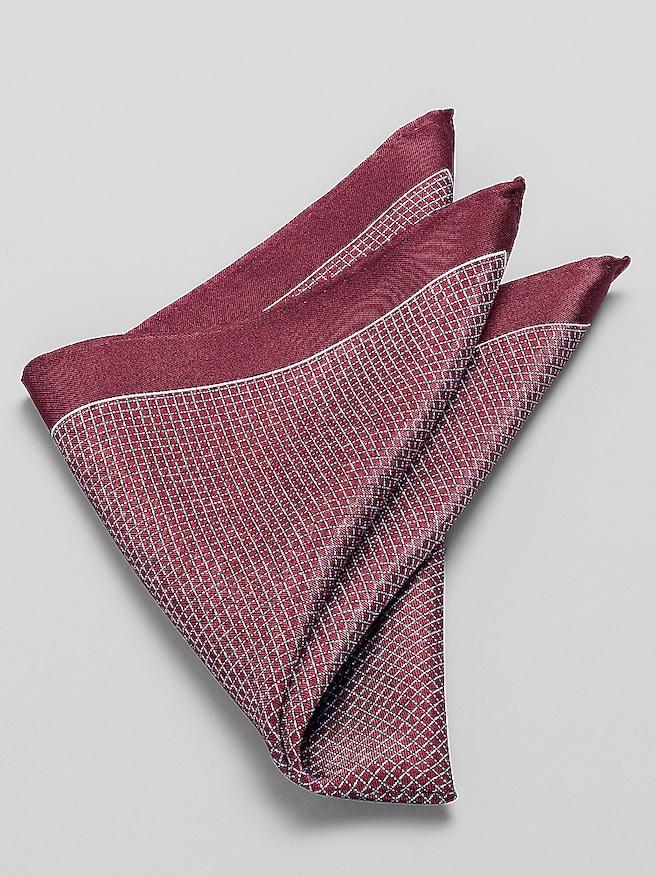
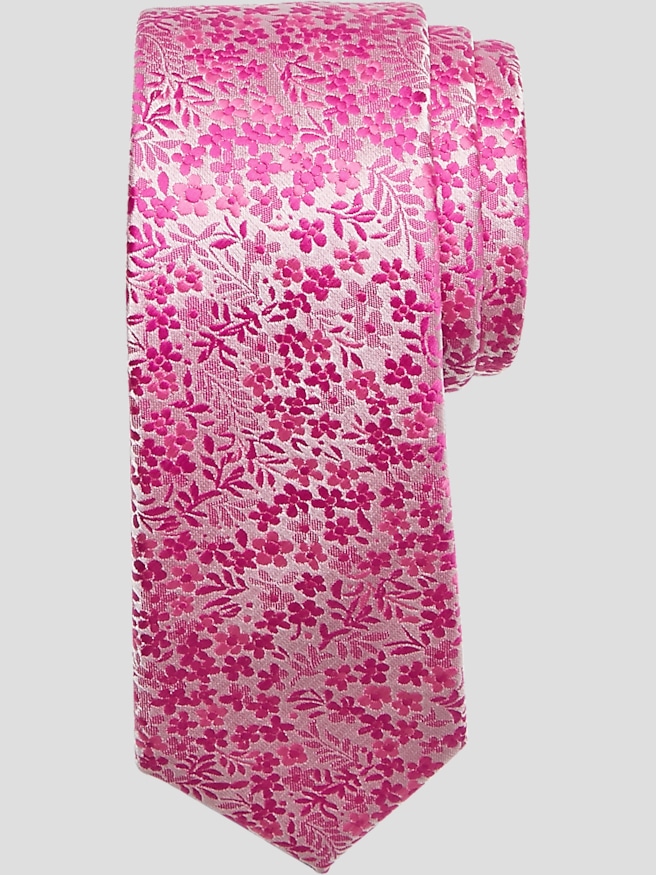
Business casual neckties bring a finished look to office clothing without making the outfit feel overly formal. Matte finishes, textured weaves, muted colors, and restrained patterns tend to work especially well with button-down shirts, chinos, tailored trousers, and softly structured sport coats. The effect is polished but approachable: a navy knit tie against a pale blue Oxford shirt, for example, has a different character from a glossy tie worn with a dark matching suit. In a workplace where ties are optional, that small distinction can make neckwear feel appropriate for an ordinary workday rather than reserved for a major presentation. Silk, cotton, wool, linen, and blended fabrics each contribute something different. Smooth woven silk can look understated when its surface has little shine and its pattern stays subtle, while silk knit offers a visibly textured alternative with a softer presence. Cotton often has a dry, matte appearance, and linen can show natural slubs that give an otherwise simple tie more dimension. Wool and wool blends provide a substantial texture that complements brushed fabrics and jackets with an open weave. The fabric alone does not determine formality; color, pattern, construction, and the surrounding outfit matter just as much. A quiet geometric design can sit comfortably in a professional setting, while a bold novelty print may draw more attention than the setting calls for. Business casual neckties are particularly useful for client-facing roles, team presentations, networking events, and work dinners where a full suit would feel unnecessary but an open collar might seem unfinished. They also make sense for professionals moving between desk work and in-person meetings throughout the day. Because business casual means different things across workplaces, the strongest combinations reflect the actual office culture. A textured solid can add definition without dominating the outfit, allowing a shirt and jacket to remain relaxed while still looking deliberately put together.
Color and proportion give business casual ties much of their versatility. Navy, burgundy, charcoal, olive, and brown offer depth without requiring a loud pattern, and they generally coordinate easily with familiar shirt colors such as white, light blue, and pale pink. Low-contrast stripes, small dots, fine checks, and subtle herringbone weaves add interest at conversational distance without becoming the first thing someone notices across a meeting table. Pattern scale matters when several fabrics share the same outfit. A finely striped shirt and a tie with a larger, more open pattern usually remain easier to distinguish than two patterns of nearly identical size. With a checked sport coat, a solid textured tie can provide a visual resting point. With a plain shirt and jacket, a small repeating motif gives the combination some personality. Fit in neckwear is largely a matter of balance rather than a single universal measurement. Tie width looks most natural when it relates to jacket lapels, shirt collar size, and the wearer’s build. A very narrow tie beside broad lapels can look disconnected, while an unusually wide blade may overwhelm a narrow collar. Length matters, too: the front blade generally looks balanced when its tip reaches around the waistband or belt buckle, without hanging far below it. Taller wearers or anyone using a knot that consumes more fabric may need additional length to achieve that proportion. A four-in-hand knot often suits business casual clothing because its slightly asymmetrical shape feels less rigid than a large, highly structured knot. Thicker fabrics naturally create more volume, while lighter fabrics usually produce a smaller knot. Knit ties frequently have a squared end, though pointed versions also exist, and that distinctive shape contributes to their relaxed character. A tie should sit securely at the collar without forcing the fabric into a bulky lump. The result is especially convincing when the shirt collar frames the knot cleanly and the tie hangs straight rather than twisting against the shirt.
Construction and care influence how well a business casual necktie holds its shape through repeated wear. On woven ties, lining and stitching help determine the weight, drape, and way the fabric returns to shape after untying. Substantial fabric is not automatically more durable, and a lightweight tie is not necessarily delicate; weave, fiber quality, finishing, and handling all play a part. A well-made tie should lie smoothly, with neat edges and a blade that does not noticeably spiral. Knit fabrics bring their own considerations because their open structure can catch on rough surfaces or sharp accessories. For someone wearing a tie through a commute, a morning meeting, and an afternoon at a desk, comfortable drape and a knot that stays tidy can matter as much as color. Care starts with the fabric label, since silk, cotton, wool, linen, and blends may require different cleaning methods. Untying the knot after each wear, rather than pulling the narrow end through a tightened knot, reduces unnecessary stress on the fabric and seams. Woven ties can generally rest on a smooth tie rack, while knit ties are often better stored loosely rolled or flat to avoid stretching. Neither style benefits from being crowded into a drawer or packed beneath heavy clothing. Spills call for gentle blotting rather than rubbing, and persistent marks are best assessed by a cleaner familiar with the material. Direct heat and aggressive pressing can flatten texture or leave an unwanted shine. These practical details also make neckties thoughtful gifts for a graduate beginning an office role, a colleague marking a promotion, or someone refreshing a work wardrobe. Familiar colors and understated patterns are usually easier to integrate than a design that requires an entirely new outfit. Alongside complementary Business Casual Accessories, a textured tie can connect the shirt, jacket, belt, and shoes without making every element match exactly. That balance gives business casual neckwear its lasting usefulness: enough structure to show care, with enough ease for everyday professional life.