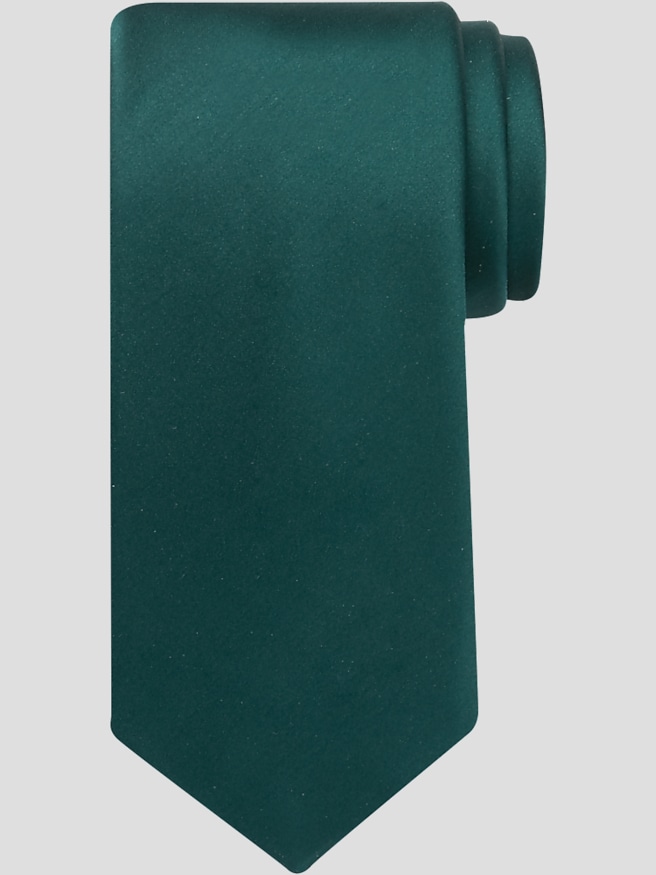
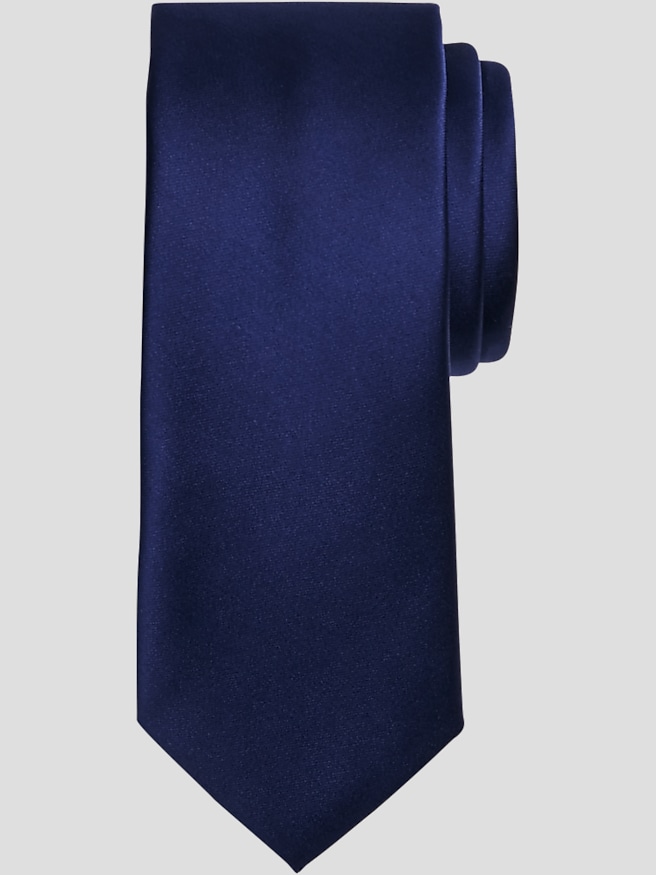
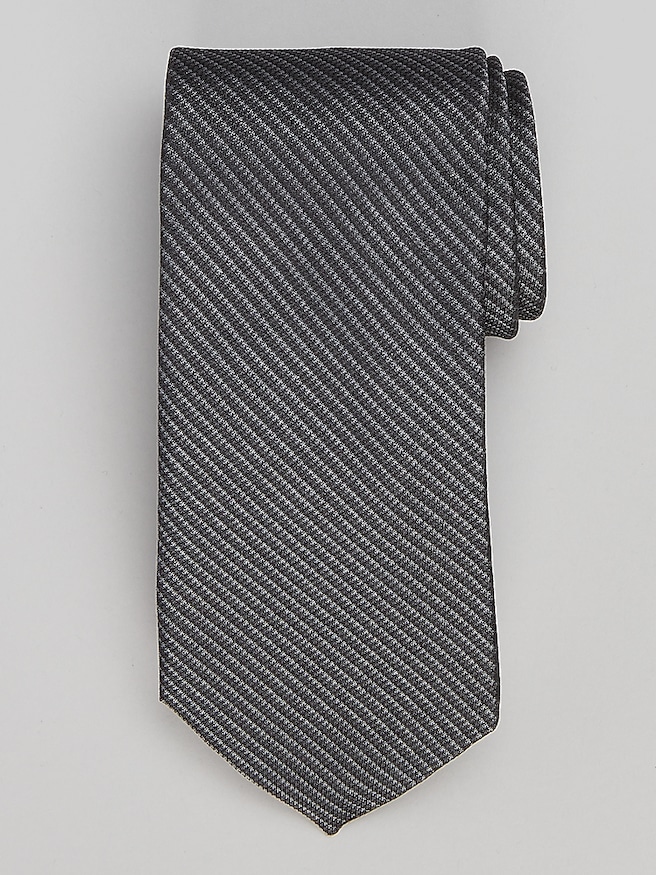
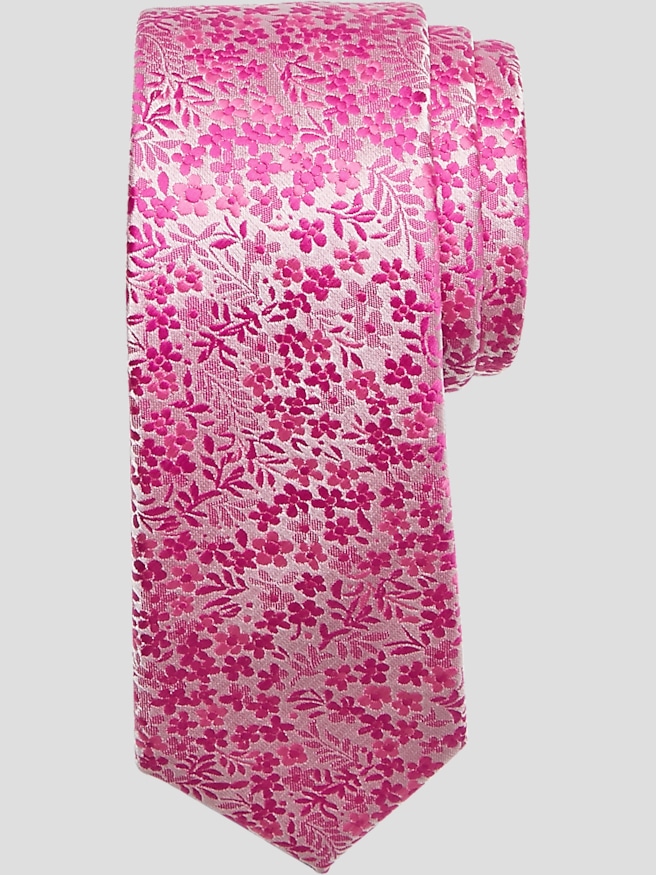
Bold neckties stand out through saturated color, oversized patterns, high contrast, or pronounced texture, giving a tailored outfit a clear focal point. A ruby red solid, a sweeping paisley, or a broad diagonal stripe can bring personality to a familiar suit without changing the rest of the outfit. Color is only part of that effect: a black-and-white geometric print can be just as striking as vivid orange, while a tonal woven pattern makes its impression through depth and light rather than sharp contrast. Large florals and medallions have an expressive, decorative quality; wide stripes and generously spaced dots offer a more structured look. The scale of the design matters as much as the motif itself. A paisley with broad, open curves reads clearly across a room, while a tightly packed pattern reveals more detail up close. Against a solid white or light blue shirt, either approach gives the tie room to stand out. Navy, charcoal, and black suits provide grounded backdrops for brighter shades, keeping the overall appearance composed rather than crowded. A cobalt tie with a charcoal suit feels crisp and deliberate; burnt orange against navy adds warmth and a distinct point of contrast. For a graphic look with a restrained palette, Black Striped Ties bring definition through alternating bands and directional lines. Statement neckties suit a range of settings, from creative workplaces and client dinners to wedding receptions, graduations, and anniversary celebrations. The strongest choice reflects both the occasion and the person wearing it. A broad stripe can carry confidence into a presentation, while an expansive floral may feel more at home at a celebratory dinner. Bold does not have to mean novelty: a well-proportioned pattern or richly colored solid can remain a useful part of a dress wardrobe long after its first outing.
Fabric and construction shape how a bold necktie looks, knots, and holds up to repeated wear. Silk can give saturated colors a luminous finish, though its appearance ranges from smooth and glossy to textured and relatively matte depending on the weave. A woven silk design can create raised detail and subtle shadow, adding dimension even when the colors stay close together. Printed fabrics often allow for fluid curves, intricate illustrations, and clearly defined color changes. Polyester and microfiber fabrics can also produce crisp patterns and strong color, with performance and care needs varying by construction. Wool ties typically have a softer, less reflective surface, while linen brings visible texture and a more relaxed character. Knit ties introduce an open, tactile surface and often a squared end, making the statement feel less formal than a smooth woven tie. The lining inside the tie contributes to its body and the fullness of its knot; thicker is not automatically better, since excess bulk can crowd a narrow collar. Width and length are equally important to the finished appearance. Neckties around 3 to 3.25 inches wide often provide a balanced starting point for a statement design, but the best proportion also depends on jacket lapels, shirt collar, and personal preference. Wider lapels generally look harmonious with a fuller tie, while narrow lapels pair more naturally with a slimmer shape. Once tied, the front tip should reach approximately the belt buckle or waistband. Taller wearers, larger neck sizes, and knots that consume more fabric may call for additional length. A four-in-hand produces a slightly asymmetrical knot that works well with many fabrics; a half-Windsor creates a more triangular shape when the collar has room for it. With either knot, a small dimple below the center adds depth and helps the fabric fall neatly. Comfort matters, too: the knot should sit securely at the collar without making the neckline feel constricted, and the shirt collar points should frame it rather than lift away from it.
A bold tie earns its place in a wardrobe when it works with clothes already worn often. For someone whose usual outfit is a navy suit and white shirt, a rich green solid or a large burgundy medallion can create a noticeably distinct look without requiring additional patterned pieces. A checked shirt can work with a statement tie when the patterns have clearly separated scales, such as a fine check beneath a broad stripe. Repeating one color between the shirt and tie helps connect them, while leaving the jacket plain gives the eye a place to rest. Pocket squares need not duplicate the tie exactly; a simple white square or a small accent drawn from the tie's pattern usually creates a more considered finish. These details make bold neckties thoughtful gifts for graduates, partners, fathers, and friends who enjoy dressing with personality. A recipient's usual suit colors, preferred tie width, and comfort with pattern offer better clues than choosing the brightest design alone. Someone who wears understated tailoring may appreciate a richly textured solid, while an enthusiastic dresser might enjoy a sweeping floral or high-contrast geometric motif. Lasting appearance depends on careful handling as well as fabric quality. After wear, reversing the tying steps instead of pulling the narrow end through a tight knot helps reduce stress on the fabric and seams. Untying the tie fully also keeps deep creases from settling into the knot area. Smooth woven ties can rest on a suitable tie rack, while loosely rolling and storing knit ties flat helps limit stretching. For spills, gentle blotting with a clean cloth is safer than rubbing, which can spread the mark or disturb the surface. The care label should determine cleaning and pressing methods, particularly for silk and textured fabrics that can be affected by moisture or direct heat. With appropriate care and balanced proportions, a statement tie can remain the memorable detail in an outfit worn many times.