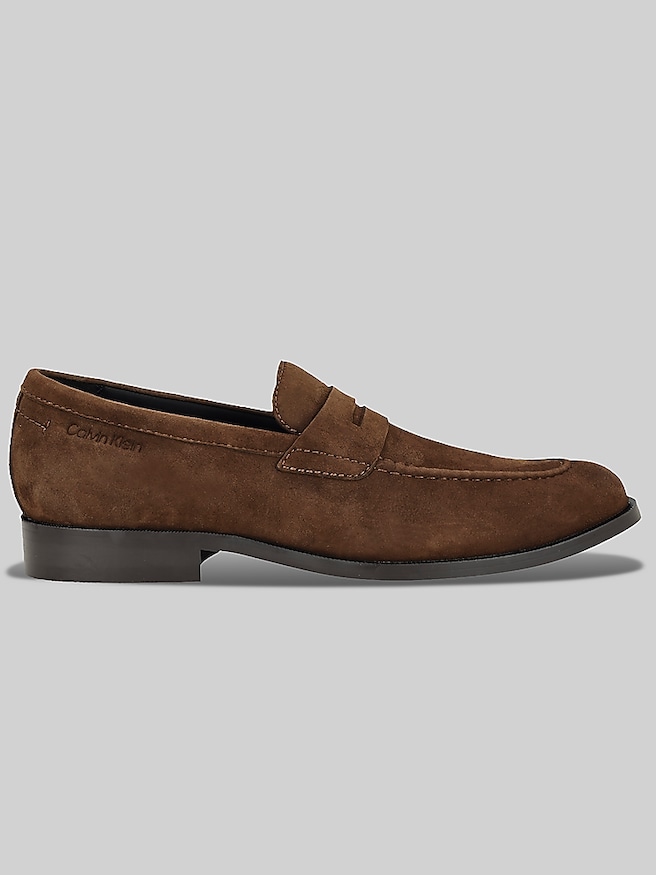
Brown leather slip-on loafers bring a relaxed confidence to a dressed-up outfit without making it feel overly formal. Their low profile and lace-free shape work especially well with trousers that fall cleanly over the top of the shoe, allowing the leather’s color and texture to stand out. Brown offers plenty of range: a lighter tan can create contrast against navy chinos, a medium brown can complement gray dress pants, and a deep chocolate shade can look understated beneath a tailored suit. The effect also depends on the leather’s finish. A softly burnished surface adds depth around the toe and seams, while a more uniform finish gives the shoe a cleaner, quieter appearance. Penny-style details, tassels, and simple apron stitching each change the character of a loafer without changing its easy-on function. A rounded toe tends to feel relaxed and traditional; a gently tapered shape can sit more naturally alongside slim, tailored trousers. For an office with a business-casual dress code, brown loafers can anchor an outfit of chinos, a tucked-in shirt, and a sport coat. For dinner or a daytime celebration, they can bring polish to dress pants without the more structured look of a lace-up shoe. Suit pairings work best when the loafer’s shape, finish, and sole feel appropriately refined for the occasion; a strict formal dress code may call for another footwear style. Matching a belt closely to the shoe’s shade creates a coordinated impression, though the browns do not need to be identical. Similar depth and undertone usually matter more than an exact color match. Socks can either blend with the trousers for an uninterrupted line or introduce a restrained pattern. The appeal of brown leather slip-ons lies in that balance of ease and polish: a familiar shape that can move from a desk to a restaurant table while still looking considered.
Leather quality and construction influence how brown slip-on loafers feel, age, and hold their shape. Full-grain leather retains the hide’s natural surface and may show small variations that become part of its character. Top-grain leather has been lightly refined for a more consistent appearance, while other finished leathers may have additional surface treatments that affect texture and care. These descriptions are useful starting points, but the leather’s thickness, flexibility, lining, and overall construction matter as well. A supple upper can feel accommodating across the foot, while a firmer one may provide a more structured silhouette. Neither should require enduring pinching or pressure in the hope that the shoe will eventually become comfortable. Because loafers have no laces to adjust, the fit around the instep and heel is especially important. The vamp should hold the foot securely without pressing hard across its highest point, and the heel should not repeatedly lift out during a normal stride. A little movement is not necessarily a problem, but persistent slipping can lead to friction and an unstable feel. There should also be room for the toes to rest naturally without contacting the front or being squeezed together. Leather may soften with wear, but a shoe that is too short will not gain meaningful length. Trying loafers with the type of socks intended for everyday use helps establish a realistic fit, particularly when alternating between lightweight dress socks and thicker casual pairs. Underfoot details deserve equal attention. Cushioning can ease pressure, while a supportive footbed and stable heel help the shoe feel balanced through a full day. Leather soles offer a traditional appearance and can feel sleek beneath tailored clothing; rubber soles often provide more grip and a quieter step on hard floors. The best choice depends on how much walking the day involves and how formal the outfit needs to look. Welted, stitched, and cemented constructions also have different repair possibilities, so durability involves both initial workmanship and whether the sole can be serviced later.
Regular care helps brown leather loafers maintain their color, flexibility, and clean outline, especially when they become a dependable part of a weekly wardrobe. Dust and surface grit are worth removing before they settle into seams or scrape against the finish. For smooth leather, a soft brush or clean cloth is often enough for routine attention, followed by a suitable cleaner when needed. Conditioning should be occasional and appropriate to the leather rather than an automatic step after every wear. Too much product can leave a heavy residue or alter the surface, and even a familiar conditioner may deepen a lighter brown. Testing a small amount in an inconspicuous area helps avoid surprises. A cream polish in a compatible shade can refresh color and provide a modest sheen, while a neutral option may suit leather whose original tone is worth preserving. Decorative stitching and lighter edge finishes need a careful hand so polish does not collect where it is difficult to remove. Textured or napped leather calls for care products designed for that finish rather than standard smooth-leather polish. After wear, allowing the shoes to rest and air out helps the lining dry naturally. Properly sized shoe trees can support the toe shape and reduce pronounced creasing without stretching the upper; cedar also helps absorb moisture from ordinary wear. Direct heat is best avoided because it can dry leather unevenly. Checking heel wear and sole edges periodically can reveal small repair needs before they affect the way the shoes sit or feel. Alternating pairs, when practical, gives each one time to recover between longer days. These considerations also make loafers a thoughtful gift for a father, partner, or someone building a professional wardrobe, provided sizing and personal style are understood. A person who favors relaxed chinos may prefer a softer shape and understated finish, while someone who regularly wears tailored trousers may appreciate a sleeker profile. Well-chosen brown leather slip-on loafers earn their place through that combination of comfortable fit, useful styling, and care that keeps them looking intentional over time.